
Compare Ottawa
Where Ottawa’s mayoral candidates stand on the issues
Compare the candidates’ published positions, commitments and available evidence on the major issues facing Ottawa.
Accessibility & Para Transpo
Compare how Ottawa's mayoral candidates would improve Para Transpo, accessible conventional transit, sidewalks, crossings, City facilities, recreation, digital services and consultation with people with disabilities.
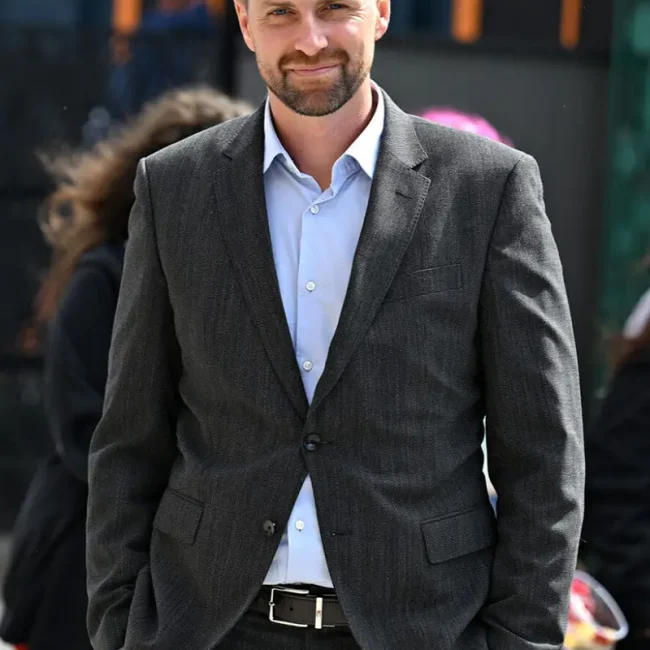
Commits to treating Para Transpo as a core OC Transpo service, with the same on-time and service-delivery standards as other transit and named senior management accountability.
- Coverage
- Extensive public information
- Evidence
- Direct campaign platform
- Reviewed
- Sep 8, 2026
Why this conclusion?
This summary reflects the attributable public material available when it was reviewed.
- Primary evidence: Direct campaign platform
- Public-information coverage: Extensive public information
- Supporting sources: 1
- Last reviewed: Sep 8, 2026
Coverage measures the amount of available information, not the quality of the policy or Compare Ottawa’s agreement with it.
Read the details
Alex Lawson’s May 2026 OC Transpo plan includes a specific Para Transpo commitment. Under the route section, he says Para Transpo should be treated as a core component of the transit system rather than a side service.
Lawson commits to giving Para Transpo riders the same on-time and service-delivery standards as other Ottawa transit riders and assigning a named senior staff member to be accountable for Para Transpo within a reorganized OC Transpo structure.
The transit plan also proposes functional audio-and-video surveillance on every OC Transpo vehicle, explicitly including Para Transpo vehicles. The plan does not amount to a comprehensive municipal accessibility platform: it does not set out detailed positions on eligibility, booking windows, trip denials, accessible City facilities, winter mobility or disability-led consultation. Compare Ottawa therefore treats this as a clear Para Transpo position while leaving broader accessibility questions open.
Key commitments
- Treat Para Transpo as a core component of OC Transpo rather than a side service.
- Apply the same on-time and service-delivery standards to Para Transpo riders as other transit riders.
- Name a senior staff member accountable for Para Transpo within a reorganized OC Transpo structure.
- Require functional audio-and-video surveillance on Para Transpo vehicles as part of a fleet-wide transit safety commitment.
Sources (1)
-
Campaign material
Official transit policy. Section 04, Commitment 03 makes a specific Para Transpo service-standard and management-accountability commitment; the safety section also includes Para Transpo vehicles in the fleet-wide camera commitment.

Would emphasize measurable transit reliability, rider representation, maintained public spaces and accessible community services, but has not released Para Transpo-specific service commitments.
- Coverage
- Moderate public information
- Evidence
- Direct campaign platform
- Reviewed
- Sep 8, 2026
Why this conclusion?
This summary reflects the attributable public material available when it was reviewed.
- Primary evidence: Direct campaign platform
- Public-information coverage: Moderate public information
- Supporting sources: 3
- Last reviewed: Sep 8, 2026
Coverage measures the amount of available information, not the quality of the policy or Compare Ottawa’s agreement with it.
Read the details
Jeff Leiper has not published a standalone accessibility or Para Transpo platform. His most relevant commitments are contained in his transit and people-focused City-services policies.
Leiper proposes a Transit Service Guarantee with public standards for on-time performance and frequency, regular reporting and stronger accountability. He also proposes restoring a citizen seat in transit governance so riders have a direct voice in decisions. These commitments could improve transparency for riders with disabilities if Para Transpo and accessibility measures are explicitly included.
His broader platform calls for maintaining community centres and public facilities, extending access to community spaces, improving booking systems, reviewing City fees and investing in neighbourhood parks, lighting and public spaces. Those measures are relevant to physical, financial and program access.
However, the campaign has not established targets for Para Transpo on-time performance, unaccommodated trips, same-day bookings, phone waits, fleet capacity or travel-time limits. Nor has it published a disability-specific plan for sidewalks, snow clearing, accessible intersections, websites or City consultation.
His position is therefore classified as supportive with medium confidence: the accountability and access principles are clear, but the specialized service details remain incomplete.
Key commitments
- Create a Transit Service Guarantee with published reliability standards.
- Report transit performance publicly and regularly.
- Restore direct citizen representation in transit governance.
- Improve maintenance and access at community facilities and public spaces.
- Improve booking systems and reduce barriers to community use.
- Review City fees and charges for fairness and affordability.
- Include disability-specific indicators in transit and City-service reporting.
- Publish Para Transpo booking, on-time, trip-availability and fleet targets.
Sources (3)
-
Campaign material
Official commitments on a Transit Service Guarantee, public reporting and rider representation.
-
Campaign material
Official commitments concerning community facilities, booking systems, public spaces and fees.
-
Official record
Official accessibility framework and municipal obligations relevant to a complete campaign policy.
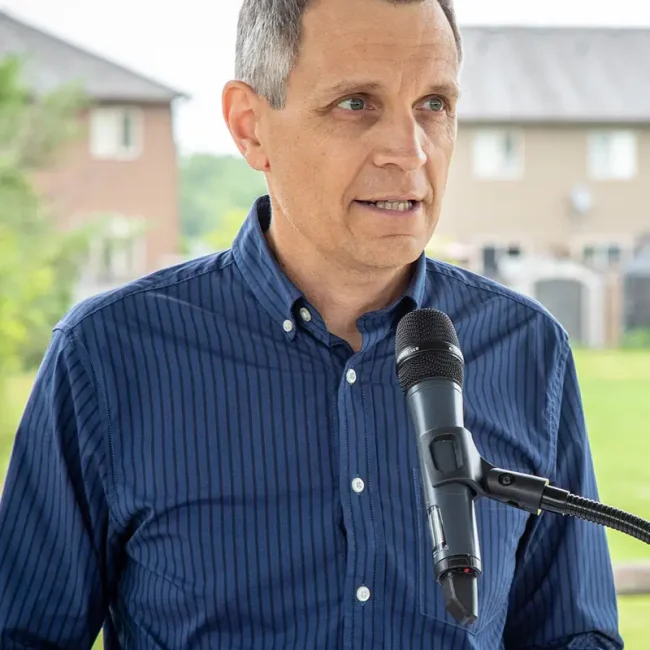
Supports implementation of Ottawa's accessibility plans and continued Para Transpo fleet, operator and customer-service improvements, but has not published a standalone accessibility campaign platform with service targets.
- Coverage
- Extensive public information
- Evidence
- Direct campaign platform
- Reviewed
- Sep 8, 2026
Why this conclusion?
This summary reflects the attributable public material available when it was reviewed.
- Primary evidence: Direct campaign platform
- Public-information coverage: Extensive public information
- Supporting sources: 4
- Last reviewed: Sep 8, 2026
Coverage measures the amount of available information, not the quality of the policy or Compare Ottawa’s agreement with it.
Read the details
Mark Sutcliffe’s accessibility position is best assessed through actions taken during his term rather than a dedicated campaign policy. Council approved the City’s 2025–2029 Municipal Accessibility Plan and the 2026–2029 OC Transpo Accessibility Plan, which identifies and addresses barriers across conventional transit, rail and Para Transpo.
The 2026 transit budget funded recruitment of Para Transpo operators, continued replacement of older specialized-transit vehicles and maintenance of discounted Access, Community and EquiPass fares. Council also approved four free monthly trips for seniors who pay per ride on Para Transpo.
By February 2026, 41 new Para Transpo minibuses were in service, with 10 additional vehicles expected for on-demand transit by the fourth quarter. The City also continued onboarding vehicles, improving fleet management and recruiting mechanics and operators.
Sutcliffe endorsed OC Transpo’s Customer-First Action Plan, which promises measurable improvements in reliability, accountability, safety and the customer experience. These system-wide objectives are relevant to riders with disabilities, although no separate Para Transpo performance guarantee has been published.
Important unanswered questions include whether he would establish public targets for Para Transpo on-time performance, trip availability, booking waits and complaint resolution; how quickly inaccessible stops and facilities would be upgraded; and how disability-led consultation would shape budgets and capital projects.
Key commitments
- Implement the 2025–2029 City Municipal Accessibility Plan.
- Implement the 2026–2029 OC Transpo Accessibility Plan.
- Recruit Para Transpo operators and continue fleet replacement.
- Maintain discounted Access, Community and EquiPass fares.
- Provide four free monthly Para Transpo trips for eligible senior pay-per-ride customers.
- Apply the Customer-First Action Plan to transit reliability and customer service.
- Continue accessible infrastructure and barrier-removal work across City services.
- Publish Para Transpo-specific performance and accessibility targets.
Sources (4)
-
Official record
Official overview of the 2025–2029 City plan and 2026–2029 OC Transpo plan.
-
Official record
Official operator recruitment, fare and Para Transpo budget information.
-
Official record
Official update on new Para Transpo minibuses, senior ride credits and ridership.
-
Public source
Official mayoral support for reliability and customer-focused transit improvements.

Saravanamuttoo’s transit plan emphasizes affordability, reliability, neighbourhood service and rider-led network redesign. His published material does not yet provide a detailed Para Transpo or accessibility-specific platform.
- Coverage
- Moderate public information
- Evidence
- Direct campaign platform
- Reviewed
- Sep 8, 2026
Why this conclusion?
This summary reflects the attributable public material available when it was reviewed.
- Primary evidence: Direct campaign platform
- Public-information coverage: Moderate public information
- Supporting sources: 2
- Last reviewed: Sep 8, 2026
Coverage measures the amount of available information, not the quality of the policy or Compare Ottawa’s agreement with it.
Read the details
Neil Saravanamuttoo proposes a broad transit recovery plan centred on lower fares, more reliable service, better real-time information and a network redesign shaped by riders and frontline operators. These proposals could affect riders with disabilities, particularly through affordability and service reliability.
However, the campaign material reviewed does not yet set out specific commitments for Para Transpo eligibility, booking, on-time performance, accessible stops, conventional-transit accessibility, sidewalks, crossings, recreation facilities or digital accessibility. This position should therefore be treated as incomplete pending a dedicated accessibility announcement.
Key commitments
- Reduce regular transit fares to $1 and cap monthly costs at $40.
- Improve real-time transit information.
- Put riders and frontline operators at the centre of a bus-network redesign.
- No detailed Para Transpo-specific commitment identified as of July 29, 2026.
Sources (2)
-
Public source
Official transit plan covering fares, governance, network redesign and funding.
-
Campaign material
Official campaign priorities covering transparency, community control, affordability, transit and city spending.
Why Accessibility & Para Transpo matters
Accessibility is both a legal obligation and a core municipal service. It affects whether residents with visible, non-visible, permanent or temporary disabilities can use transit, streets, sidewalks, parks, recreation facilities, City buildings, websites, documents and public consultations with dignity and equitable access.
The City of Ottawa’s 2025–2029 Municipal Accessibility Plan guides work under the Accessibility for Ontarians with Disabilities Act. OC Transpo is federally regulated and operates under the Accessible Canada Act rather than the provincial transportation standards. Council approved a separate 2026–2029 OC Transpo Accessibility Plan, effective June 1, 2026, covering conventional bus and rail services as well as Para Transpo.
Para Transpo provides specialized door-to-door transit for eligible residents who cannot always use conventional transit. The most important service questions include booking access, on-time performance, trip availability, lengthy travel windows, same-day flexibility, vehicle reliability, operator availability, customer communication and the integration of contracted taxis and minibuses.
Accessibility extends beyond Para Transpo. It includes low-floor buses, elevators and tactile features at rail stations, announcements and wayfinding, accessible bus stops, winter-cleared sidewalks and curb ramps, pedestrian signals, accessible parking, inclusive recreation, accessible playgrounds, barrier-free City facilities, accessible digital services and the availability of documents in alternate formats.
Ottawa’s 2026 transit budget included recruitment of Para Transpo operators, continued replacement of older Para Transpo vehicles and protection of discounted Access, Community and EquiPass fares. Council also approved four free monthly Para Transpo trips for seniors who pay per ride. In 2025, Para Transpo provided 888,800 customer trips; by May 2026, twelve-month ridership had increased to more than 913,000 trips.
Mark Sutcliffe has not released a standalone accessibility platform. His record includes approval of the 2026–2029 OC Transpo Accessibility Plan, Para Transpo operator recruitment, new and replacement vehicles, fare relief for senior Para Transpo customers and the Customer-First Action Plan. His broader approach emphasizes transit reliability and infrastructure investment, but accessibility-specific performance targets have not been published as campaign commitments.
Jeff Leiper has not released a standalone disability or Para Transpo platform. His published Transit Service Guarantee, restored rider representation and public performance reporting would apply to transit users broadly and could provide stronger accountability for accessible service. His wider platform also emphasizes maintained public spaces, fair City fees, improved access to community facilities and resident participation. However, no Para Transpo-specific booking, trip-denial, on-time or fleet targets have been published.
Alex Lawson has not published a dedicated accessibility or Para Transpo policy. His campaign emphasizes reliable basic services, transit performance and management accountability, but it does not establish verified positions on specialized transit, universal design, accessible infrastructure, digital accessibility or disability consultation.
Candidate commitments should be evaluated against measurable outcomes: Para Transpo on-time performance, unaccommodated trip requests, call and booking wait times, vehicle availability, elevator uptime, accessible-stop coverage, winter accessibility, barrier-removal projects, accessible digital content, complaint resolution and direct participation by people with disabilities in planning and oversight.
Alto High-Speed Rail
Compare how Ottawa's mayoral candidates approach Alto high-speed rail, including the Ottawa station location, route transparency, farmland and property impacts, local connections and the City's role in the federally led project.
Focuses his Alto policy on transparency and property-owner protections, pledging not to sign an NDA that prevents residents from seeing route information affecting their own farms or homes.
- Coverage
- Extensive public information
- Evidence
- Direct campaign platform
- Reviewed
- Sep 8, 2026
Why this conclusion?
This summary reflects the attributable public material available when it was reviewed.
- Primary evidence: Direct campaign platform
- Public-information coverage: Extensive public information
- Supporting sources: 2
- Last reviewed: Sep 8, 2026
Coverage measures the amount of available information, not the quality of the policy or Compare Ottawa’s agreement with it.
Read the details
Alex Lawson has made Alto a specific campaign issue through what he calls the Alto Pledge. His campaign says Ottawa signed a non-disclosure agreement covering route maps that may affect farms and homes, and Lawson pledges that as mayor he would not sign an NDA that keeps residents in the dark about information concerning their own property.
His campaign also states that Alto high-speed rail is coming through the Ottawa region. The emphasis of his published position is therefore not a simple endorsement or rejection of high-speed rail; it is transparency, municipal accountability and the treatment of rural and other affected property owners as the route is refined.
Compare Ottawa did not locate a Lawson commitment on the preferred Ottawa station location or a proposal to cancel the federal project. His position is best characterized by the commitments he has actually published rather than inferring a broader pro- or anti-Alto stance.
Key commitments
- Do not sign an NDA that prevents affected residents from seeing Alto information concerning their own property.
- Increase transparency around route maps and potential impacts on farms and homes.
- Give affected rural and property-owning residents clearer information as planning proceeds.
- No verified preferred Ottawa station location was located in the reviewed campaign material.
Sources (2)
-
Campaign material
Official campaign page states Lawson's pledge not to sign an NDA that keeps residents from seeing information concerning their own property.
-
Campaign material
Official campaign article frames Alto as coming through the region and focuses on local impacts and transparency.
Supports greater Alto transparency while arguing that Ottawa must be realistic about the limits of municipal control over a federal rail project and cannot simply require the route to avoid all private property.
- Coverage
- Moderate public information
- Evidence
- Council vote or motion
- Reviewed
- Sep 8, 2026
Why this conclusion?
This summary reflects the attributable public material available when it was reviewed.
- Primary evidence: Council vote or motion
- Public-information coverage: Moderate public information
- Supporting sources: 2
- Last reviewed: Sep 8, 2026
Coverage measures the amount of available information, not the quality of the policy or Compare Ottawa’s agreement with it.
Read the details
Jeff Leiper has addressed Alto directly through City Council, although Compare Ottawa did not locate a dedicated Alto plank in his 2026 mayoral platform.
During Council’s June 2026 debate over route transparency and rural-property impacts, Leiper supported the Council-wide demand for more clarity but cautioned colleagues to be realistic about what the City can require from a federal rail project. He specifically argued that Ottawa cannot simply demand that Alto avoid all private property and noted that Alto is a federal entity proceeding with a major rail-infrastructure mandate.
This establishes a clear approach to implementation: greater transparency and consultation, combined with recognition that a project of this scale may create unavoidable route and property trade-offs. It does not, by itself, establish Leiper’s preferred Ottawa station location or a complete current mayoral-platform position on Alto.
Key commitments
- Support Council’s demand for greater transparency from Alto and the federal government.
- Take a pragmatic approach to route and property impacts.
- Recognize the limits of municipal authority over a federally led rail project.
- Do not assume the City can require complete avoidance of all private property.
- No dedicated 2026 campaign Alto platform or preferred station location was located.
Sources (2)
-
Public source
Reports Leiper's direct Council comments on municipal limits, private-property impacts and Alto's federal mandate.
-
Campaign material
Official campaign priorities reviewed; no dedicated Alto policy or station-location commitment was located.
Supports Alto high-speed rail and advocates for locating Ottawa's station downtown, while calling for greater route transparency and treating expropriation as a last resort.
- Coverage
- Extensive public information
- Evidence
- Candidate statement or interview
- Reviewed
- Sep 8, 2026
Why this conclusion?
This summary reflects the attributable public material available when it was reviewed.
- Primary evidence: Candidate statement or interview
- Public-information coverage: Extensive public information
- Supporting sources: 3
- Last reviewed: Sep 8, 2026
Coverage measures the amount of available information, not the quality of the policy or Compare Ottawa’s agreement with it.
Read the details
Mark Sutcliffe supports the Alto high-speed rail project and has publicly advocated for a downtown Ottawa station. In January 2026 he told Council that Ottawa residents would be best served by a station located downtown rather than assuming the existing Tremblay VIA Rail site should be used.
Sutcliffe has argued that a downtown station could boost tourism and economic development and contribute to revitalizing Centretown and the ByWard Market. This makes station location a central part of his Alto position rather than a technical detail.
As route concerns grew in rural Ottawa, Sutcliffe also seconded a June 2026 Council motion demanding greater transparency from Alto and the federal government. He said the project’s economic importance must be balanced with respectful treatment of rural residents whose properties could be divided by the route. Council’s position calls for meaningful consideration of resident feedback and for expropriation to be a last resort.
The final route and station remain federal/Alto decisions, so the mayor’s practical role is advocacy, municipal coordination, local transit integration and representing Ottawa residents during planning and consultation.
Key commitments
- Support Alto high-speed rail serving Ottawa.
- Advocate for Ottawa’s Alto station to be located downtown.
- Use a downtown station to support tourism, economic development and downtown revitalization.
- Demand greater transparency about route evaluation and impacts.
- Treat expropriation as a last resort and improve engagement with affected rural residents.
Sources (3)
-
News reporting
Reports Sutcliffe's direct statement advocating for a downtown Alto station.
-
Public source
Direct statement linking a downtown Alto station to tourism, economic development and downtown revitalization.
-
Public source
Reports Sutcliffe's support for Council's transparency and rural-property protections concerning Alto.
Opposes the current Alto proposal while supporting high-speed rail in principle. Says Alto is deeply flawed, should be rejected and describes himself as a “No to Alto.”
- Coverage
- Extensive public information
- Evidence
- Candidate statement or interview
- Reviewed
- Sep 8, 2026
Why this conclusion?
This summary reflects the attributable public material available when it was reviewed.
- Primary evidence: Candidate statement or interview
- Public-information coverage: Extensive public information
- Supporting sources: 1
- Last reviewed: Sep 8, 2026
Coverage measures the amount of available information, not the quality of the policy or Compare Ottawa’s agreement with it.
Read the details
Neil Saravanamuttoo opposes the current Alto proposal while stating that he supports the concept of high-speed rail in principle.
In an August 19, 2026 post on his official Bluesky account, Saravanamuttoo wrote that he loves the concept of high-speed rail but considers Alto a deeply flawed proposal that needs to be rejected. He concluded the post by describing himself as a “No to Alto.”
This direct campaign statement resolves the earlier evidence gap on whether he supports or opposes the current project. Compare Ottawa has therefore changed his classification from Under Review to Opposes. The classification applies to the current Alto proposal and should not be read as opposition to high-speed rail generally.
Key commitments
- Opposes the current Alto proposal and says it should be rejected.
- Supports the concept of high-speed rail in principle.
- Describes his current position as “No to Alto.”
Sources (1)
-
Public source
Direct candidate statement: Saravanamuttoo says he supports high-speed rail in principle but considers the current Alto proposal deeply flawed, says it needs to be rejected, and describes himself as “No to Alto.”
Why Alto High-Speed Rail matters
Alto is the federally led high-speed rail project planned to connect Toronto, Peterborough, Ottawa, Montréal, Laval, Trois-Rivières and Québec City on mostly dedicated electrified tracks, with trains designed to reach speeds of 300 km/h or more. The Ottawa–Montréal segment has been prioritized as the first section for construction, currently targeted to begin in 2029.
For Ottawa, the municipal-election debate is not simply whether high-speed rail should exist. The City does not control the federal project. The questions for a mayor include where Ottawa’s station should be located, how the City should advocate for residents affected by the route, what information should be made public, how farmland and private-property impacts should be handled, and how Alto should connect with local transit and downtown economic development.
Mark Sutcliffe supports Alto and has publicly advocated for a downtown Ottawa station, arguing that central access would improve the project’s value for residents while supporting tourism, economic development and downtown revitalization. He has also backed Council demands for greater transparency and for expropriation to be treated as a last resort.
Alex Lawson has made Alto transparency a specific campaign issue. His Alto Pledge says that, as mayor, he would not sign a non-disclosure agreement that keeps residents from seeing route information concerning their own farms or homes. His published material treats the project as moving forward while focusing on disclosure, rural impacts and property-owner protections rather than campaigning for or against high-speed rail itself.
Jeff Leiper has addressed Alto through his work on Council. In June 2026, while supporting Council’s unanimous call for greater transparency, he cautioned that Ottawa should be realistic about the limits of municipal authority over a federal rail project and that the City cannot simply require Alto to avoid all private property. A dedicated 2026 campaign policy stating his preferred station location or a complete Alto platform was not located.
Neil Saravanamuttoo opposes the current Alto proposal while supporting high-speed rail in principle. In an August 19, 2026 statement on his official Bluesky account, he wrote that he loves the concept of high-speed rail but considers Alto a deeply flawed proposal that needs to be rejected, describing himself as a “No to Alto.”
City Governance & Transparency
Compare how Ottawa's mayoral candidates would govern City Hall, use strong-mayor powers, disclose lobbying and meetings, manage budgets and procurement, and improve public accountability.
Proposes a live, searchable public list of City contracts, including consultants, with no minimum dollar threshold, alongside more open procurement intended to increase competition.
- Coverage
- Extensive public information
- Evidence
- Direct campaign platform
- Reviewed
- Sep 8, 2026
Why this conclusion?
This summary reflects the attributable public material available when it was reviewed.
- Primary evidence: Direct campaign platform
- Public-information coverage: Extensive public information
- Supporting sources: 1
- Last reviewed: Sep 8, 2026
Coverage measures the amount of available information, not the quality of the policy or Compare Ottawa’s agreement with it.
Read the details
Alex Lawson published a dedicated transparency policy, “Your Money in Plain Sight,” on July 31, 2026. It focuses on procurement and public disclosure of City spending.
Lawson proposes a live, searchable, plain-language list showing who receives City contracts, what the City is paying and when the work is due. He says every contract should be included with no minimum dollar threshold and the list should be updated as work is awarded rather than through periodic reports.
He would also include consultants, studies, reviews and outside advice, including their cost and recipient. His policy calls for more open procurement so more companies can bid. The proposal is a substantive transparency and procurement policy, although it does not address every governance area tracked by Compare Ottawa, such as strong-mayor powers, lobbying disclosure, Council procedure or campaign-finance rules.
Key commitments
- Create a live, searchable, plain-language public list of City contracts.
- Disclose every contract with no minimum dollar threshold and update the list as work is awarded.
- Include consultants, studies, reviews and outside advice, showing costs and recipients.
- Use more open procurement intended to attract more bidders and increase price competition.
Sources (1)
-
Campaign material
Official campaign policy setting out contract disclosure, consultant disclosure and open-procurement commitments.
Proposes explicit limits on strong-mayor powers, proactive disclosure of schedules and meetings, plain-language decision materials, developer-donation restrictions and a more open budget process.
- Coverage
- Extensive public information
- Evidence
- Direct campaign platform
- Reviewed
- Sep 8, 2026
Why this conclusion?
This summary reflects the attributable public material available when it was reviewed.
- Primary evidence: Direct campaign platform
- Public-information coverage: Extensive public information
- Supporting sources: 3
- Last reviewed: Sep 8, 2026
Coverage measures the amount of available information, not the quality of the policy or Compare Ottawa’s agreement with it.
Read the details
Jeff Leiper’s ‘City Hall That Works in the Open’ platform is the most detailed governance proposal among the candidates reviewed.
He commits not to use strong-mayor powers to override Council and instead says he would work collaboratively to build consensus on major decisions. This directly addresses the balance between executive authority and Council decision-making.
Leiper also commits to publishing a weekly mayoral schedule and proactively disclosing meetings with lobbyists and major stakeholders. Ottawa already requires qualifying lobbyists to register substantive communications, but his proposal would place an additional disclosure responsibility on the mayor’s office.
He proposes plain-language summaries for major decisions and release of supporting materials before votes, intended to make trade-offs and implications understandable before decisions are finalized.
His platform also states that he refuses donations from developers and promises to replace the existing City budget process with a more open system that shows how funding decisions affect services.
The platform is explicit, but implementation details remain to be developed, including publication formats, timing standards, exceptions for confidential matters and the design of the replacement budget process.
Key commitments
- Do not use strong-mayor powers to override Council.
- Build consensus on major decisions.
- Publish a weekly mayoral schedule.
- Proactively disclose meetings with lobbyists and major stakeholders.
- Provide plain-language summaries for major decisions.
- Release supporting materials before Council votes.
- Refuse campaign donations from developers.
- Replace the existing City budget process with a more open model.
Sources (3)
-
Campaign material
Official governance commitments on strong-mayor powers, disclosure, decision materials, donations and budget reform.
-
Official record
Official explanation of current lobbying disclosure rules and oversight.
-
Official record
Official baseline against which proposed reforms can be compared.
Emphasizes collaborative Council leadership, disciplined budgeting and implementation of existing accountability systems, but has not published a detailed governance reform platform.
Attribution note: This position is inferred from the candidate’s public record rather than stated as a direct campaign commitment.
- Coverage
- Moderate public information
- Evidence
- Inferred from public record
- Reviewed
- Sep 8, 2026
Why this conclusion?
This summary reflects the attributable public material available when it was reviewed.
- Primary evidence: Inferred from public record
- Public-information coverage: Moderate public information
- Supporting sources: 3
- Last reviewed: Sep 8, 2026
Coverage measures the amount of available information, not the quality of the policy or Compare Ottawa’s agreement with it.
Read the details
Mark Sutcliffe presents collaboration as a defining feature of his governing record. His campaign states that budgets, the housing plan and the LRT upload passed unanimously or almost unanimously and argues that Ottawa has made progress by working across Council rather than through ideological division.
His campaign also emphasizes financial discipline, claimed savings and efficiencies, comparatively low tax increases and action-oriented plans for housing, transit, downtown renewal and public safety. These themes support a governance approach focused on implementation, consensus and value for money.
Ottawa’s existing accountability framework remained in place during his term, including the Integrity Commissioner, Lobbyist Registry, Codes of Conduct, expense and gift disclosure, conflict-of-interest records and Auditor General oversight.
However, Sutcliffe has not released a standalone 2026 governance platform specifying how he would use strong-mayor powers, whether he would publish a weekly schedule or proactively disclose stakeholder meetings, how he would change procurement and budget processes or what new performance-reporting standards he would introduce.
His position is therefore supportive of existing governance and collaborative decision-making, with medium confidence on future reforms.
Key commitments
- Continue emphasizing consensus and collaborative Council decision-making.
- Maintain disciplined budgeting and focus on savings and efficiencies.
- Use action plans to organize and communicate major priorities.
- Continue operating within Ottawa’s existing accountability framework.
- Report on implementation of major housing, transit, infrastructure and downtown initiatives.
- Clarify future use of strong-mayor powers.
- Publish specific commitments on schedules, stakeholder meetings, procurement and budget transparency.
Sources (3)
-
Campaign material
Official campaign account of collaborative Council votes, fiscal discipline and leadership approach.
-
Official record
Official governance principles and accountability tools operating during the current term.
-
Official record
Official summary of Ottawa's accountability framework.
Saravanamuttoo makes governance reform and transparency central to his campaign, promising 100 days of open books, public benchmarking of city spending, stronger project accountability, participatory budgeting and more community control.
- Coverage
- Extensive public information
- Evidence
- Direct campaign platform
- Reviewed
- Sep 8, 2026
Why this conclusion?
This summary reflects the attributable public material available when it was reviewed.
- Primary evidence: Direct campaign platform
- Public-information coverage: Extensive public information
- Supporting sources: 3
- Last reviewed: Sep 8, 2026
Coverage measures the amount of available information, not the quality of the policy or Compare Ottawa’s agreement with it.
Read the details
Neil Saravanamuttoo argues that Ottawa’s central problem is not a lack of money but weak transparency, accountability and decision-making. He proposes an “Open Books, 100 Days” initiative that would publish and benchmark contracts, procurement data and spending decisions, scrutinize change orders and expose whether Ottawa is paying more than comparable cities.
He also supports zero-based budgeting, stronger accountability for major projects, reduced developer influence, neighbourhood safety councils, citizens’ assemblies and participatory budgeting. His campaign frames these measures as a transfer of power from insiders and centralized City Hall processes toward residents and communities.
Key commitments
- Launch Open Books, 100 Days.
- Publish and benchmark contracts, procurement data and spending decisions.
- Introduce zero-based budgeting.
- Increase accountability for major projects, including LRT and Lansdowne.
- Use participatory budgeting, citizens’ assemblies and neighbourhood-level decision-making.
- Reject developer influence and developer-linked campaign contributions.
Sources (3)
-
Campaign material
Official campaign priorities covering transparency, community control, affordability, transit and city spending.
-
Public source
Official campaign spending plan proposing open books, zero-based budgeting, procurement scrutiny, smarter growth and a new fiscal deal for cities.
-
Public source
Candidate interview covering city spending, transit, housing and growth.
Why City Governance & Transparency matters
City governance is about how Ottawa makes decisions, manages public money, sets priorities and remains accountable to residents. It affects every municipal issue because budgets, procurement, planning approvals, infrastructure projects and service standards all depend on transparent and effective decision-making.
Ottawa already has an Accountability Framework that includes an Integrity Commissioner, Lobbyist Registry, Codes of Conduct, expense disclosure, a Gifts Registry, a public registry of declared conflicts of interest, open-meeting requirements and complaint processes. The City’s Accountability and Transparency Policy states that decision-making should be open, operations ethical, public resources managed efficiently, information accessible and inquiries answered promptly.
The Lobbyist Registry records substantive communications intended to influence City decisions and requires qualifying lobbying activity to be disclosed within 15 business days. The Integrity Commissioner oversees the registry, investigates complaints and reports to Council. Ottawa also has an Auditor General who reports directly to Council and reviews value for money, risk, controls and administration.
The Province of Ontario has granted Ottawa’s mayor strong-mayor powers. These powers can affect budgets, senior administration, committees and decisions linked to provincial priorities. A major governance question in the 2026 election is not only whether these powers exist, but how each candidate would use them, limit them or substitute consensus-building for unilateral authority.
Mark Sutcliffe’s governance message emphasizes collaboration, disciplined budgeting and measurable action plans. His campaign says major budgets, housing measures and the LRT upload were passed unanimously or nearly unanimously, presenting consensus-building as a central part of his governing record. However, he has not released a dedicated governance reform platform addressing strong-mayor powers, lobbyist disclosure, public schedules, procurement reform or changes to the budget process.
Jeff Leiper has released the clearest governance platform. He commits not to use strong-mayor powers to override Council, to publish a weekly mayoral schedule, proactively disclose meetings with lobbyists and major stakeholders, provide plain-language summaries and supporting materials before major votes, refuse developer donations and replace the current City budget process with a more open model.
Alex Lawson has not published a dedicated governance or transparency plan. His campaign emphasizes spending review, cutting waste, reliable core services and practical results. Those themes relate to management accountability, but they do not establish positions on strong-mayor powers, lobbying, procurement, ethics, open data, Council governance or public disclosure.
Candidate commitments should be evaluated through measurable governance outcomes, including public release of schedules and meeting records, completeness and timeliness of lobbyist registrations, implementation of Auditor General recommendations, procurement performance, budget clarity, public participation, service-standard reporting, complaint resolution and the frequency with which strong-mayor powers are used.
Climate Resilience & Extreme Weather
How candidates would prepare Ottawa for flooding, severe storms, extreme heat and other climate risks through infrastructure, emergency response, resident support and long-term resilience planning.
Proposes measurable rural ditch-maintenance standards and expanded local contracting to improve drainage capacity, with a specific focus on flooding, basement protection and rural infrastructure.
- Coverage
- Extensive public information
- Evidence
- Direct campaign platform
- Reviewed
- Sep 8, 2026
Why this conclusion?
This summary reflects the attributable public material available when it was reviewed.
- Primary evidence: Direct campaign platform
- Public-information coverage: Extensive public information
- Supporting sources: 1
- Last reviewed: Sep 8, 2026
Coverage measures the amount of available information, not the quality of the policy or Compare Ottawa’s agreement with it.
Read the details
Alex Lawson published a dedicated rural ditches and drainage policy on August 19, 2026. The policy connects roadside drainage to flooding, basement protection, farmland drainage, road shoulders and spring icing.
Lawson proposes setting a target completion window for Priority C ditch maintenance, the category that currently lacks a specific service standard, and publishing performance quarterly by ward. He also proposes a qualified supplier roster at published unit rates so local rural operators can perform ditch cleaning, brushing and culvert flushing alongside City crews.
The policy would scale qualification and insurance requirements to contract size and retain City specifications, inspection, Conservation Authority requirements and other applicable controls. This is a clear flood- and drainage-resilience policy, although it does not constitute a comprehensive plan for all extreme-weather risks such as heat, major wind events, emergency shelters or hydro reliability.
Key commitments
- Set a measurable completion standard for Priority C rural ditch maintenance and report performance quarterly by ward.
- Create a qualified local-operator roster for ditch cleaning, brushing and culvert flushing at published unit rates.
- Scale insurance, bonding and prequalification requirements to the size of rural maintenance contracts.
- Keep contracted work subject to City specifications, inspection and applicable environmental and drainage rules.
Sources (1)
-
Campaign material
Official campaign policy with specific drainage-maintenance, flood-prevention service standards and rural maintenance procurement commitments.
Would make stormwater and existing-infrastructure maintenance a core priority, arguing that more frequent extreme weather requires Ottawa to reduce avoidable flood risk before taking on discretionary projects.
- Coverage
- Extensive public information
- Evidence
- Direct campaign platform
- Reviewed
- Sep 8, 2026
Why this conclusion?
This summary reflects the attributable public material available when it was reviewed.
- Primary evidence: Direct campaign platform
- Public-information coverage: Extensive public information
- Supporting sources: 2
- Last reviewed: Sep 8, 2026
Coverage measures the amount of available information, not the quality of the policy or Compare Ottawa’s agreement with it.
Read the details
Jeff Leiper directly connects Ottawa’s recent flooding with infrastructure priorities. In a July 2026 campaign article, he wrote that extreme weather is becoming more common and argued that while a city cannot eliminate every flood, it can reduce avoidable risk by maintaining ditches, replacing aging pipes, clearing stormwater systems and repairing roads.
Leiper’s broader argument is that Ottawa has allowed routine maintenance and its infrastructure backlog to compete unsuccessfully with major discretionary projects. He says maintaining roads, bridges, pipes and stormwater infrastructure should become a core city priority and links that approach to reduced flood risk.
His climate-adaptation position predates the current campaign. In an Ecology Ottawa questionnaire, Leiper said Ottawa was already seeing more severe wind storms, flooding and heat and committed to completing and implementing the city’s climate-resiliency planning more quickly. That earlier statement is used as background, while the 2026 campaign article provides the current election evidence.
The reviewed campaign material does not yet provide a full costed resilience platform covering every element raised by the reader suggestion, such as hydro-line burial, dedicated cooling-centre expansion or Ottawa River flood-control projects. His current position is nevertheless explicit on extreme-weather risk and stormwater/infrastructure maintenance.
Key commitments
- Make maintenance of roads, bridges, pipes and stormwater infrastructure a core city priority.
- Maintain ditches, replace aging pipes and clear stormwater systems to reduce avoidable flood risk.
- Prioritize existing infrastructure before major discretionary projects.
- Plan further ahead for increasing extreme-weather risk rather than reacting only after failures occur.
- Has previously supported faster implementation of Ottawa’s climate-resiliency planning.
Sources (2)
-
Public source
Current campaign statement linking Canada Day flooding, extreme weather and stormwater/infrastructure maintenance priorities.
-
Official record
Earlier direct statement supporting climate adaptation planning and faster implementation of the city's resilience plan.
Points to flood-recovery support, drainage investment and outside infrastructure funding, while backing broader municipal climate-adaptation and resilience planning.
- Coverage
- Extensive public information
- Evidence
- Multiple source types
- Reviewed
- Sep 8, 2026
Why this conclusion?
This summary reflects the attributable public material available when it was reviewed.
- Primary evidence: Multiple source types
- Public-information coverage: Extensive public information
- Supporting sources: 3
- Last reviewed: Sep 8, 2026
Coverage measures the amount of available information, not the quality of the policy or Compare Ottawa’s agreement with it.
Read the details
Mark Sutcliffe’s strongest current evidence on climate resilience comes from his record and public statements as mayor rather than a dedicated 2026 campaign platform. After the Canada Day 2026 flooding, he highlighted city and community recovery supports for affected families, including case-management assistance, information sessions and other recovery resources.
Sutcliffe has also emphasized infrastructure investment. His 2026 budget communications cite $10.7 million this term for rural ditching and drainage projects intended to reduce flooding and protect infrastructure, while his recent public communications say the city is seeking nearly $700 million in federal and provincial funding for roads, transit, water, wastewater and other infrastructure.
In a 2025 joint federal-priorities letter with the Mayor of Gatineau, Sutcliffe called for long-term municipal funding to mitigate natural-disaster impacts and invest in climate adaptation and natural infrastructure, linking those investments to stronger community resilience. Ottawa’s current Climate Ready Ottawa plan also establishes flood preparedness, cooling, critical-infrastructure protection and extreme-weather response as city priorities during his term.
A separate, detailed 2026 Sutcliffe campaign plan addressing issues such as burying hydro lines, specific flood-protection projects, cooling centres or new resilience spending was not located in the sources reviewed. Compare Ottawa therefore treats the direction as supported but does not infer commitments beyond the published record.
Key commitments
- Continue supporting households affected by major flooding through city and community recovery programs.
- Invest in rural ditching and drainage work intended to reduce flooding and protect infrastructure.
- Seek major federal and provincial funding for water, wastewater and other municipal infrastructure.
- Support long-term intergovernmental funding for climate adaptation, natural infrastructure and disaster mitigation.
- No detailed 2026 campaign commitment located on burying hydro lines or specific new flood-control megaprojects.
Sources (3)
-
Public source
Mayor's newsletter describing flood-recovery support and efforts to secure infrastructure funding.
-
News reporting
Cites $10.7 million in rural ditching and drainage projects to reduce flooding and protect infrastructure.
-
Public source
Calls for long-term funding for natural-disaster mitigation, climate adaptation and natural infrastructure.
Argues Ottawa should address known flood risks and repair existing infrastructure before funding new projects, consistent with his longer record of climate-action advocacy.
- Coverage
- Moderate public information
- Evidence
- Multiple source types
- Reviewed
- Sep 8, 2026
Why this conclusion?
This summary reflects the attributable public material available when it was reviewed.
- Primary evidence: Multiple source types
- Public-information coverage: Moderate public information
- Supporting sources: 3
- Last reviewed: Sep 8, 2026
Coverage measures the amount of available information, not the quality of the policy or Compare Ottawa’s agreement with it.
Read the details
Neil Saravanamuttoo has recently made flooding part of his ‘Fix What We Have First’ argument. In an official social-media statement visible through his LinkedIn activity, he said City Hall had known for years that Crystal Beach faced flood risk and argued that those existing risks should have been addressed rather than prioritizing new projects such as Tewin.
That position fits his broader campaign emphasis on redirecting spending toward local priorities and existing assets. His campaign biography also identifies environmental action as part of his public advocacy record.
Saravanamuttoo’s pre-campaign work provides additional context. As a co-founder and executive director of CitySHAPES, he worked on an organization whose stated priorities included climate action, and his Fix Your City writing addressed adaptation to longer and hotter summers. These sources show a sustained interest in municipal climate policy, but they are not substitutes for a complete 2026 mayoral platform.
A detailed current campaign plan covering citywide flood-control investments, cooling and warming spaces, emergency-response standards or hydro-line burial was not located. His direction on flood-risk prioritization is clear, while the broader resilience program remains less developed.
Key commitments
- Prioritize known flood risks and existing infrastructure before major new discretionary projects.
- Use a ‘Fix What We Have First’ approach to municipal capital priorities.
- Has a documented public record of advocating for environmental and climate action.
- No complete 2026 resilience platform located covering heat response, hydro-line burial or citywide flood-control targets.
Sources (3)
-
Public source
Current official social statement arguing that known Crystal Beach flood risk should have been addressed and promising to 'Fix What We Have First.'
-
Public source
Official campaign biography identifying environmental action among his public advocacy work.
-
Public source
Pre-campaign climate-adaptation work showing attention to changing heat patterns; used as background rather than a 2026 commitment.
Why Climate Resilience & Extreme Weather matters
Ottawa has experienced repeated floods, severe windstorms, heat events, power outages and other extreme-weather impacts that have damaged homes, disrupted transportation and placed pressure on emergency and municipal services. The record Canada Day 2026 rainfall and flooding renewed attention on how well the city protects neighbourhoods, maintains drainage and stormwater infrastructure, supports residents after disasters and plans for a changing climate.
The City of Ottawa’s Climate Ready Ottawa plan for 2026–2030 identifies flood preparedness, cooling, community climate preparedness, critical-infrastructure protection, climate-ready infrastructure, tree and natural-asset management, and extreme-weather preparedness and response as priority programs. The mayoral debate therefore includes both immediate recovery and longer-term choices about infrastructure maintenance, capital priorities, emergency response and outside funding.
The candidates currently differ more in emphasis and level of detail than in whether resilience matters. Mark Sutcliffe points to flood-recovery support, drainage investment and efforts to secure federal and provincial infrastructure funding. Jeff Leiper argues that extreme weather makes routine maintenance of ditches, pipes and stormwater systems a core city priority and says Ottawa should fix existing infrastructure before major discretionary projects. Neil Saravanamuttoo similarly argues that known flood risks and existing infrastructure should be addressed before new projects, while his longer public record includes climate-action advocacy. Alex Lawson has not yet published a detailed climate-resilience or extreme-weather platform, so his position remains under review rather than being inferred from broader infrastructure themes.
Community Safety
Compare how Ottawa's mayoral candidates would approach policing, civilian crisis response, by-law enforcement, emergency services, downtown disorder, neighbourhood safety and prevention.
Promises support for frontline services and practical action on visible disorder and neighbourhood safety, but has not yet released a detailed policing or community-safety platform.
- Coverage
- Moderate public information
- Evidence
- No clear public position found
- Reviewed
- Sep 8, 2026
Why this conclusion?
This summary reflects the attributable public material available when it was reviewed.
- Primary evidence: No clear public position found
- Public-information coverage: Moderate public information
- Supporting sources: 2
- Last reviewed: Sep 8, 2026
Coverage measures the amount of available information, not the quality of the policy or Compare Ottawa’s agreement with it.
Read the details
Alex Lawson’s official campaign overview says every resident should feel safe in their neighbourhood. It commits broadly to supporting frontline services, addressing visible disorder, working with appropriate partners and focusing on practical, measurable improvements. This establishes safety as a campaign priority but does not yet specify staffing, budgets, service models or timelines.
Lawson has published a more specific road-safety proposal for rural Ottawa. He argues that traffic warrants designed for high-volume urban roads can deny crosswalks, stop controls and other interventions in villages and rural communities even where speeds, sightlines and collision history create serious risk. He would create a rural standard that weighs local conditions, school routes, speeds and visibility rather than applying the same volume thresholds used downtown.
His broader campaign style is management-focused: identify a concrete failure, review the operating rules and change the system so frontline services produce better outcomes. That approach may eventually inform policing, by-law and emergency response, but Compare Ottawa does not infer policies that have not been published.
As of July 29, 2026, no dedicated Lawson policy was located setting police or by-law staffing levels, ANCHOR funding, downtown enforcement measures, emergency-response targets, violence-prevention programs or federal security cost-sharing. His current profile is therefore incomplete and should be updated after the promised safety policy is released.
Key commitments
- Support frontline safety services.
- Address visible disorder through practical measures and partnerships.
- Focus on results residents can see in their own neighbourhoods.
- Create rural road-safety standards that consider speed, sightlines, school routes and local conditions.
- Replace inappropriate one-size-fits-all traffic warrants where they delay rural safety improvements.
- Publish a detailed police, crisis-response, by-law and emergency-services policy; none was available at verification.
Sources (2)
-
Campaign material
Official high-level safety commitment; the page states that a fuller policy is forthcoming.
-
Campaign material
Official proposal for rural-specific road-safety decision standards.
Would permanently fund and expand civilian crisis response, shift non-core calls away from police, increase demand-based by-law staffing and seek federal agreements for national-capital security costs.
- Coverage
- Extensive public information
- Evidence
- Direct campaign platform
- Reviewed
- Sep 8, 2026
Why this conclusion?
This summary reflects the attributable public material available when it was reviewed.
- Primary evidence: Direct campaign platform
- Public-information coverage: Extensive public information
- Supporting sources: 3
- Last reviewed: Sep 8, 2026
Coverage measures the amount of available information, not the quality of the policy or Compare Ottawa’s agreement with it.
Read the details
Jeff Leiper’s Safety That Works platform argues that public safety requires the right response rather than a one-size-fits-all police response. He includes policing within the safety system but also emphasizes by-law enforcement, mental-health support and civilian crisis response.
His most specific commitment is to make ANCHOR funding permanent and expand the service citywide. He proposes linking future ANCHOR growth to increases in the police budget, creating a built-in expectation that investment in conventional policing should be accompanied by investment in non-police crisis capacity. He would also move non-core responsibilities to alternative response services so police officers can focus on crime and other core community-safety work.
Leiper would increase by-law staffing and deploy personnel based on service demand in order to improve response times. This reflects his broader view that neighbourhood safety includes property standards, nuisance enforcement and everyday municipal responsiveness, not only serious crime.
He also argues that Ottawa experiences costs and policing pressures because it is the national capital. His platform commits to negotiating clearer agreements with federal partners so those responsibilities are not downloaded onto the municipal tax base.
The reviewed platform provides less detail on police staffing numbers, the total police budget, downtown-specific enforcement, fire and paramedic capacity, violence prevention, traffic enforcement and measurable safety outcomes. His position is nevertheless clear on the division of calls and resources between police and alternative responders.
Key commitments
- Make ANCHOR crisis-response funding permanent.
- Expand ANCHOR citywide.
- Tie future growth of alternative crisis response to increases in the police budget.
- Shift non-core police responsibilities to appropriate alternative response models.
- Allow police to focus on core community-safety responsibilities.
- Increase by-law staffing and deploy it according to service demand.
- Negotiate federal agreements covering security and policing pressures associated with Ottawa’s national-capital role.
Sources (3)
-
Campaign material
Official campaign commitments on ANCHOR, by-law staffing, police focus and federal cost-sharing.
-
Campaign material
Official campaign framing around safe neighbourhoods and reliable municipal services.
-
Official record
Context for ANCHOR's reported call volume and non-police resolution rate.
Supports a combined strategy of stronger frontline police and emergency services, expanded civilian crisis response, visible downtown security, better lighting and coordinated outreach and housing supports.
- Coverage
- Extensive public information
- Evidence
- Direct campaign platform
- Reviewed
- Sep 8, 2026
Why this conclusion?
This summary reflects the attributable public material available when it was reviewed.
- Primary evidence: Direct campaign platform
- Public-information coverage: Extensive public information
- Supporting sources: 5
- Last reviewed: Sep 8, 2026
Coverage measures the amount of available information, not the quality of the policy or Compare Ottawa’s agreement with it.
Read the details
Mark Sutcliffe’s community-safety approach combines enforcement, emergency response, alternative crisis services and neighbourhood investment. His 2026 Public Safety Action Plan and budget supported 25 additional Ottawa Police Service positions, 23 new paramedics, six additional by-law positions, equipment and facility investments for fire and emergency services, and improvements intended to reduce response delays.
A major component is expansion of ANCHOR, Ottawa’s civilian response for certain mental-health and substance-use calls. The City reported 4,464 calls in the program’s first year, with 92 percent handled without police. Sutcliffe supported $700,000 to accelerate expansion into additional neighbourhoods. His approach does not frame alternative response as a substitute for police; it is intended to direct appropriate calls away from police while police concentrate on crime, violence and public-order responsibilities.
For the ByWard Market and downtown, Sutcliffe’s action plan includes increased police presence through MarketSafe and the mounted unit, the Neighbourhood Operations Centre, dedicated community police and resource teams, $1 million in enhanced security over two years, dedicated paramedics, centralized homelessness outreach, street and underpass improvements, additional lighting and partnerships connecting people to housing, health and addiction services.
He also argues that Ottawa’s role as the national capital creates policing and security costs that should not fall exclusively on municipal taxpayers. The principal evaluation question is whether increased staffing and multiple overlapping downtown initiatives produce sustained reductions in crime, disorder and emergency calls, rather than only greater visible presence or short-term displacement.
Key commitments
- Continue increased investment in Ottawa Police Service staffing and district policing.
- Maintain additional paramedic, fire, by-law and public-safety resources funded through the 2026 budget.
- Expand ANCHOR civilian crisis response into more neighbourhoods.
- Use police and special constables for crime and public-order needs while directing appropriate crisis calls to civilian teams.
- Maintain enhanced ByWard Market security, the Neighbourhood Operations Centre and dedicated police resources.
- Improve downtown lighting, public spaces, transit areas, cleanup and the Rideau-Sussex underpass.
- Coordinate homelessness outreach, paramedic care and links to housing, mental-health and addiction services.
- Seek federal participation in costs associated with Ottawa’s national-capital role.
Sources (5)
-
Public source
Official plan covering police visibility, security, paramedics, outreach and downtown public-realm measures.
-
Official record
Official account of public-safety investments, ANCHOR expansion, downtown security and infrastructure measures.
-
Official record
Adopted funding for police, paramedics, fire, by-law, ANCHOR and downtown improvements.
-
Public source
Police budget, staffing, district policing and efficiency context.
-
Official record
Official approval of downtown safety, security and public-realm projects.
Saravanamuttoo supports neighbourhood safety councils and stronger local control, but has not yet released a detailed citywide platform on policing, emergency response, violence prevention or community-safety spending.
- Coverage
- Extensive public information
- Evidence
- Direct campaign platform
- Reviewed
- Sep 8, 2026
Why this conclusion?
This summary reflects the attributable public material available when it was reviewed.
- Primary evidence: Direct campaign platform
- Public-information coverage: Extensive public information
- Supporting sources: 1
- Last reviewed: Sep 8, 2026
Coverage measures the amount of available information, not the quality of the policy or Compare Ottawa’s agreement with it.
Read the details
Saravanamuttoo identifies community safety as a concern and proposes neighbourhood safety councils as part of his broader community-control agenda. The concept is intended to give residents a more direct role in setting local priorities and building safer, more connected neighbourhoods.
The campaign material reviewed does not yet provide detailed proposals on police governance, staffing, emergency response, traffic enforcement, violence prevention, hate-motivated incidents or alternative crisis response. His position is therefore only partially developed.
Key commitments
- Create neighbourhood safety councils.
- Give communities a stronger voice in local priorities.
- No detailed policing or emergency-response platform identified as of July 29, 2026.
Sources (1)
-
Campaign material
Official campaign priorities covering transparency, community control, affordability, transit and city spending.
Why Community Safety matters
Community safety in Ottawa includes more than conventional policing. Residents expect timely police, fire and paramedic response, safe streets and transit, effective by-law enforcement, support for victims, and visible action when neighbourhood disorder affects homes and businesses. At the same time, many calls involve mental illness, substance use, homelessness or other needs that police alone cannot resolve. The municipal debate is therefore about which response should attend each call, how frontline services should be staffed, and how enforcement, prevention, housing, treatment and crisis response should work together.
The City’s 2026 budget increased investments across emergency and protective services. It funded 23 additional paramedics, six new by-law positions and 25 new Ottawa Police Service positions, while the police tax requirement rose by five percent. Ottawa also accelerated the Alternate Neighbourhood Crisis Response program, known as ANCHOR. The City reported that ANCHOR received 4,464 calls in its first year and handled 92 percent without police intervention. These figures are central to the election debate because they demonstrate both continued demand for policing and the potential for civilian crisis response.
Downtown and ByWard Market safety is another major focus. Current measures combine visible police and special-constable presence, private security, improved lighting and public spaces, coordinated homelessness outreach, paramedic services, cleanup operations and links to housing, health and addiction supports. The issue is not simply whether downtown is safe or unsafe; it is whether these measures produce durable improvements for residents, workers, businesses, visitors and people experiencing homelessness.
Mark Sutcliffe supports a blended enforcement-and-support model. His record emphasizes record public-safety investment, additional police and paramedic staffing, expansion of ANCHOR, increased downtown security, the ByWard Market Neighbourhood Operations Centre, street lighting and coordinated outreach. His position treats visible police presence and alternative crisis response as complementary rather than competing strategies.
Jeff Leiper proposes a more formal division of responsibilities. He would make ANCHOR funding permanent, expand it citywide and link its growth to increases in the police budget. He would move non-core calls toward alternative response models so police can focus on community safety, increase by-law staffing based on demand, and seek federal agreements covering the unusual policing costs Ottawa faces as the national capital.
Alex Lawson’s campaign says it will support frontline services, address visible disorder and pursue practical neighbourhood-level improvements. His published material also proposes replacing one-size-fits-all road-safety formulas with rural standards that consider speed, sightlines and local conditions. As of the verification date, however, his campaign had not released a detailed community-safety plan specifying police staffing, crisis-response funding, downtown enforcement or emergency-service targets. His entry is therefore preliminary and carries a lower confidence rating.
The main distinction among the candidates is not whether safety matters, but how responsibilities and resources should be divided among police, by-law officers, paramedics, civilian crisis teams, outreach workers and other community partners. Compare Ottawa also distinguishes actual service commitments from broad promises to make residents feel safer.
Cycling & Active Transportation
Compare candidate plans for bike lanes, pathways, cycling safety, complete streets and active transportation.
No dedicated cycling platform published.
- Coverage
- Limited public information
- Evidence
- No clear public position found
- Reviewed
- Sep 8, 2026
Why this conclusion?
This summary reflects the attributable public material available when it was reviewed.
- Primary evidence: No clear public position found
- Public-information coverage: Limited public information
- Supporting sources: 1
- Last reviewed: Sep 8, 2026
Coverage measures the amount of available information, not the quality of the policy or Compare Ottawa’s agreement with it.
Read the details
Lawson emphasizes transportation infrastructure, reliable services and efficient spending but has not published specific commitments on cycling infrastructure.
Key commitments
- No verified cycling platform.
- Improve transportation infrastructure.
- Publish cycling-specific commitments.
Sources (1)
-
Campaign material
General transportation themes.
Strong supporter of protected cycling infrastructure and safer streets.
- Coverage
- Extensive public information
- Evidence
- Direct campaign platform
- Reviewed
- Sep 8, 2026
Why this conclusion?
This summary reflects the attributable public material available when it was reviewed.
- Primary evidence: Direct campaign platform
- Public-information coverage: Extensive public information
- Supporting sources: 1
- Last reviewed: Sep 8, 2026
Coverage measures the amount of available information, not the quality of the policy or Compare Ottawa’s agreement with it.
Read the details
Leiper has consistently advocated for protected bike lanes, complete streets, improved pedestrian infrastructure and better integration between cycling and transit.
Key commitments
- Expand protected bike lanes.
- Improve road safety.
- Support complete streets.
- Integrate cycling with transit.
Sources (1)
-
Campaign material
Transportation priorities.
Supports balanced multimodal transportation including cycling investments.
Attribution note: This position is inferred from the candidate’s public record rather than stated as a direct campaign commitment.
- Coverage
- Extensive public information
- Evidence
- Inferred from public record
- Reviewed
- Sep 8, 2026
Why this conclusion?
This summary reflects the attributable public material available when it was reviewed.
- Primary evidence: Inferred from public record
- Public-information coverage: Extensive public information
- Supporting sources: 1
- Last reviewed: Sep 8, 2026
Coverage measures the amount of available information, not the quality of the policy or Compare Ottawa’s agreement with it.
Read the details
Sutcliffe supports implementing Ottawa’s Transportation Master Plan and Active Transportation Network while balancing the needs of motorists, pedestrians, transit users and cyclists. Cycling investments are generally incorporated into broader transportation and road reconstruction projects rather than presented as a standalone platform.
Key commitments
- Continue Active Transportation Network implementation.
- Support Complete Streets projects.
- Integrate cycling with road reconstruction.
- Improve cycling safety.
Sources (1)
-
Official record
Transportation planning context.
Saravanamuttoo links transportation planning to lower congestion and neighbourhood decision-making, but has not released a dedicated cycling or active-transportation platform.
- Coverage
- Limited public information
- Evidence
- Candidate statement or interview
- Reviewed
- Sep 8, 2026
Why this conclusion?
This summary reflects the attributable public material available when it was reviewed.
- Primary evidence: Candidate statement or interview
- Public-information coverage: Limited public information
- Supporting sources: 2
- Last reviewed: Sep 8, 2026
Coverage measures the amount of available information, not the quality of the policy or Compare Ottawa’s agreement with it.
Read the details
Saravanamuttoo’s published transportation material focuses primarily on transit affordability, reliability and network design. His broader platform favours investing in existing communities and allowing neighbourhoods to shape local priorities, which could include walking and cycling infrastructure.
No detailed commitments were identified on protected cycling lanes, winter maintenance, sidewalks, multi-use pathways, Vision Zero or allocation of road space. The campaign’s position remains under review until a specific active-transportation plan is released.
Key commitments
- Reduce congestion through stronger transit.
- Direct growth-related resources back into affected neighbourhoods.
- No dedicated cycling or active-transportation plan identified as of July 29, 2026.
Sources (2)
-
Public source
Official transit plan covering fares, governance, network redesign and funding.
-
Public source
Official campaign spending plan proposing open books, zero-based budgeting, procurement scrutiny, smarter growth and a new fiscal deal for cities.
Why Cycling & Active Transportation matters
Cycling and active transportation are core municipal responsibilities involving protected bike lanes, multi-use pathways, complete streets, traffic calming, winter maintenance, cycling safety and connections to transit. Ottawa’s Transportation Master Plan and Active Transportation Network guide long-term investment in safe, connected transportation choices.
This issue compares how candidates would expand cycling infrastructure, improve safety, balance road space, integrate cycling with OC Transpo and maintain facilities year-round.
Downtown Revitalization
Compare how Ottawa's mayoral candidates would rebuild downtown through housing, office conversion, business growth, public safety, transit, public spaces, tourism, culture and a more diversified economy.
Has not published a dedicated downtown plan; his existing campaign focuses on reliable basic services, transit operations, faster housing approvals and management accountability.
- Coverage
- Limited public information
- Evidence
- No clear public position found
- Reviewed
- Sep 8, 2026
Why this conclusion?
This summary reflects the attributable public material available when it was reviewed.
- Primary evidence: No clear public position found
- Public-information coverage: Limited public information
- Supporting sources: 3
- Last reviewed: Sep 8, 2026
Coverage measures the amount of available information, not the quality of the policy or Compare Ottawa’s agreement with it.
Read the details
Alex Lawson had not released a dedicated downtown revitalization platform as of July 29, 2026. Compare Ottawa therefore cannot verify his position on office conversion, ByWard Market redevelopment, downtown public-realm investment, nightlife, tourism, business incentives or the balance between enforcement and social supports.
His campaign’s published themes are relevant but general. Lawson promises to improve unreliable transit, maintain roads, improve snow removal, accelerate housing approvals and make basic City services more dependable. A downtown recovery strategy built around those principles would likely focus first on operational performance and visible service delivery.
His governance proposals also emphasize accountability and limiting insider influence. These could affect how the City procures and oversees major redevelopment projects, although Lawson has not applied them specifically to downtown assets or public-private partnerships.
The absence of a detailed policy is significant because downtown revitalization requires coordinated land-use, housing, economic development, safety, transportation and social-service decisions. Lawson still needs to identify measurable objectives, priority projects, funding sources and the role he expects the federal government and National Capital Commission to play.
Until those commitments are published, his overall position remains under review.
Key commitments
- No verified standalone downtown revitalization policy was available.
- Improve reliability of transit and other basic City services.
- Accelerate housing approvals and reduce unnecessary process delays.
- Apply management accountability to City programs and capital projects.
- Limit insider lobbying through his proposed governance reforms.
- Publish specific commitments on office conversion, the ByWard Market, public spaces, downtown business and social supports.
Sources (3)
-
Campaign material
Official campaign overview focused on housing, transit, roads and dependable basic services.
-
Campaign material
Official governance proposal relevant to oversight, but not a downtown-specific policy.
-
Official record
Context for the range of downtown issues a complete platform would need to address.
Would emphasize downtown housing, reliable transit, maintained public spaces, alternative crisis response and a more resident-focused economy, but has not yet released a dedicated downtown revitalization platform.
- Coverage
- Moderate public information
- Evidence
- Direct campaign platform
- Reviewed
- Sep 8, 2026
Why this conclusion?
This summary reflects the attributable public material available when it was reviewed.
- Primary evidence: Direct campaign platform
- Public-information coverage: Moderate public information
- Supporting sources: 4
- Last reviewed: Sep 8, 2026
Coverage measures the amount of available information, not the quality of the policy or Compare Ottawa’s agreement with it.
Read the details
Jeff Leiper’s campaign has not published a standalone downtown revitalization plan. His likely approach can nevertheless be evaluated through his official commitments on housing, transit, public spaces and community safety.
His housing platform proposes 1,500 new non-profit homes per year, use of City-owned land through long-term leases, faster non-profit approvals and an acquisition fund to preserve affordable rentals. Applied downtown, these tools could add permanent residents and protect lower-cost housing, helping shift the core from an office district toward a complete mixed-use community.
Leiper also proposes restoring transit service, creating a Transit Service Guarantee and expanding dedicated bus lanes. Reliable transit is central to downtown revitalization because the core cannot accommodate unlimited growth in car traffic and parking.
His public-space platform calls for addressing maintenance backlogs and creating a Neighbourhood Improvement Fund for parks, lighting and small-scale improvements. His safety platform would make ANCHOR permanent, expand civilian crisis response and focus police on core safety work. Together, these policies suggest a resident- and service-oriented downtown strategy rather than one built mainly around returning office workers.
However, Leiper has not yet identified downtown office-conversion targets, specific ByWard Market projects, business-support programs, nightlife or tourism initiatives, major public-realm capital commitments or a financing plan. His confidence rating is therefore medium rather than high.
Key commitments
- Add non-profit and permanently affordable housing using City land and long-term leases.
- Protect existing affordable rentals through a City acquisition fund.
- Restore transit service and establish measurable reliability standards.
- Expand dedicated bus lanes serving the downtown.
- Address public-space and City-asset maintenance backlogs.
- Create neighbourhood funding for lighting, parks and small public-space improvements.
- Expand civilian crisis response and focus police on core community-safety duties.
- Publish a dedicated plan for office conversion, downtown businesses, tourism, nightlife and major public-realm projects.
Sources (4)
-
Campaign material
Official commitments on non-profit housing, City land and preservation of affordable rentals.
-
Campaign material
Official commitments on service reliability, restoration and dedicated bus lanes.
-
Campaign material
Official commitments on maintenance, public spaces and neighbourhood improvements.
-
Official record
Context for housing, public-space, safety and economic-diversification needs.
Supports the approved Downtown Revitalization Framework and a detailed ByWard Market transformation combining public-space redevelopment, economic activity, tourism, housing, safety, cleaning and coordinated social supports.
Attribution note: This position is inferred from the candidate’s public record rather than stated as a direct campaign commitment.
- Coverage
- Extensive public information
- Evidence
- Inferred from public record
- Reviewed
- Sep 8, 2026
Why this conclusion?
This summary reflects the attributable public material available when it was reviewed.
- Primary evidence: Inferred from public record
- Public-information coverage: Extensive public information
- Supporting sources: 5
- Last reviewed: Sep 8, 2026
Coverage measures the amount of available information, not the quality of the policy or Compare Ottawa’s agreement with it.
Read the details
Mark Sutcliffe has made downtown and ByWard Market revitalization a major part of his current record. He supported the City’s 2026 Downtown Revitalization Framework, which seeks to rebalance land uses, diversify the economy, improve safety and transform public spaces. His public messaging describes downtown recovery as requiring new investment, local-business support, improved safety and more attractive destinations.
His ByWard Market Action Plan is more specific. It proposes restoring the historic market building at 55 ByWard Market Square as a food hall, redeveloping the 70 Clarence Street parking garage as a mixed-use destination, redesigning William Street and Market Square, creating York Street Plaza, pursuing national historic-site recognition and establishing an arts corridor between the Ottawa Art Gallery and the National Gallery.
The plan also includes stronger gateways at Rideau-Sussex and Rideau Station, lighting and art, proactive cleaning, increased police presence, the Neighbourhood Operations Centre, dedicated community officers, additional security, downtown paramedics, redesigned homelessness outreach and partnerships related to substance-use supports.
Sutcliffe also welcomes the additional downtown activity generated by federal return-to-office requirements, but the City’s framework acknowledges that Ottawa must reduce its dependence on the federal office market. His broader strategy includes more housing, tourism, events, nightlife, cultural activity and private-sector economic development.
The principal evaluation questions are whether major ByWard projects receive funding and proceed on schedule, whether safety investments improve both actual and perceived safety, whether vulnerable residents are connected to housing and care rather than simply displaced, and whether the downtown attracts permanent residents and private employment beyond the federal government.
Key commitments
- Implement the City’s Downtown Revitalization Framework and develop measurable long-term actions.
- Redevelop key ByWard Market public assets and create new pedestrian-oriented public spaces.
- Restore the historic market building and examine mixed-use redevelopment of 70 Clarence Street.
- Improve downtown gateways, lighting, streetscapes, cleanliness and public art.
- Support tourism, events, nightlife, restaurants and local businesses.
- Increase police and security visibility while expanding paramedic and homelessness outreach.
- Add housing and diversify downtown employment beyond the federal government.
- Use federal office activity as a near-term benefit without making it the sole recovery strategy.
Sources (5)
-
Public source
Detailed official plan covering public assets, public spaces, safety, cleaning and social supports.
-
Public source
Official statement supporting the Downtown Revitalization Plan and ByWard Market actions.
-
Official record
Official Council approval of the Downtown Revitalization Framework and its four pillars.
-
Official record
Official projects related to safety, vibrancy, Rideau Street and the ByWard Market.
-
Public source
Official support for expanding pedestrian-oriented public-space programming.
Saravanamuttoo supports stronger communities, lower everyday costs and more accountable investment, but has not yet released a detailed downtown revitalization strategy.
- Coverage
- Limited public information
- Evidence
- Candidate statement or interview
- Reviewed
- Sep 8, 2026
Why this conclusion?
This summary reflects the attributable public material available when it was reviewed.
- Primary evidence: Candidate statement or interview
- Public-information coverage: Limited public information
- Supporting sources: 2
- Last reviewed: Sep 8, 2026
Coverage measures the amount of available information, not the quality of the policy or Compare Ottawa’s agreement with it.
Read the details
Saravanamuttoo’s campaign argues that Ottawa should redirect resources away from poorly scrutinized major deals and toward neighbourhoods, housing, transit, parks and community services. His transit and affordability proposals could affect downtown access and activity.
However, no detailed downtown platform was identified covering office conversions, vacant properties, public-realm investment, tourism, nightlife, ByWard Market governance or downtown safety. This position should be treated as incomplete.
Key commitments
- Improve affordable transit access.
- Redirect savings toward housing, parks and community services.
- No dedicated downtown revitalization strategy identified as of July 29, 2026.
Sources (2)
-
Campaign material
Official campaign priorities covering transparency, community control, affordability, transit and city spending.
-
Public source
Official campaign spending plan proposing open books, zero-based budgeting, procurement scrutiny, smarter growth and a new fiscal deal for cities.
Why Downtown Revitalization matters
Downtown revitalization is one of Ottawa’s largest long-term economic and city-building challenges. The downtown core was designed around a heavy concentration of federal offices and weekday commuters. Post-pandemic work patterns, federal office downsizing, elevated office vacancy, housing pressure, public-safety concerns and reduced daytime foot traffic have exposed the risks of relying too heavily on a single employer and a narrow range of land uses.
The City’s 2026 Downtown Revitalization Framework organizes action around four pillars: rebalancing residential, commercial, institutional and tourism uses; diversifying the downtown economy; improving community safety and well-being; and transforming public spaces, gateways and key destinations. Staff are expected to return in 2027 with detailed economic and land-use analysis, stakeholder engagement and measurable long-term actions.
Revitalization includes more than bringing office workers back. A successful downtown needs more residents, affordable and market housing, schools and daily services, private-sector employment, tourism, nightlife, arts and culture, clean and attractive public spaces, reliable transit and a coordinated response to homelessness, mental illness and substance use. It also requires stronger connections among Centretown, Sparks Street, Rideau Street, the ByWard Market, LeBreton Flats and the parliamentary precinct.
Mark Sutcliffe supports the approved City framework and has made the ByWard Market a signature revitalization project. His plan combines redevelopment of public assets, new public spaces, business and visitor attraction, increased policing and security, street cleaning, lighting, dedicated paramedics and coordinated homelessness outreach. He also supports increased federal office attendance as a short-term economic benefit while promoting housing, tourism and broader economic diversification.
Jeff Leiper’s published campaign priorities emphasize housing, public spaces, reliable services, transit and community safety. His approach would likely place greater weight on adding permanent residents, non-profit housing, dependable transit, maintained public spaces and alternative crisis response rather than relying on compulsory office attendance. However, his campaign has not yet released a dedicated downtown revitalization platform with downtown-specific targets or projects.
Alex Lawson has not published a dedicated downtown strategy. His campaign’s broader themes—fixing basic services, improving transit reliability, accelerating housing and applying stronger accountability to City operations—are relevant to downtown recovery, but they do not establish a verified plan for office conversion, public-space investment, ByWard Market redevelopment, business support or the nighttime economy.
The central election question is what kind of downtown Ottawa wants to create over the next decade. Candidates should explain how they would finance and sequence improvements, convert or replace obsolete offices, add housing and services, support small businesses, improve safety without displacing vulnerable residents, expand culture and nightlife, and measure whether public investments are producing more residents, visitors, jobs and street activity throughout the day and week.
Economic Development & Jobs
Compare how Ottawa's mayoral candidates would attract investment, create jobs, support small and rural businesses, revitalize downtown, grow tourism and strengthen key economic sectors.
Lawson proposes a city-led jobs and economic diversification strategy focused on helping displaced workers retrain, rebuilding Ottawa’s trades pipeline, improving youth employment pathways, attracting private-sector employers, and publishing clearer labour-market and economic-development performance data.
- Coverage
- Extensive public information
- Evidence
- Direct campaign platform
- Reviewed
- Sep 8, 2026
Why this conclusion?
This summary reflects the attributable public material available when it was reviewed.
- Primary evidence: Direct campaign platform
- Public-information coverage: Extensive public information
- Supporting sources: 1
- Last reviewed: Sep 8, 2026
Coverage measures the amount of available information, not the quality of the policy or Compare Ottawa’s agreement with it.
Read the details
Lawson’s Jobs and Growth plan argues Ottawa is overly dependent on federal employment and proposes a two-part strategy: help residents get back into work while expanding the city’s private-sector employment base. Measures include an Ottawa labour-market team and quarterly youth unemployment reporting, a Career Pathways Ottawa service connecting displaced workers with jobs and retraining, workforce-development requirements in City contracting, expanded trades and apprenticeship partnerships, youth hiring commitments, targeted employer attraction, a public inventory of serviced employment land, and regular reporting on employment and economic-development outcomes.
Key commitments
- Create an Ottawa labour-market team and publish quarterly labour-market reporting, including youth unemployment.
- Create Career Pathways Ottawa to connect displaced workers with employment and retraining opportunities.
- Use City contracting and partnerships to strengthen workforce development, skilled trades and apprenticeship pathways.
- Expand youth employment opportunities and pathways into municipal and private-sector work.
- Target private-sector employer attraction and economic diversification to reduce Ottawa’s dependence on federal employment.
- Maintain a public inventory of serviced employment land and improve reporting on employment and economic-development outcomes.
Sources (1)
-
Campaign material
Official campaign economic development and jobs policy. Primary source for Lawson's current position.
Frames reliable transit, affordable housing, effective neighbourhood services and transparent government as the foundations of a productive and attractive local economy, but has not published a dedicated jobs and investment strategy.
- Coverage
- Extensive public information
- Evidence
- Direct campaign platform
- Reviewed
- Sep 8, 2026
Why this conclusion?
This summary reflects the attributable public material available when it was reviewed.
- Primary evidence: Direct campaign platform
- Public-information coverage: Extensive public information
- Supporting sources: 2
- Last reviewed: Sep 8, 2026
Coverage measures the amount of available information, not the quality of the policy or Compare Ottawa’s agreement with it.
Read the details
Jeff Leiper has not published a standalone economic-development and jobs platform. His economic direction must therefore be assessed through the core services and city-building commitments in his ‘A City That Works’ platform.
Leiper argues that dependable transit affects access to employment and education and shapes whether Ottawa functions efficiently. His Transit Service Guarantee, public performance reporting and rider representation are intended to make the transit system more reliable and accountable—conditions that also matter to employers and workers.
His housing platform proposes 1,500 non-profit homes annually, use of City land, faster non-profit approvals and preservation of affordable rental housing. These measures are presented primarily as housing policy but also address workforce affordability and Ottawa’s ability to retain residents and talent.
His people-focused platform emphasizes maintained public facilities, longer access to community spaces, neighbourhood improvements and review of City fees. His open-government commitments may improve predictability and trust in municipal decisions.
However, Leiper has not yet published quantified targets for employment, investment attraction, commercial vacancy, tourism, downtown office conversion, small-business growth, sector development, rural business or municipal economic-development partnerships. His position is therefore supportive with medium confidence rather than a complete economic strategy.
Key commitments
- Create a Transit Service Guarantee and publish performance results.
- Improve access to jobs and education through more reliable transit.
- Build 1,500 non-profit homes annually to improve workforce affordability.
- Use City land and faster approvals to support housing delivery.
- Maintain public facilities and improve neighbourhood public spaces.
- Review City fees and charges for fairness and value.
- Increase transparency and public accountability at City Hall.
- Publish specific job, investment, tourism, small-business and rural-development targets.
Sources (2)
-
Campaign material
Official campaign commitments on transit, housing, City services and transparent government.
-
Official record
Official context for the economic-development areas not yet addressed through a dedicated campaign plan.
Supports economic diversification through downtown and ByWard Market renewal, housing and infrastructure investment, tourism and major events, rural business support, streamlined approvals, municipal tax relief and reduced interprovincial trade barriers with Gatineau.
- Coverage
- Extensive public information
- Evidence
- Multiple source types
- Reviewed
- Sep 8, 2026
Why this conclusion?
This summary reflects the attributable public material available when it was reviewed.
- Primary evidence: Multiple source types
- Public-information coverage: Extensive public information
- Supporting sources: 5
- Last reviewed: Sep 8, 2026
Coverage measures the amount of available information, not the quality of the policy or Compare Ottawa’s agreement with it.
Read the details
Mark Sutcliffe’s economic-development position is reflected in City strategies and action plans advanced during his term. His approach combines infrastructure and housing growth with downtown revitalization, tourism, small-business measures, rural development, sector diversification and new efforts to reduce interprovincial trade barriers with Gatineau.
The 2026 Downtown Revitalization Framework identifies a stronger downtown economy as essential to investment, talent attraction and entrepreneurship. It proposes rebalancing downtown land uses, diversifying the economy, improving safety and well-being and upgrading public places and destinations. Sutcliffe’s separate ByWard Market Action Plan includes redevelopment of 55 ByWard Market Square, a proposed food hall, redevelopment of 70 Clarence Street, redesign of William Street and Market Square, a York Street event space, improved gateways, cleaning, security and outreach.
The City’s 2026 economic-development update highlights diversification in technology, defence, tourism, construction and manufacturing. It also identifies workforce development, small-business growth, BIA expansion, rural development, culture and the nighttime economy as priorities. In addition, Sutcliffe has signed an agreement with Gatineau’s mayor intended to reduce interprovincial trade barriers between the two cities, positioning closer cross-river economic integration as a tool to support businesses and manage cost pressures in a challenging trade environment.
Council’s 2026 tax policy included a 15 percent reduction for eligible small-business commercial and industrial properties, described by the City as providing $12.6 million in municipal tax savings. Council also approved a rural economic-development plan with a business liaison, tourism promotion and support for employment areas and diversified farm uses.
Sutcliffe’s Housing Action Plan links economic growth to faster approvals, fewer procedural bottlenecks, more flexible fees and charges and transit-oriented development. The key accountability questions are whether these measures, including reduced trade barriers with Gatineau, produce net new jobs and investment, how incentives are evaluated, whether growth reaches rural and lower-income communities and how downtown and intermunicipal outcomes will be independently measured.
Key commitments
– Implement the Downtown Revitalization Framework and detailed action planning.
– Redevelop and improve public spaces in the ByWard Market.
– Support technology, defence, tourism, construction and manufacturing diversification.
– Use major events, culture and the nighttime economy to attract visitors and spending.
– Streamline housing and development approvals and reduce procedural delays.
– Maintain small-business property-tax relief and BIA support.
– Implement the rural economic-development plan and rural business liaison.
– Invest in transit, roads and other infrastructure that supports employment and investment.
– Work with Gatineau to reduce interprovincial trade barriers that affect local businesses and jobs.
– Publish transparent job, investment, vacancy and program-performance results.
Sources (5)
-
Official record
Official downtown framework, economic update and 2026 business tax measures.
-
Public source
Official plan for public-realm, tourism, business, safety and social-support improvements.
-
Public source
Official commitments on approvals, fees, intensification and development culture.
-
Official record
Official rural business, tourism and employment-area actions.
-
Public source
Use the iPolitics article as evidence that Sutcliffe has entered into an agreement with Gatineau’s mayor to reduce interprovincial trade barriers between Ottawa and Gatineau, framing it as a component of his economic development strategy rather than a full trade platform.
Saravanamuttoo emphasizes value for money, lower household costs, stronger infrastructure decisions and a new fiscal deal for cities. A detailed business, investment and jobs strategy has not yet been released.
- Coverage
- Moderate public information
- Evidence
- Direct campaign platform
- Reviewed
- Sep 8, 2026
Why this conclusion?
This summary reflects the attributable public material available when it was reviewed.
- Primary evidence: Direct campaign platform
- Public-information coverage: Moderate public information
- Supporting sources: 2
- Last reviewed: Sep 8, 2026
Coverage measures the amount of available information, not the quality of the policy or Compare Ottawa’s agreement with it.
Read the details
Saravanamuttoo brings an economist’s perspective to municipal finances and infrastructure. He argues that better procurement, transparent investment decisions, reliable transit and lower long-term infrastructure costs would strengthen Ottawa’s economic foundations.
He also proposes organizing municipalities to seek a new fiscal arrangement with senior governments. The campaign has not yet published a comprehensive plan addressing small business, downtown employment, technology, tourism, workforce development, permitting or investment attraction.
Key commitments
- Reform procurement and major-project oversight.
- Improve transit reliability and affordability.
- Seek a new fiscal deal for Canadian cities.
- No detailed jobs or business-development platform identified as of July 29, 2026.
Sources (2)
-
Public source
Official campaign spending plan proposing open books, zero-based budgeting, procurement scrutiny, smarter growth and a new fiscal deal for cities.
-
Campaign material
Official biography and background.
Why Economic Development & Jobs matters
Economic development is the work of creating the local conditions in which businesses can start, invest, expand and create employment. The City does not control interest rates, federal or provincial income taxes, international trade policy or most labour and immigration rules. It does control or influence zoning, development approvals, infrastructure, municipal taxes and fees, business-support partnerships, tourism promotion, public-realm investment, employment lands, downtown revitalization and the delivery of many services businesses rely on.
Ottawa’s economy is unusually diverse but remains strongly connected to the federal government. The City’s 2026 economic-development update described near-term growth as modest while identifying technology, defence, tourism, construction and manufacturing as important sources of resilience and diversification. Ottawa’s technology sector includes more than 1,800 firms and approximately 94,000 skilled workers, while its defence cluster includes more than 330 firms.
The City’s current Economic Development Strategy is organized around growth, diversification and resilience. Its supporting work includes downtown revitalization, rural economic development, nightlife, tourism, creative industries, small-business support, workforce development and investment attraction. The City also works through partners such as Invest Ottawa, Ottawa Tourism, Business Improvement Areas, colleges, universities and sector organizations.
Downtown recovery is a central economic issue. Ottawa continues to face reduced daytime foot traffic, elevated office vacancy, federal workplace changes, land-use imbalance and public-realm and community-safety concerns. The City’s 2026 Downtown Revitalization Framework focuses on rebalancing residential, commercial, institutional and tourism uses; diversifying the downtown economy; improving community safety and well-being; and transforming public spaces and destinations.
Rural economic development is also significant because most of Ottawa’s land area is rural. In 2026, Council approved a rural economic-development plan that includes a dedicated business liaison, stronger navigation support, promotion of rural tourism, film and events, and work to make rural employment areas and on-farm diversified businesses more viable.
Mark Sutcliffe’s economic approach is the most directly documented through his mayoral record and action plans. It emphasizes downtown and ByWard Market revitalization, infrastructure, housing approvals, tourism and events, rural business support, business tax relief and economic diversification. His ByWard Market plan combines public-realm redevelopment, tourism, business activity, safety and social supports.
Jeff Leiper has not published a standalone economic-development strategy. His campaign argues that reliable transit, affordable and non-profit housing, maintained public facilities, transparent government and effective neighbourhood services are economic foundations because they help residents reach jobs, reduce operating uncertainty and make Ottawa attractive to workers and employers. The direction is clear, but quantified job, investment, tourism, small-business and rural-development targets have not been released.
Alex Lawson has not published a comprehensive economic-development plan. His campaign’s emphasis on faster approvals, reliable transit and services, spending review and accountable management may affect the investment climate, but Compare Ottawa does not infer detailed positions on Invest Ottawa, tourism, downtown office conversion, rural business, sector development or economic incentives where none have been published.
Candidate plans should be compared using measurable results: private investment attracted, employment growth, new and surviving businesses, commercial vacancy, downtown foot traffic, tourism spending, permit and approval timelines, expansion of the commercial and industrial tax base, rural business growth, workforce participation and transparent reporting on the cost and impact of municipal programs.
Federal RTO4 Impact
Compare how Ottawa's mayoral candidates would respond to the federal four-day return-to-office mandate through transit, traffic management, downtown revitalization, economic diversification and advocacy.
Opposes the federal four-day return-to-office mandate and proposes formal City opposition, more federal worksites outside the Greenbelt and restored rush-hour express buses.
- Coverage
- Extensive public information
- Evidence
- Direct campaign platform
- Reviewed
- Sep 8, 2026
Why this conclusion?
This summary reflects the attributable public material available when it was reviewed.
- Primary evidence: Direct campaign platform
- Public-information coverage: Extensive public information
- Supporting sources: 2
- Last reviewed: Sep 8, 2026
Coverage measures the amount of available information, not the quality of the policy or Compare Ottawa’s agreement with it.
Read the details
Alex Lawson published a dedicated return-to-office policy on August 5, 2026 and explicitly states that he does not support the federal four-day return-to-office mandate.
Lawson acknowledges that an Ottawa mayor cannot repeal a federal staffing policy. He proposes instead to put the City formally on record asking the federal government to reverse the four-day mandate.
He also proposes using municipal land-use, zoning and permitting powers to facilitate more federal workplaces outside the Greenbelt in areas such as Kanata, Orléans, Barrhaven and the south end. To address additional commuting demand, he would restore rush-hour station-to-station express bus service using buses Ottawa already owns or has on order, consistent with his broader transit plan.
Key commitments
- Formally ask the federal government to reverse the four-day return-to-office mandate.
- Use municipal land, zoning and permitting tools to facilitate federal workplaces outside the Greenbelt.
- Target areas including Kanata, Orléans, Barrhaven and the south end for additional federal workplace capacity.
- Restore station-to-station rush-hour express bus service during morning and afternoon peaks.
Sources (2)
-
Campaign material
Official campaign policy explicitly opposing the federal four-day mandate and proposing municipal advocacy, decentralized federal worksites and express transit service.
-
Campaign material
Official transit plan supporting the rush-hour express bus commitment referenced in the RTO policy.
Opposes blanket return-to-office mandates, would restore flexible work arrangements for City employees where operationally appropriate, and would press the federal government to reconsider its in-office requirements.
- Coverage
- Extensive public information
- Evidence
- Candidate statement or interview
- Reviewed
- Sep 8, 2026
Why this conclusion?
This summary reflects the attributable public material available when it was reviewed.
- Primary evidence: Candidate statement or interview
- Public-information coverage: Extensive public information
- Supporting sources: 2
- Last reviewed: Sep 8, 2026
Coverage measures the amount of available information, not the quality of the policy or Compare Ottawa’s agreement with it.
Read the details
Leiper explicitly opposes blanket return-to-office mandates, arguing they increase congestion, put additional pressure on Ottawa’s transit system and increase commuting costs for workers. In August 2026, he pledged to restore flexible work arrangements for City employees where operationally appropriate and said he would encourage the federal government to reverse its return-to-office mandates.
Leiper also proposes advocating for additional shared federal workspaces in communities including Orléans, Barrhaven and Ottawa’s south end to reduce commuting distances and pressure on the transportation network. He argues that downtown Ottawa’s economic future should rely increasingly on people living downtown rather than mandatory office attendance.
Key commitments
- Oppose blanket return-to-office mandates.
- Restore flexible work arrangements for City employees where operationally appropriate.
- Encourage the federal government to reconsider and reverse its return-to-office requirements.
- Advocate for additional shared federal workspaces outside downtown Ottawa to shorten commutes.
- Assess transportation, financial and environmental impacts before major City workplace-policy changes.
- Support a more residential and diversified downtown economy that is less dependent on mandatory office attendance.
Sources (2)
-
Public source
Official record of Leiper's motion supporting continued hybrid work for City employees where operationally appropriate.
-
Campaign material
Official transit commitments relevant to increased RTO4 commuting.
Welcomes increased and predictable federal office presence as beneficial to downtown activity and transit, while preparing City transportation systems for higher commuting demand.
- Coverage
- Extensive public information
- Evidence
- Multiple source types
- Reviewed
- Sep 8, 2026
Why this conclusion?
This summary reflects the attributable public material available when it was reviewed.
- Primary evidence: Multiple source types
- Public-information coverage: Extensive public information
- Supporting sources: 3
- Last reviewed: Sep 8, 2026
Coverage measures the amount of available information, not the quality of the policy or Compare Ottawa’s agreement with it.
Read the details
Mark Sutcliffe has consistently treated clarity about federal office attendance as important to Ottawa’s economy. His public comments have emphasized the effects on downtown businesses, commercial activity and transit ridership.
Under RTO4, the City’s practical response has focused on transportation readiness. OC Transpo restored double-car Line 1 weekday service, reviewed bus routes likely to require additional capacity and prepared for increased federal commuting. The City also developed a Transportation and Mobility Strategy covering transit, roads, traffic flow and parking.
Sutcliffe’s downtown approach also supports more housing, private-sector activity, tourism, culture and mixed uses. This matters because increased office attendance may help weekday businesses without solving office vacancy, evening activity or downtown housing challenges.
His position is best characterized as supportive of the local economic opportunity created by RTO4 and focused on implementation rather than opposition to the federal decision.
Key commitments
- Prepare OC Transpo and Line 1 for increased commuting demand.
- Add or adjust bus capacity where ridership data shows pressure.
- Implement traffic, road-network and parking measures for increased weekday travel.
- Use increased office attendance to support downtown businesses and transit ridership.
- Continue downtown diversification through housing, tourism, culture and private-sector growth.
- Coordinate with the federal government on workforce plans, office locations and transportation impacts.
Sources (3)
-
News reporting
Reports Sutcliffe's statement that clarity on the federal workforce is critical to Ottawa's economy.
-
Official record
Official municipal plan for increased traffic and commuting associated with federal office attendance.
-
Official record
Confirms restored Line 1 capacity and preparation for the federal return to office.
Opposes the federal four-day return-to-office mandate, supports hybrid work for remote-capable jobs, and argues workers should be evaluated on results rather than where they work.
- Coverage
- Extensive public information
- Evidence
- Candidate statement or interview
- Reviewed
- Sep 9, 2026
Why this conclusion?
This summary reflects the attributable public material available when it was reviewed.
- Primary evidence: Candidate statement or interview
- Public-information coverage: Extensive public information
- Supporting sources: 3
- Last reviewed: Sep 9, 2026
Coverage measures the amount of available information, not the quality of the policy or Compare Ottawa’s agreement with it.
Read the details
Saravanamuttoo explicitly opposes the federal return-to-office mandate and argues Ottawa was not prepared for the additional commuting pressure it creates. He has said he would have pushed the federal government to reconsider the mandate and criticized the current mayor for not doing so.
His position on workplace flexibility is more specifically defined by his response to the independent Ottawa Telework & Future of Work Candidate Survey 2026. For jobs that can be effectively performed remotely while maintaining service and operational requirements, Saravanamuttoo selected hybrid work as the preferred default. He also strongly agreed that workers should generally be evaluated based on their performance and results rather than where they perform their work, and said he would publicly advocate for evidence-based workplace flexibility.
His position therefore combines opposition to a blanket federal RTO4 requirement with support for hybrid workplace arrangements where operationally appropriate, while emphasizing the transportation and infrastructure consequences federal workplace decisions have for Ottawa.
Key commitments
- Oppose the federal four-day return-to-office mandate.
- Advocate for hybrid work for remote-capable jobs where operational requirements allow it.
- Support evaluating workers based on performance and results rather than work location.
- Push the federal government to reconsider workplace mandates when they create significant transportation and infrastructure impacts for Ottawa.
Sources (3)
-
Public source
Official campaign spending plan proposing open books, zero-based budgeting, procurement scrutiny, smarter growth and a new fiscal deal for cities.
-
Public source
Candidate interview covering city spending, transit, housing and growth.
-
Public source
Independent non-partisan candidate survey. Neil Saravanamuttoo selected hybrid work as the preferred default for remote-capable jobs, strongly agreed workers should be evaluated on performance and results rather than work location, and said he would publicly advocate for evidence-based workplace flexibility.
Why Federal RTO4 Impact matters
The federal government’s four-day return-to-office requirement took effect for most hybrid-eligible federal public servants on July 6, 2026, while executives had already returned five days per week on May 4. Because Ottawa contains a large concentration of federal workers, offices and commuting trips, the policy has an unusually large local impact.
The mayor and City Council do not control federal workplace policy. Ottawa cannot cancel or enforce the federal directive. The municipal question is how the City should respond to increased traffic, transit demand, parking pressure, childcare and accessibility concerns, downtown business activity, office-space demand, climate impacts and the need to build a downtown economy that does not depend on one employer.
The City prepared a Transportation and Mobility Strategy for increased travel. OC Transpo restored double-car Line 1 weekday service and identified bus routes that could require additional capacity. These actions recognize that RTO4 may strengthen transit ridership and downtown foot traffic while creating congestion and capacity problems if transportation remains unreliable.
Mark Sutcliffe has welcomed clearer and increased federal office presence as helpful to downtown activity, transit and the local economy. His municipal response emphasizes transportation readiness and downtown revitalization.
Jeff Leiper has a documented record supporting flexible work where operationally appropriate. In 2025, he moved a Council motion seeking to reverse the City’s own five-day office standard, arguing that evidence had not been provided that hybrid work reduced productivity or taxpayer value. His campaign’s transit commitments would also affect Ottawa’s response to RTO4.
Alex Lawson has not published a specific position on the federal RTO4 mandate. His transit platform emphasizes operational reliability, route design and measurable service delivery, which are relevant to absorbing additional commuting demand.
The useful comparison is therefore not whether a mayor can reverse federal policy, but how each candidate would manage transit capacity, congestion, parking, downtown revitalization, business support, worker impacts and intergovernmental coordination.
Homelessness & Supportive Housing
Compare how candidates would prevent and reduce homelessness, improve shelters and outreach, expand supportive housing, respond to encampments and connect residents with mental-health, addiction and recovery supports.
Emphasizes shelter safety, homelessness diversion and a stronger pathway from harm reduction to treatment and recovery, while promising a broader homelessness/addiction policy later in the campaign.
- Coverage
- Moderate public information
- Evidence
- Multiple source types
- Reviewed
- Sep 8, 2026
Why this conclusion?
This summary reflects the attributable public material available when it was reviewed.
- Primary evidence: Multiple source types
- Public-information coverage: Moderate public information
- Supporting sources: 2
- Last reviewed: Sep 8, 2026
Coverage measures the amount of available information, not the quality of the policy or Compare Ottawa’s agreement with it.
Read the details
Lawson’s May housing plan contains distinct homelessness commitments that belong in a separate category: a public 90-day review of shelter operations involving police, paramedics and shelter providers, and expansion of homelessness-diversion programs and frontline partnerships. He argues that unsafe shelter conditions and public disorder require stronger management and accountability.
In August, Lawson told iPolitics that harm reduction should lead toward recovery and said his focus would be on getting people connected to help and off the streets. He said a broader policy would follow. Because detailed supportive-housing, treatment-capacity and encampment targets remain unpublished, this position is substantive but still incomplete.
Key commitments
- Conduct a public 90-day review of shelter operations with emergency services and shelter providers.
- Scale homelessness-diversion programs that reduce time in shelters.
- Strengthen frontline partnerships with organizations serving people experiencing homelessness.
- Shift the municipal response toward treatment and recovery pathways rather than harm reduction alone.
- Publish fuller supportive-housing, treatment and implementation targets as the campaign develops.
Sources (2)
-
Campaign material
Contains shelter-safety and homelessness-diversion commitments.
-
Public source
Reports Lawson’s recovery-focused position and promise of a broader policy.
Emphasizes permanently affordable non-profit housing, a municipal acquisition fund to preserve rentals, tougher proactive enforcement of housing standards, and expanded civilian crisis response, but still lacks a detailed homelessness plan with quantified shelter or supportive-housing targets.
- Coverage
- Moderate public information
- Evidence
- Multiple source types
- Reviewed
- Sep 11, 2026
Why this conclusion?
This summary reflects the attributable public material available when it was reviewed.
- Primary evidence: Multiple source types
- Public-information coverage: Moderate public information
- Supporting sources: 2
- Last reviewed: Sep 11, 2026
Coverage measures the amount of available information, not the quality of the policy or Compare Ottawa’s agreement with it.
Read the details
Leiper has not released a standalone homelessness blueprint with quantified supportive-housing, shelter, encampment or outreach targets, but his public statements and platform outline several priorities.
He links homelessness prevention to permanently affordable non-profit housing and a municipal acquisition fund to protect existing rental buildings from speculative loss and renovictions. In the Yahoo homelessness comparison he also stresses tougher, proactive enforcement of property-standards bylaws as a tool to keep vulnerable tenants housed rather than pushed into homelessness.
On street-level response, his broader safety platform supports making the ANCHOR civilian crisis-response program permanent, expanding it city-wide, and shifting appropriate non-core police calls, including mental-health crises, to alternative response models. He also calls for better access to treatment and support services for people experiencing addiction, mental illness and poverty, framed around dignity rather than criminalization.
Overall, his approach focuses more on prevention, tenant protection and non-profit housing than on a quantified, time-bound homelessness-reduction plan.
Key commitments
– Prioritize permanently affordable non-profit housing as a core homelessness-prevention tool.
– Create and use a municipal acquisition fund to preserve existing affordable rental housing.
– Implement tougher, proactive enforcement of property and housing-standards bylaws to protect vulnerable tenants.
– Make the ANCHOR civilian crisis-response program permanent and expand it city-wide.
– Shift appropriate non-core police calls, including mental-health crises, to non-police response models.
– Expand access to treatment and support services for people experiencing addiction, mental illness and poverty.
Sources (2)
-
Campaign material
Official campaign commitments on ANCHOR and alternative crisis response.
-
Public source
Reports Leiper’s treatment, housing and ANCHOR positions.
Has released a detailed plan focused on ending youth and chronic homelessness through prevention, Housing First, faster supportive-housing delivery, coordinated outreach and integrated mental-health, addiction and primary-care supports.
- Coverage
- Extensive public information
- Evidence
- Direct campaign platform
- Reviewed
- Sep 11, 2026
Why this conclusion?
This summary reflects the attributable public material available when it was reviewed.
- Primary evidence: Direct campaign platform
- Public-information coverage: Extensive public information
- Supporting sources: 3
- Last reviewed: Sep 11, 2026
Coverage measures the amount of available information, not the quality of the policy or Compare Ottawa’s agreement with it.
Read the details
Sutcliffe has a dedicated Ending Homelessness Action Plan that moves beyond general housing supply. It calls for prevention and diversion, rapid housing pathways and a substantial expansion of supportive housing. He proposes doubling supportive-housing delivery to roughly 110 units per year and housing the approximately 450 people on the supportive-housing waitlist within five years.
His plan also maintains the goal of ending youth homelessness by 2030, expands coordinated 24/7 outreach for unsheltered residents and ties supportive housing to mental-health, addiction, primary-care, peer and life-skills supports. He has also supported expanding ANCHOR and has expressed support for a provincial review of involuntary treatment in limited high-risk cases.
Key commitments
- End youth homelessness in Ottawa by 2030.
- Double supportive-housing delivery to about 110 units per year.
- Aim to house the current supportive-housing waitlist within five years.
- Create or capitalize a dedicated supportive-housing fund.
- Expand prevention and shelter-diversion programs.
- Expand coordinated 24/7 outreach for people experiencing unsheltered homelessness.
- Integrate supportive housing with mental-health, addiction, primary-care and peer supports.
- Expand ANCHOR and community-led crisis response.
Sources (3)
-
Campaign material
Detailed campaign plan for homelessness and supportive housing.
-
Public source
Independent confirmation of the youth-homelessness initiative.
-
Public source
Reports candidate positions on supportive housing, ANCHOR and treatment policy.
Proposes a homelessness strategy combining immediate street-level measures like tiny homes, rapid-access detox and expanded non-police crisis response with increased transitional and long-term social housing, affordable units with wrap-around services, city-wide ANCHOR expansion and openness to reviewing compassionate-care intervention rules.
- Coverage
- Extensive public information
- Evidence
- Direct campaign platform
- Reviewed
- Sep 11, 2026
Why this conclusion?
This summary reflects the attributable public material available when it was reviewed.
- Primary evidence: Direct campaign platform
- Public-information coverage: Extensive public information
- Supporting sources: 3
- Last reviewed: Sep 11, 2026
Coverage measures the amount of available information, not the quality of the policy or Compare Ottawa’s agreement with it.
Read the details
Neil Saravanamuttoo presents homelessness as requiring both immediate street-level action and longer-term housing solutions. He supports building transitional tiny homes and other temporary or transitional shelter options, paired with rapid-access detox and recovery services, expanded non-police crisis response, and rapid-response cleanup teams for needles and other debris.
Over the medium and long term, he argues the city must increase affordable and social housing with wrap-around services, including both transitional and permanent supportive options. He backs expanding ANCHOR across Ottawa and emphasizes that non-police crisis response should be scaled up to handle more mental health and addiction-related calls. He has also said the city should remain open to reviewing compassionate-care and intervention rules to better support people with severe addiction or mental illness.
His campaign still has not released detailed supportive-housing production targets or a fully costed homelessness strategy, but the combination of tiny homes, rapid detox access, expanded crisis response and commitments to both transitional and long-term social housing outlines a more integrated approach than previously documented.
Key commitments
– Build transitional tiny homes as part of the immediate homelessness response.
– Expand ANCHOR services across Ottawa.
– Increase affordable and social housing with wrap-around services, including transitional and permanent supportive options.
– Expand non-police crisis response for mental health and addiction-related calls.
– Provide rapid-access detox and same-day recovery treatment options.
– Use rapid-response teams to remove needles and other street debris.
– Remain open to reviewing compassionate-care and intervention rules.
Sources (3)
-
Public source
Reports Saravanamuttoo’s homelessness, ANCHOR, recovery-treatment and temporary-shelter positions.
-
News reporting
CTV reports that Neil Saravanamuttoo is promising to build transitional tiny homes as part of his campaign, adding a specific transitional-housing model to his homelessness and supportive-housing approach.
-
News reporting
CTV reports Saravanamuttoo promising to build transitional tiny homes as part of his homelessness response, adding a concrete tiny-home transitional shelter commitment to his previously documented interest in temporary-shelter models.
Why Homelessness & Supportive Housing matters
Homelessness & Supportive Housing covers people who are unhoused or at immediate risk of losing stable housing: shelters, encampments, Housing First, supportive and transitional housing, prevention and diversion, outreach, youth homelessness and wrap-around mental-health, addiction and recovery supports.
Broader housing supply, zoning, office conversion, infill and urban-sprawl policies belong under Housing & Affordability unless the candidate explicitly connects them to homelessness prevention or supportive housing.
Housing & Affordability
Compare how candidates would increase housing supply and affordability, shape growth and density, use public land, regulate development, preserve rentals and respond to Ottawa’s changing housing market.
Would use a one-year development-charge cut to stimulate family-sized rental construction, then use public land and financing for direct municipal delivery if the private market does not produce enough homes.
- Coverage
- Extensive public information
- Evidence
- Direct campaign platform
- Reviewed
- Sep 8, 2026
Why this conclusion?
This summary reflects the attributable public material available when it was reviewed.
- Primary evidence: Direct campaign platform
- Public-information coverage: Extensive public information
- Supporting sources: 2
- Last reviewed: Sep 8, 2026
Coverage measures the amount of available information, not the quality of the policy or Compare Ottawa’s agreement with it.
Read the details
Alex Lawson’s housing plan is a market-first approach with a public fallback. He proposes cutting development charges in half for one year to stimulate two- and three-bedroom rentals, with stated target starting rents of about $1,800 for a two-bedroom and $2,200 for a three-bedroom. He also emphasizes faster approvals, less administrative delay and better conditions for smaller and medium-sized builders.
If private-sector delivery is not on track after 12 months, Lawson says the City should assemble public land, financing partners and shovel-ready projects and build directly. The environmental scan confirmed these commitments remain central to his current published platform.
Key commitments
- Cut municipal development charges in half for one year.
- Use the temporary reduction to stimulate two- and three-bedroom rental construction.
- Target starting rents around $1,800 for a two-bedroom and $2,200 for a three-bedroom.
- Speed approvals and reduce unnecessary municipal red tape.
- Assess private-sector delivery after 12 months.
- If delivery is inadequate, use public land and financing partners for direct municipal housing construction.
Sources (2)
-
Campaign material
Detailed official housing policy.
-
Campaign material
Candidate housing framing and development approach.
Prioritizes permanently affordable non-profit housing, preservation of existing rentals, city-land leases, faster non-profit approvals and stronger enforcement of rental housing standards.
- Coverage
- Extensive public information
- Evidence
- Direct campaign platform
- Reviewed
- Sep 8, 2026
Why this conclusion?
This summary reflects the attributable public material available when it was reviewed.
- Primary evidence: Direct campaign platform
- Public-information coverage: Extensive public information
- Supporting sources: 2
- Last reviewed: Sep 8, 2026
Coverage measures the amount of available information, not the quality of the policy or Compare Ottawa’s agreement with it.
Read the details
Jeff Leiper’s housing platform centres on non-profit supply and preserving existing affordable rentals. He proposes 1,500 new non-profit homes per year with federal and provincial participation, using city-owned land through long-term leases rather than sales and fast-tracking non-profit builders.
He also proposes an acquisition fund to buy at-risk rental buildings and transfer or preserve them under non-profit ownership, along with proactive inspections and escalating fines for repeat property-standards violations. His approach is more focused on permanently affordable and non-profit housing than broad market incentives.
Key commitments
- Target 1,500 new non-profit homes per year with federal and provincial participation.
- Dedicate city-owned land and favour long-term leases rather than selling public land.
- Fast-track approvals for non-profit housing builders.
- Create a city acquisition fund to preserve at-risk rental buildings.
- Expand proactive rental inspections and escalating fines for repeat offenders.
Sources (2)
-
Campaign material
Official campaign priorities including housing commitments.
-
Public source
Candidate housing platform.
Would continue a supply-focused housing strategy built around faster approvals, lower development charges and fees, missing-middle and transit-oriented density, office-to-residential conversions, public-land partnerships, and a large federal-municipal affordable-housing pipeline.
- Coverage
- Extensive public information
- Evidence
- Multiple source types
- Reviewed
- Sep 8, 2026
Why this conclusion?
This summary reflects the attributable public material available when it was reviewed.
- Primary evidence: Multiple source types
- Public-information coverage: Extensive public information
- Supporting sources: 4
- Last reviewed: Sep 8, 2026
Coverage measures the amount of available information, not the quality of the policy or Compare Ottawa’s agreement with it.
Read the details
Mark Sutcliffe’s housing approach emphasizes increasing supply while lowering municipal barriers and project costs. His Housing Action Plan supports faster approvals, standardized requirements, broader missing-middle permissions, gentle density, transit-oriented development and easier office-to-residential conversions. He has also highlighted Ottawa’s Build Canada Homes partnership, which combines federal and municipal land and funding for 3,000 market, affordable and supportive rental homes.
In 2026 Council also approved a temporary reduction in residential development charges while the City seeks senior-government infrastructure funding. Sutcliffe presents these measures as a way to make projects financially viable while continuing affordable-housing investment. The housing category here excludes his separate homelessness and supportive-housing commitments, which are tracked under Homelessness & Supportive Housing.
Key commitments
- Implement the Housing Action Plan’s 50-plus measures to streamline approvals and reduce municipal barriers.
- Expand missing-middle housing, gentle density and transit-oriented housing.
- Make office-to-residential conversions easier, particularly as downtown federal office demand changes.
- Use fee waivers, deferrals and flexible charges to improve project viability, especially for non-profit housing.
- Deliver the 3,000-home Build Canada Homes partnership using federal and municipal land and funding.
- Reduce residential development charges while seeking senior-government infrastructure funding.
Sources (4)
-
Campaign material
Official housing action plan.
-
Campaign material
Campaign housing and development-charge announcement.
-
Official record
Official context for the Build Canada Homes partnership.
-
Campaign material
Campaign summary of housing record and priorities.
Proposes a large-scale not-for-profit, mixed-income public housing option through Arriv Properties, targeting 25,000 to 30,000 homes over roughly two decades while prioritizing infill and existing infrastructure over outward greenfield expansion.
- Coverage
- Extensive public information
- Evidence
- Multiple source types
- Reviewed
- Sep 8, 2026
Why this conclusion?
This summary reflects the attributable public material available when it was reviewed.
- Primary evidence: Multiple source types
- Public-information coverage: Extensive public information
- Supporting sources: 3
- Last reviewed: Sep 8, 2026
Coverage measures the amount of available information, not the quality of the policy or Compare Ottawa’s agreement with it.
Read the details
Neil Saravanamuttoo proposes using Arriv Properties, the development arm of Ottawa Community Housing, to create a large public option for mixed-income, not-for-profit rental housing. He says financing and operating costs would be recovered through rents rather than ongoing municipal subsidies, with a long-term target of 25,000 to 30,000 homes.
This builds on his earlier growth position: prioritize housing in existing serviced neighbourhoods, question costly greenfield expansion such as Tewin and direct growth-related benefits back to communities that accept density. The environmental scan confirmed both the public-option proposal and his anti-sprawl/infill emphasis.
Key commitments
- Create a not-for-profit, mixed-income public housing option through Arriv Properties.
- Target 25,000 to 30,000 public-option homes over roughly two decades.
- Recover financing and operating costs through rents rather than ongoing municipal operating subsidies.
- Prioritize new housing within existing serviced neighbourhoods and infrastructure.
- Avoid costly outward greenfield expansion where comparable supply can be accommodated within the existing city.
- Scrutinize whether development charges cover long-term infrastructure costs.
Sources (3)
-
Public source
Candidate interview covering infill, greenfield growth and infrastructure costs.
-
News reporting
Reports Arriv public-option housing proposal and 25,000–30,000-home target.
-
News reporting
Detailed reporting on the public-option model, loan guarantees and timeline.
Why Housing & Affordability matters
Housing & Affordability covers the broader housing system: supply, rents, ownership, non-profit and public housing, zoning, intensification, office-to-residential conversions, development charges, infill, urban expansion and the use of public land and infrastructure.
This category is intentionally separate from Homelessness & Supportive Housing. A proposal about adding apartments downtown, converting federal offices, building missing-middle housing or limiting urban sprawl is a housing policy even when it is not primarily a homelessness policy.
Lansdowne 2.0
Compare the candidates' positions on the approved Lansdowne 2.0 redevelopment, including cost, risk, oversight, public space, transportation, housing, sports facilities and the City-OSEG partnership.
Has not yet published a dedicated Lansdowne 2.0 position; his accountability and anti-insider themes may inform oversight, but they do not establish whether he supports, opposes or would renegotiate the project.
- Coverage
- Limited public information
- Evidence
- No clear public position found
- Reviewed
- Sep 8, 2026
Why this conclusion?
This summary reflects the attributable public material available when it was reviewed.
- Primary evidence: No clear public position found
- Public-information coverage: Limited public information
- Supporting sources: 2
- Last reviewed: Sep 8, 2026
Coverage measures the amount of available information, not the quality of the policy or Compare Ottawa’s agreement with it.
Read the details
Alex Lawson was not a member of Ottawa City Council when Lansdowne 2.0 was approved and therefore has no recorded vote on the project. As of July 29, 2026, Compare Ottawa did not locate an official campaign policy stating whether he supports the approved redevelopment, would seek to renegotiate it, would attempt to cancel future phases or would continue it under stronger oversight.
Lawson’s broader campaign emphasizes management reform, measurable delivery and reducing the influence of political insiders. His Influence Firewall proposal would bar people who financially or organizationally supported an elected official’s campaign from lobbying that official for four years. Those principles could be relevant to future City-OSEG governance and procurement decisions, but applying them to Lansdowne without an explicit statement from Lawson would be inference rather than a verified position.
The project is already under construction, making the absence of a detailed position significant. A mayoral candidate should explain how he would handle the approved contracts, monitor cost and schedule, protect taxpayers, address transportation and public-space concerns, and respond if projected private development or partnership revenues underperform.
Until Lawson publishes those commitments, his overall position remains under review.
Key commitments
- No verified commitment to support, cancel or renegotiate Lansdowne 2.0 was available.
- Apply a general management and accountability focus to major City projects.
- Limit lobbying access by campaign donors, paid workers and organized campaign volunteers through his proposed Influence Firewall.
- Publish a project-specific position on contracts, cost control, governance, transit and future phases.
Sources (2)
-
Campaign material
Official governance policy relevant to lobbying and major-project accountability, but not a Lansdowne-specific position.
-
Campaign material
Official campaign overview; no dedicated Lansdowne 2.0 policy was located on the reviewed site.
Opposed the approved Lansdowne 2.0 plan, citing financial risk, weak transparency and process concerns, and would be expected to emphasize stronger oversight and taxpayer protection during construction.
- Coverage
- Extensive public information
- Evidence
- Council vote or motion
- Reviewed
- Sep 8, 2026
Why this conclusion?
This summary reflects the attributable public material available when it was reviewed.
- Primary evidence: Council vote or motion
- Public-information coverage: Extensive public information
- Supporting sources: 3
- Last reviewed: Sep 8, 2026
Coverage measures the amount of available information, not the quality of the policy or Compare Ottawa’s agreement with it.
Read the details
Jeff Leiper voted against the final Lansdowne 2.0 redevelopment and partnership amendments. His opposition was not limited to the need for new facilities; it focused on whether the approved financial and governance model was the right way to deliver them.
Leiper publicly criticized the process in October 2025 after Mayor Sutcliffe promoted major elements of the staff recommendations before councillors and the public had received the underlying documents. He described that approach as disrespectful to Council and objected to the characterization of community critics’ financial analysis as false information. This reflects a broader concern about transparency, independent scrutiny and the treatment of dissenting evidence.
His recorded vote places him clearly against the plan that Council ultimately approved. The opposing case at Council raised risks related to cost overruns, revenue assumptions, opportunity cost, the size and location of the Event Centre, festivals and the Great Lawn, consultation with sports tenants, and the adequacy of independent cost-benefit analysis.
Because contracts have since been approved and construction is underway, a future Leiper administration could not necessarily reverse the project without legal, contractual and financial consequences. His campaign had not yet published a detailed post-approval Lansdowne plan explaining whether he would seek renegotiation, independent audits, design changes, stronger governance or simply tighter implementation oversight. His entry therefore distinguishes his clear opposition to approval from the still-developing question of what he would now do as mayor.
Key commitments
- Maintain his opposition to the financial and governance model Council approved in 2025.
- Demand greater transparency and earlier access to major project documents.
- Give independent and community analysis a meaningful role in evaluating public-private projects.
- Protect taxpayers against overruns, weak revenue performance and partnership risk.
- Clarify what contractual or governance changes remain feasible now that construction is underway.
- Publish a detailed post-approval Lansdowne plan addressing audits, reporting, transportation and public-space protections.
Sources (3)
-
Official record
Leiper's direct criticism of the information-release process and treatment of community analysis.
-
Official record
Official record showing Leiper voted against the final plan and partnership amendments.
-
Official record
Contemporary reporting on the debate, project value and final vote.
Strongly supports Lansdowne 2.0 as a long-term investment in City-owned sports and event infrastructure and would focus on completing the approved project and delivering its promised public and economic benefits.
- Coverage
- Extensive public information
- Evidence
- Candidate statement or interview
- Reviewed
- Sep 8, 2026
Why this conclusion?
This summary reflects the attributable public material available when it was reviewed.
- Primary evidence: Candidate statement or interview
- Public-information coverage: Extensive public information
- Supporting sources: 4
- Last reviewed: Sep 8, 2026
Coverage measures the amount of available information, not the quality of the policy or Compare Ottawa’s agreement with it.
Read the details
Mark Sutcliffe was the most prominent political advocate for Lansdowne 2.0 and voted for the final redevelopment and partnership amendments in November 2025. He argues that the existing arena and north-side stands require replacement and that proceeding with the approved redevelopment is financially preferable to maintaining aging facilities without the new private development and partnership revenues.
His public case describes the plan as ‘more for less.’ Sutcliffe says lower construction estimates and higher air-rights revenue improved the final proposal, increased the amount associated with affordable housing and reduced the City’s net burden. He argues that taxpayers are responsible for approximately 31 percent of construction costs and none of the operating costs, and that the City receives roughly three dollars in asset value for each dollar of net municipal investment.
He also emphasizes broader benefits: modern facilities for sports and concerts, continued homes for the REDBLACKS and Ottawa 67’s, housing on the site, tourism, jobs, economic activity and renewed public spaces. Council’s approval included a requirement that the revised partnership guarantee the REDBLACKS and Ottawa 67’s remain in Ottawa and play at Lansdowne until at least 2042.
With construction underway, Sutcliffe’s position is effectively to deliver the project rather than reopen the approval decision. The main accountability questions are whether the City remains within the approved financial framework, whether projected private and partnership revenues arrive, whether public-space and transportation commitments are fulfilled, and how his administration would respond to overruns or delays.
Key commitments
- Complete the approved new Event Centre, north-side stands, retail, public realm and associated redevelopment.
- Treat Lansdowne as a long-term City-owned civic, sports, entertainment and tourism asset.
- Maintain the revised partnership and guarantees intended to keep the REDBLACKS and Ottawa 67’s at Lansdowne through at least 2042.
- Deliver the projected housing, public-space, affordable-housing and economic benefits.
- Keep Lansdowne active and operating through phased construction.
- Manage the project within the approved net-investment and risk framework.
- Improve event transportation through transit and shuttle measures considered by Council.
Sources (4)
-
Public source
Official argument on taxpayer share, asset value, air-rights revenue and affordable-housing proceeds.
-
Official record
Official recorded vote and approved partnership amendments.
-
Official record
Official description of project scope, estimated net investment, asset value, seating and public space.
-
Official record
Current construction status and three-phase project schedule.
Saravanamuttoo strongly opposes the current Lansdowne 2.0 arrangement, describing it as an inadequately scrutinized subsidy to a politically connected private partner and calling for full accountability.
- Coverage
- Extensive public information
- Evidence
- Direct campaign platform
- Reviewed
- Sep 8, 2026
Why this conclusion?
This summary reflects the attributable public material available when it was reviewed.
- Primary evidence: Direct campaign platform
- Public-information coverage: Extensive public information
- Supporting sources: 3
- Last reviewed: Sep 8, 2026
Coverage measures the amount of available information, not the quality of the policy or Compare Ottawa’s agreement with it.
Read the details
Opposition to Lansdowne 2.0 is one of Saravanamuttoo’s defining civic positions. He argues that the City committed roughly half a billion dollars to a private-partner redevelopment while lacking sufficient resources for local arenas and other community infrastructure.
His broader spending plan identifies Lansdowne as a “sweetheart deal” that should not be repeated. He calls for open books, stronger project accountability and a reorientation of municipal spending toward community priorities.
Key commitments
- Oppose the current Lansdowne 2.0 deal.
- Open the financial assumptions and spending decisions to public scrutiny.
- End what he describes as preferential deals for politically connected developers.
- Redirect municipal resources toward community infrastructure and services.
Sources (3)
-
Public source
Official campaign position opposing the Lansdowne 2.0 deal and calling for accountability.
-
Public source
Official campaign spending plan proposing open books, zero-based budgeting, procurement scrutiny, smarter growth and a new fiscal deal for cities.
-
Campaign material
Official biography and background.
Why Lansdowne 2.0 matters
Lansdowne 2.0 is one of Ottawa’s most divisive municipal projects because it combines public infrastructure, professional sports, private development, public land, long-term partnership agreements and substantial financial risk. City Council approved the redevelopment and related partnership changes on November 7, 2025 by a vote of 15 to 10. Construction is now underway, so the 2026 mayoral debate is no longer simply whether the original plan should proceed. It is also about oversight, cost control, transparency, transportation, public-space quality and what a future mayor would do if the project encounters financial or construction problems.
The approved plan includes a new municipally owned Event Centre, new north-side stadium stands, replacement retail, public-realm improvements and two privately developed residential towers. The City described the project as delivering a publicly owned asset valued at approximately $418.8 million, with an estimated net municipal investment of $130.7 million. The Event Centre is planned for 6,600 spectators for hockey and more than 7,000 for concerts. The new north-side stands are planned for 12,400 seats, bringing total stadium capacity above 23,000.
Supporters argue that the aging arena and north stands must be replaced, that Lansdowne is an important civic and economic asset, and that the partnership structure allows Ottawa to obtain new public facilities without paying the full construction and operating costs normally associated with municipal recreation and event infrastructure. They also cite new housing, additional public space, tourism, jobs, affordable-housing proceeds from air-rights sales and guarantees intended to keep the REDBLACKS and Ottawa 67’s at Lansdowne through at least 2042.
Opponents argue that the financial projections place too much risk on taxpayers, rely on uncertain future revenues, and commit public resources that could be used for transit, housing or other priorities. They have also raised concerns about the size and location of the Event Centre, impacts on the Great Lawn and festivals, transportation and congestion, consultation with the Ottawa Charge, partnership governance and whether Council received sufficiently independent analysis before approving the deal.
Mark Sutcliffe strongly supported Lansdowne 2.0 and voted for the final plan. He describes it as a responsible investment in a City-owned asset, argues that taxpayers fund only a minority of the project cost, and says the value returned to the City exceeds its net investment. His position now centres on successful construction, risk management, economic activity and delivery of the promised public benefits.
Jeff Leiper voted against the final plan and has criticized both the substance of the deal and the process used to advance it. His concerns include financial exposure, weak transparency, the treatment of alternative analysis and the practice of publicly promoting staff recommendations before councillors and residents had access to the documents. Because construction has begun, his future position must also address which aspects can realistically be changed without creating additional legal or financial costs.
Alex Lawson was not a member of Council when the project was approved. As of the verification date, his campaign had not published a dedicated Lansdowne 2.0 policy. His broader emphasis on management, accountability and limiting insider influence may be relevant to project oversight, but Compare Ottawa does not treat those themes as a verified promise to support, cancel or renegotiate Lansdowne 2.0.
The most useful 2026 comparison is therefore not a retrospective yes-or-no question alone. Candidates should explain how they would monitor costs and schedule, enforce the partnership agreements, protect public space and festivals, improve transit access, report financial performance, respond to overruns and preserve Ottawa’s options if expected revenues or private development do not materialize.
Property Taxes & City Spending
Compare how Ottawa's mayoral candidates would balance property-tax affordability, service quality, municipal spending, efficiencies and funding from other levels of government.
Emphasizes fixing management, accountability and basic service delivery before asking residents to pay more, but has not yet published a specific property-tax target or complete fiscal plan.
- Coverage
- Moderate public information
- Evidence
- Multiple source types
- Reviewed
- Sep 8, 2026
Why this conclusion?
This summary reflects the attributable public material available when it was reviewed.
- Primary evidence: Multiple source types
- Public-information coverage: Moderate public information
- Supporting sources: 4
- Last reviewed: Sep 8, 2026
Coverage measures the amount of available information, not the quality of the policy or Compare Ottawa’s agreement with it.
Read the details
Alex Lawson’s campaign repeatedly argues that Ottawa residents face rising costs while receiving unreliable basic services. His central message is that City Hall should improve management, execution and accountability rather than treating additional spending as the first answer. In his transit policy, for example, he calls for operational reform and an independent management review before a major new funding injection.
That philosophy is relevant to property taxes because it suggests a preference for demonstrating value from existing spending, reviewing management and redirecting resources before increasing the burden on residents. His campaign also emphasizes dependable roads, snow removal, garbage collection and other basics rather than adding complex new programs without clear delivery.
However, the reviewed official material does not contain a dedicated property-tax policy. Lawson has not yet committed to a freeze, a reduction, a fixed annual ceiling or a particular all-in increase. Nor has he published a complete municipal budget showing the value of proposed efficiencies, the cost of his commitments, the use of reserves, or how infrastructure and collective-agreement pressures would be funded.
Compare Ottawa therefore characterizes his present position as management-first and value-for-money focused, not as a verified low-tax platform. The confidence rating is medium-low and should be raised only after the campaign publishes numerical tax and spending commitments.
Key commitments
- Improve management and accountability before relying on major new spending.
- Focus municipal resources on reliable delivery of roads, snow removal, garbage, transit and other basics.
- Use operational reviews and measurable performance standards to identify failures and savings.
- Demonstrate better value for existing taxpayer dollars.
- Publish a specific tax target and costed fiscal plan; neither was available as of the verification date.
Sources (4)
-
Campaign material
Official campaign framing that costs are rising while services are not keeping up.
-
Campaign material
Official example of his management-first and operational-review approach.
-
Public source
Interview describing his focus on delivery, management reform and development costs.
-
Campaign material
Official accountability proposal described as requiring no new department or spending.
Rejects setting a tax ceiling before assessing service needs and is more willing to consider additional revenue when required to provide reliable, adequately funded municipal services.
- Coverage
- Moderate public information
- Evidence
- Council vote or motion
- Reviewed
- Sep 8, 2026
Why this conclusion?
This summary reflects the attributable public material available when it was reviewed.
- Primary evidence: Council vote or motion
- Public-information coverage: Moderate public information
- Supporting sources: 5
- Last reviewed: Sep 8, 2026
Coverage measures the amount of available information, not the quality of the policy or Compare Ottawa’s agreement with it.
Read the details
Jeff Leiper’s clearest property-tax position comes from his opposition to Ottawa’s adopted 2026 budget. He was one of four councillors who voted against it. In explaining his vote, he argued that Council’s method of first setting a tax target and then forcing every service to compete within that predetermined amount does not properly fund the services residents expect.
Leiper said that multiple municipal services have become underfunded after years of low increases. This places him in a different fiscal position from Sutcliffe: he gives greater priority to determining actual service needs before fixing the tax number and appears more willing to accept a higher increase where the alternative is unreliable or deteriorating service.
This does not establish that Leiper supports unlimited spending or any specific tax increase. His campaign message is built around a ‘city that works,’ with reliable transit, housing action and functioning services. The reviewed campaign pages do not yet contain a complete fiscal framework identifying an annual property-tax target, detailed departmental reductions, new revenue sources or the exact cost of all campaign commitments.
Accordingly, his position is best described as service-needs-first budgeting with transparent trade-offs, rather than a numerical tax promise. The entry should be updated when he releases a formal budget or taxation platform. Until then, claims about the exact increase he would propose would be speculative.
Key commitments
- Assess the resources required to deliver reliable municipal services before fixing the overall tax target.
- Address what he describes as long-term underfunding across multiple City services.
- Make the relationship between tax levels, service standards and budget trade-offs more transparent.
- Prioritize a city whose transit, housing programs and everyday services function reliably.
- Publish a fuller fiscal platform before voters can evaluate his exact tax and spending targets.
Sources (5)
-
Official record
Reports Leiper's vote and direct explanation opposing tax-target-first budgeting.
-
Official record
Confirms Leiper was one of four councillors opposing the adopted budget.
-
Campaign material
Official campaign framing around affordability, reliable services and an open City Hall.
-
Campaign material
Official issue priorities; no numerical property-tax target was published on the reviewed page.
-
Official record
Official budget totals and household impact used as context for his dissent.
Prioritizes restrained property-tax increases, recurring savings and efficiencies, and additional federal and provincial funding while maintaining investment in core services.
- Coverage
- Extensive public information
- Evidence
- Multiple source types
- Reviewed
- Sep 8, 2026
Why this conclusion?
This summary reflects the attributable public material available when it was reviewed.
- Primary evidence: Multiple source types
- Public-information coverage: Extensive public information
- Supporting sources: 5
- Last reviewed: Sep 8, 2026
Coverage measures the amount of available information, not the quality of the policy or Compare Ottawa’s agreement with it.
Read the details
Mark Sutcliffe presents low and predictable property-tax increases as a central part of municipal affordability. He supported the 2026 budget direction capping the overall increase at 3.75 percent and the adopted budget at that level. His communications argue that Ottawa’s increases during his term have remained lower than those in other major Canadian cities, while the City continued to invest in transit, policing, roads, sidewalks, housing and support for vulnerable residents.
Sutcliffe says the City identified $253 million in savings and efficiencies, which he characterizes as avoiding the equivalent of a substantially larger tax increase. His approach combines spending reviews and administrative efficiencies with efforts to obtain additional federal and provincial contributions for services and infrastructure that he argues should not be financed solely by Ottawa property taxpayers.
The 2026 adopted budget nevertheless raised the overall property-tax requirement by 3.75 percent. City figures estimated an additional $166 annually for an average urban or suburban homeowner and $93 for an average rural homeowner. Sutcliffe describes this as a balanced affordability measure rather than a tax freeze, because the City also faced cost inflation and service pressures, especially in transit and public safety.
His campaign material reviewed for this entry does not yet publish a firm tax ceiling for every year of the 2027–2030 term. The clearest evidence is therefore his current record and stated commitment to continue keeping increases low through savings, efficiencies and outside funding. Evaluation should also distinguish recurring operational savings from one-time measures and verify that promised service investments remain fully funded.
Key commitments
- Keep property-tax increases as low and predictable as possible during an affordability crisis.
- Continue identifying savings and efficiencies within City operations.
- Seek a larger federal and provincial contribution toward transit, infrastructure and other shared pressures.
- Maintain investment in public safety, transit, roads, housing and core municipal services.
- Avoid larger tax increases advocated by councillors who favour additional spending.
- Present municipal affordability as a combination of restrained taxes, service investment and external funding.
Sources (5)
-
Campaign material
Official campaign account of tax restraint, savings and comparative affordability.
-
Public source
Official argument for the 3.75 percent ceiling and continued savings and efficiencies.
-
Public source
Official budget messaging on taxes, investments, stability and efficiencies.
-
Official record
Official adopted budget totals, 3.75 percent increase and estimated household impact.
-
Official record
Official budget direction establishing the maximum overall increase and levy parameters.
Saravanamuttoo proposes 100 days of open books, spending benchmarks, zero-based budgeting, procurement reform and smarter growth before deciding future property-tax rates.
- Coverage
- Extensive public information
- Evidence
- Direct campaign platform
- Reviewed
- Sep 8, 2026
Why this conclusion?
This summary reflects the attributable public material available when it was reviewed.
- Primary evidence: Direct campaign platform
- Public-information coverage: Extensive public information
- Supporting sources: 3
- Last reviewed: Sep 8, 2026
Coverage measures the amount of available information, not the quality of the policy or Compare Ottawa’s agreement with it.
Read the details
Saravanamuttoo’s fiscal platform argues that Ottawa must first identify waste, compare its costs with other cities and reform budgeting before asking residents to pay more. His Open Books proposal would publish contracts, procurement information, change orders and spending decisions for public scrutiny.
He proposes zero-based budgeting, under which departments would justify spending from scratch rather than automatically carrying prior budgets forward. He also wants to end preferential development deals, reduce the long-term cost of outward expansion and build a national coalition for a new municipal fiscal arrangement.
He explicitly declines to promise a fixed future tax rate before completing this review, saying an inflation cap without structural reform could defer infrastructure costs to future taxpayers.
Key commitments
- Open Books, 100 Days.
- Benchmark Ottawa’s costs against comparable cities.
- Publish contracts, procurement data and change orders.
- Introduce zero-based budgeting.
- Reform spending before setting future property-tax policy.
- Pursue a new fiscal deal for municipalities.
Sources (3)
-
Public source
Official campaign spending plan proposing open books, zero-based budgeting, procurement scrutiny, smarter growth and a new fiscal deal for cities.
-
Campaign material
Official campaign priorities covering transparency, community control, affordability, transit and city spending.
-
Public source
Candidate interview covering city spending, transit, housing and growth.
Why Property Taxes & City Spending matters
Property taxes are Ottawa’s principal locally controlled source of revenue and one of the clearest ways residents experience municipal decisions. The debate is not simply whether taxes should rise or fall. Council must balance household affordability against the cost of transit, policing, roads, snow clearing, libraries, public health, housing, emergency services and the repair of aging infrastructure. Ontario municipalities must adopt balanced operating budgets, so lower tax increases normally require some combination of service reductions, efficiencies, user-fee increases, reserve use, delayed capital work or additional funding from other governments.
Ottawa’s adopted 2026 budget contains a $5.2-billion operating budget, a $1.9-billion capital budget and an overall net property-tax increase of 3.75 percent. The City estimated that this would add approximately $166 to the annual bill of an average urban or suburban homeowner and $93 to the bill of an average rural homeowner. The all-in increase reflects different levy pressures, including substantial increases for transit and police, rather than an identical increase in every municipal service.
Mark Sutcliffe defends a tax-restraint approach. He argues that Ottawa has kept increases below those of other major Canadian cities while still increasing investment in transit, public safety, roads, housing and other priorities. He points to $253 million in identified savings and efficiencies and more than $1 billion attracted from other levels of government. His position is that affordability requires continued spending discipline, operational efficiencies and outside funding rather than larger local tax increases.
Jeff Leiper has challenged the practice of setting a tax ceiling before determining what services actually need. He voted against the adopted 2026 budget and argued that years of restrained tax increases have left multiple services underfunded. His approach places greater weight on service adequacy and transparent trade-offs. The evidence reviewed shows that he is more open than Sutcliffe to tax increases when required to fund reliable services, but his campaign has not yet published a precise annual tax target or a complete citywide fiscal plan.
Alex Lawson’s campaign says residents are paying more while basic services perform poorly and repeatedly frames Ottawa’s problems as failures of management, priorities and execution. His published policies call for operational reviews and accountability before major new spending in areas such as transit. As of the verification date, however, his campaign has not published a specific property-tax ceiling, freeze, reduction, or complete municipal budget plan. His entry is therefore intentionally more cautious and carries a lower confidence rating.
The key comparison is between tax restraint, service investment and managerial reform. Voters should look not only at a promised tax percentage, but also at which services would expand or contract, whether savings are recurring, how capital repairs would be funded, what assumptions depend on federal or provincial money, and whether fees or charges would rise outside the headline property-tax number.
Recreation, Parks & Community Services
Compare how Ottawa's mayoral candidates would maintain and expand parks, community centres, pools, arenas, sports fields, recreation programs, accessible services and community partnerships.
Has not published a dedicated recreation or parks platform; his broader approach emphasizes dependable core services, spending reviews and practical service delivery.
- Coverage
- Limited public information
- Evidence
- No clear public position found
- Reviewed
- Sep 8, 2026
Why this conclusion?
This summary reflects the attributable public material available when it was reviewed.
- Primary evidence: No clear public position found
- Public-information coverage: Limited public information
- Supporting sources: 2
- Last reviewed: Sep 8, 2026
Coverage measures the amount of available information, not the quality of the policy or Compare Ottawa’s agreement with it.
Read the details
Alex Lawson had not published a recreation, parks and community-services platform as of July 29, 2026. Compare Ottawa therefore cannot verify his position on park renewal, recreation fees, facility hours, sports infrastructure, programming, accessibility or community grants.
His campaign’s central message is to ‘get the basics right.’ It promises to review spending, cut waste and focus on consistent, dependable delivery of services residents use. Those principles are relevant to park maintenance and recreation operations, but applying them to specific facilities or programs would be inference rather than a published commitment.
A complete policy would need to explain whether Lawson would prioritize lifecycle renewal or new construction, how he would address registration and booking problems, whether he would change recreation fees, how he would serve rapidly growing suburbs and rural communities and what accessibility and neighbourhood-equity standards he would use.
Until those details are published, his overall position remains under review.
Key commitments
- No verified recreation, parks or community-services platform was available.
- Review spending and focus funding on dependable core services.
- Improve operational consistency and resident-facing service delivery.
- Apply measurable performance standards to City programs.
- Publish positions on facility renewal, new construction, fees, access, accessibility and community partnerships.
Sources (2)
-
Campaign material
Official campaign overview emphasizing core services, spending review and dependable delivery.
-
Official record
Context for the range of recreation and park commitments a full platform would need to address.
Would prioritize fixing aging facilities, expanding access to community spaces, improving booking systems, creating a neighbourhood improvement fund and reviewing City fees to reduce barriers.
- Coverage
- Extensive public information
- Evidence
- Direct campaign platform
- Reviewed
- Sep 8, 2026
Why this conclusion?
This summary reflects the attributable public material available when it was reviewed.
- Primary evidence: Direct campaign platform
- Public-information coverage: Extensive public information
- Supporting sources: 3
- Last reviewed: Sep 8, 2026
Coverage measures the amount of available information, not the quality of the policy or Compare Ottawa’s agreement with it.
Read the details
Jeff Leiper has published explicit commitments under his ‘A City That Works for People’ platform. He argues that parks, libraries, community centres and maintained public spaces are basic municipal services rather than optional extras.
His first commitment is a multi-year plan to address deferred maintenance, prioritizing high-use community centres and City facilities and reporting progress publicly. This directly addresses the tension between building new facilities and repairing aging assets.
Leiper also proposes extending hours, improving booking systems and reducing barriers to community use. These measures could affect sports organizations, community associations, casual users and residents trying to access rooms, gyms, pools or other public facilities.
His proposed Ottawa Neighbourhood Improvement Fund would finance smaller local projects such as parks, lighting and public-space improvements. He also proposes a comprehensive review of City fees and charges to identify where costs can be reduced or better aligned with the service received.
The platform is clear on maintenance and access but does not yet establish capital targets for new recreation complexes, pools, arenas, sports fields or district parks. It also does not specify fee-reduction amounts, accessibility targets or how extended operating hours would be funded.
Key commitments
- Launch a multi-year plan to address deferred facility maintenance.
- Prioritize high-use community centres and City facilities.
- Track and publish progress on the maintenance backlog.
- Extend hours at community spaces.
- Improve booking systems and reduce barriers to community use.
- Create an Ottawa Neighbourhood Improvement Fund for parks, lighting and public spaces.
- Review City fees and charges for affordability and fairness.
- Publish capital targets for new recreation facilities in growth communities.
Sources (3)
-
Campaign material
Official campaign commitments on maintenance, community-space access, neighbourhood funding and fee review.
-
Official record
Official planning context for new facilities and parkland through 2031.
-
Official record
Context for community-led capital projects and partnership delivery.
Supports continued capital investment in new and renewed parks and recreation infrastructure, community partnerships and operating funding, while emphasizing affordability and infrastructure that keeps pace with growth.
Attribution note: This position is inferred from the candidate’s public record rather than stated as a direct campaign commitment.
- Coverage
- Moderate public information
- Evidence
- Inferred from public record
- Reviewed
- Sep 8, 2026
Why this conclusion?
This summary reflects the attributable public material available when it was reviewed.
- Primary evidence: Inferred from public record
- Public-information coverage: Moderate public information
- Supporting sources: 4
- Last reviewed: Sep 8, 2026
Coverage measures the amount of available information, not the quality of the policy or Compare Ottawa’s agreement with it.
Read the details
Mark Sutcliffe has not released a dedicated 2026 recreation, parks and community-services platform. His position is therefore best assessed through the adopted budgets and projects advanced during his term.
The 2026 budget included $41.7 million for new parks and park improvements, with $23 million directed to three new district parks. It also included $1.3 million for major and minor capital partnerships, allowing incorporated non-profit and community organizations to share the cost of eligible recreation and park improvements.
Operating and maintenance investments included additional funding for more than 4,500 hectares of parkland, support for newly built parks and splash pads, expanded boulevard grass cutting, minor park repairs and sports-field and baseball-diamond maintenance. The budget also increased renewable funding for local recreation and cultural organizations.
Sutcliffe’s broader campaign argues that Ottawa must invest in infrastructure while keeping tax increases comparatively low and ensuring services keep up with population growth. Applied to recreation, that suggests continuing planned capital projects, lifecycle renewal and partnership-based delivery rather than a major change in policy direction.
However, his campaign has not specified recreation-fee targets, registration reforms, operating-hour commitments, accessibility benchmarks or a quantified plan to eliminate the maintenance backlog. These remain important areas for further campaign detail.
Key commitments
- Continue funding new parks and park improvements in growth areas.
- Advance district parks and recreation infrastructure identified through City plans.
- Maintain capital partnership funding for non-profit and community organizations.
- Increase maintenance funding for parks, splash pads, sports fields and minor repairs.
- Support renewable operating funding for local recreation and cultural organizations.
- Balance new construction with lifecycle renewal of existing facilities.
- Keep recreation investment consistent with broader affordability and tax objectives.
- Publish specific targets for fees, waitlists, accessibility, hours and maintenance backlogs.
Sources (4)
-
Official record
Official 2026 budget details for new parks, partnerships, organizations and maintenance.
-
Official record
Official adopted budget, including recreation infrastructure and core capital investment.
-
Campaign material
Official campaign emphasis on infrastructure, affordability and services keeping pace with growth.
-
Official record
Official framework for planned parks and recreation facilities to 2031.
Saravanamuttoo argues that savings and growth-related revenues should be redirected toward parks, arenas and community services, and criticizes prioritizing Lansdowne while local facilities face funding pressures.
- Coverage
- Moderate public information
- Evidence
- Direct campaign platform
- Reviewed
- Sep 8, 2026
Why this conclusion?
This summary reflects the attributable public material available when it was reviewed.
- Primary evidence: Direct campaign platform
- Public-information coverage: Moderate public information
- Supporting sources: 2
- Last reviewed: Sep 8, 2026
Coverage measures the amount of available information, not the quality of the policy or Compare Ottawa’s agreement with it.
Read the details
Saravanamuttoo uses the contrast between Lansdowne spending and the condition of local arenas as an example of misplaced priorities. His fiscal plan says even modest savings could be redirected toward parks and community services.
He also proposes returning incremental resources from neighbourhood growth to the communities experiencing that growth. The campaign has not yet released a detailed recreation-facility plan, service standards, fee policy or capital schedule.
Key commitments
- Redirect identified savings toward parks and community services.
- Prioritize local infrastructure over poorly scrutinized major deals.
- Return growth-related resources to affected neighbourhoods.
- No detailed recreation capital plan identified as of July 29, 2026.
Sources (2)
-
Public source
Official campaign spending plan proposing open books, zero-based budgeting, procurement scrutiny, smarter growth and a new fiscal deal for cities.
-
Public source
Official campaign position opposing the Lansdowne 2.0 deal and calling for accountability.
Why Recreation, Parks & Community Services matters
Recreation, parks and community services shape everyday quality of life across Ottawa. The City operates and maintains parks, community centres, arenas, pools, sports fields, splash pads, wading pools, courts, trails and specialized recreation facilities. It also supports local cultural and recreation organizations, community partnerships, seasonal programming, youth and seniors’ activities and accessible recreation.
Ottawa’s geographically large and rapidly growing municipality creates two simultaneous pressures: building new facilities in growth areas and renewing aging facilities in established neighbourhoods. The Parks and Recreation Facilities Master Plan identifies the parkland and recreation amenities needed to 2031 and uses population growth, facility inventories, usage patterns, priority neighbourhoods, affordability and public consultation to guide investment.
The 2026 budget included $41.7 million for new parks and park improvements, including $23 million for three new district parks; $1.3 million for cost-shared improvements with community partners; and an additional $290,000 in renewable funding for local recreation and cultural organizations. It also included more funding for maintenance of over 4,500 hectares of parkland, minor park repairs and sports-field and baseball-diamond maintenance.
The policy challenge is not simply whether candidates support parks. Voters should compare how they would address facility-maintenance backlogs, recreation affordability, registration and booking systems, operating hours, accessibility, neighbourhood equity, growth-related capital needs, sports-field quality, seasonal services and partnerships with community and non-profit organizations.
Mark Sutcliffe has not published a standalone recreation platform, but his record includes the 2026 recreation and parks investments, capital renewal, new district parks, community-partnership funding and support for local recreation and cultural organizations. His broader campaign emphasizes infrastructure investment, affordability and services that keep pace with growth.
Jeff Leiper has released the clearest dedicated campaign commitments in this area. He proposes a multi-year plan to address deferred maintenance, prioritizing high-use community centres and City facilities; expanded hours and improved booking systems for community spaces; a neighbourhood improvement fund for parks, lighting and public spaces; and a review of City fees and charges.
Alex Lawson has not published a recreation, parks or community-services platform. His campaign’s emphasis on dependable core services, spending reviews and practical service delivery is relevant, but it does not establish verified commitments on facilities, programs, fees, park renewal, accessibility or community grants.
Success should be measured through facility condition, recreation-program availability, registration waitlists, affordability, usage, park access, maintenance response times, accessible amenities, sports-field quality, geographic equity and whether new communities receive facilities as they grow.
Roads & Traffic
Compare how Ottawa's mayoral candidates would address road maintenance, congestion, construction coordination, traffic signals, rural roads, winter operations, road safety and alternatives to driving.
Prioritizes road maintenance, dependable snow removal, practical congestion fixes and rural safety standards based on local risk, and now pledges to eliminate paid on-street parking citywide.
- Coverage
- Extensive public information
- Evidence
- Direct campaign platform
- Reviewed
- Sep 8, 2026
Why this conclusion?
This summary reflects the attributable public material available when it was reviewed.
- Primary evidence: Direct campaign platform
- Public-information coverage: Extensive public information
- Supporting sources: 3
- Last reviewed: Sep 8, 2026
Coverage measures the amount of available information, not the quality of the policy or Compare Ottawa’s agreement with it.
Read the details
Alex Lawson’s campaign identifies road maintenance and improved snow removal as basic City services that should operate consistently, with an emphasis on practical delivery rather than complicated new systems.
His most detailed roads proposal concerns rural road safety. Lawson argues that Ottawa’s standard traffic warrants can disadvantage villages and rural communities because they rely heavily on vehicle and pedestrian counts developed for busier urban environments. A dangerous rural intersection may never reach the numerical threshold required for a stop sign or crosswalk, even where speeds, sightlines, school routes or collision history indicate substantial risk. He would establish a rural standard that weighs speed, visibility, school routes and how residents actually use the road. His examples include Dalmeny Road and Nixon Drive, Flewellyn Road and Shea Road, Constance Bay Road and Dunrobin Road, and heavy truck traffic through villages such as Manotick.
In addition, Lawson now pledges that, if elected mayor, he will eliminate paid on-street parking in Ottawa by turning off parking meters and making on-street parking free across the city. This is a new, specific commitment affecting how curbside space is managed and how the City uses parking charges as a tool. It extends his roads and traffic platform beyond rural safety and maintenance into parking policy.
His overall position remains supportive of better roads and traffic management but still developing: he has not yet released a complete citywide plan covering traffic signals, construction coordination, road-resurfacing funding, downtown congestion, suburban bottlenecks, parking-garage policy, freight movement or major capital projects. The confidence level reflects strong evidence for rural road reform, maintenance priorities, and now a clear stance on paid on-street parking, but limited evidence for the rest of Ottawa’s road network.
Key commitments
Maintain roads more consistently.
Improve snow removal and dependable delivery of basic services.
Create rural road-safety standards that consider speed, sightlines and school routes.
Reduce reliance on one-size-fits-all urban traffic-count warrants.
Act earlier at rural intersections with demonstrated local risk.
Address heavy-truck and road-safety concerns in rural villages.
Eliminate paid on-street parking by turning off parking meters and making on-street parking free citywide.
Publish a complete citywide congestion, construction and road-capital plan.
Sources (3)
-
Campaign material
Official proposal for rural-specific road-safety warrants and earlier intervention.
-
Campaign material
Official high-level commitments on maintaining roads and improving snow removal.
-
Campaign material
CTV News coverage quoting Lawson’s pledge to eliminate paid on-street parking by turning off meters and making on-street parking free citywide.
Would reduce congestion primarily through reliable transit, dedicated bus lanes and safer, more efficient street design, while prioritizing maintenance of existing infrastructure.
- Coverage
- Moderate public information
- Evidence
- Direct campaign platform
- Reviewed
- Sep 8, 2026
Why this conclusion?
This summary reflects the attributable public material available when it was reviewed.
- Primary evidence: Direct campaign platform
- Public-information coverage: Moderate public information
- Supporting sources: 3
- Last reviewed: Sep 8, 2026
Coverage measures the amount of available information, not the quality of the policy or Compare Ottawa’s agreement with it.
Read the details
Jeff Leiper’s 2026 campaign has not published a standalone roads and traffic platform. His clearest transportation commitments focus on making transit dependable enough to reduce congestion and give residents a practical alternative to driving.
His campaign proposes restoring recent transit service cuts, creating a public Transit Service Guarantee, publishing on-time performance and frequency results, delivering dedicated bus lanes citywide and advancing the Baseline Bus Rapid Transit project. Dedicated lanes are a road-allocation policy as well as a transit policy because they give buses priority over general traffic where congestion otherwise causes delays.
Leiper’s broader public record supports complete-street design, neighbourhood traffic calming and safer conditions for walking and cycling. His campaign also proposes a multi-year plan to address deferred maintenance of City assets, although it does not yet specify a road-resurfacing funding target or a list of major road-capacity projects.
His likely distinction from Sutcliffe is that he gives greater priority to moving more people within the existing right of way rather than treating added general-purpose road capacity as the main response to congestion. Compare Ottawa identifies that as an evidence-based interpretation of his published transit policies, not as a complete roads platform.
A fuller policy would need to address potholes, winter maintenance, construction coordination, rural roads, goods movement, major suburban bottlenecks and the balance between bus lanes, cycling facilities, parking and vehicle capacity.
Key commitments
- Create a Transit Service Guarantee with public reliability standards.
- Restore recent transit service reductions.
- Deliver dedicated bus lanes citywide.
- Advance the Baseline Bus Rapid Transit project.
- Use reliable transit to reduce congestion and dependence on driving.
- Prioritize maintenance of existing public infrastructure.
- Support safer neighbourhood streets and transportation choices.
- Publish a complete roads, winter-maintenance and congestion platform.
Sources (3)
-
Campaign material
Official commitments on transit reliability, service restoration, dedicated bus lanes and Baseline BRT.
-
Campaign material
Official commitment to a multi-year maintenance plan and neighbourhood improvements.
-
Official record
Context for how signal timing, transit priority and incident management can improve existing road capacity.
Supports increased road and sidewalk investment, traffic-flow improvements, coordinated construction and a multimodal strategy combining roads, transit, parking, cycling and walking, with added commitments to boost rural road funding and advance work on an Ottawa ring road.
- Coverage
- Extensive public information
- Evidence
- Direct campaign platform
- Reviewed
- Sep 8, 2026
Why this conclusion?
This summary reflects the attributable public material available when it was reviewed.
- Primary evidence: Direct campaign platform
- Public-information coverage: Extensive public information
- Supporting sources: 6
- Last reviewed: Sep 8, 2026
Coverage measures the amount of available information, not the quality of the policy or Compare Ottawa’s agreement with it.
Read the details
Mark Sutcliffe’s approach combines maintenance of the existing road network with major transportation projects and alternatives to driving. His campaign states that road and sidewalk investment doubled during the current term and that the City invested more in public transit than during any previous Council term.
His earlier transportation commitments included $100 million over four years for roads and sidewalks, improved winter maintenance, public pothole reporting, clearer road-construction information, growth-related road infrastructure, off-peak construction work, larger ward traffic-calming budgets, expanded red-light-camera use and rural road safety edges. Several of these themes remain visible in his current record and 2026 budget communications.
In the lead-up to the 2026 election, Sutcliffe has also promised that, if re-elected, he will boost funding for rural roads and advance work on an Ottawa ring road. These pledges signal a stronger emphasis on improving rural connectivity and exploring or progressing a bypass route around the urban area as part of his broader road network strategy.
The July 2026 Transportation and Mobility Strategy under his administration identifies 48 potential measures. These include traffic-signal optimization, real-time monitoring, faster incident response, enforcement, construction coordination, express transit routes, Park & Ride expansion, parking adjustments and support for walking and cycling. The City also worked with Ontario to reduce conflicts between Highway 417 construction and heavier fall commuting.
Sutcliffe also supported an agreement to advance a provincial upload of Highway 174 and the LRT. He argues that the arrangement would improve transportation accountability and free municipal funds for more reliable transit. His position is therefore not simply road expansion; it is a network-management strategy that uses maintenance, targeted capacity, transit and intergovernmental funding.
The key questions are whether announced investments reduce the road-maintenance backlog, whether signal and construction measures produce measurable travel-time improvements, whether new suburban development receives roads and transit early enough to avoid creating additional bottlenecks, and how increased rural road funding and any ring-road work affect congestion patterns and long-term land use.
Key commitments
– Continue increased investment in road and sidewalk maintenance.
– Increase funding specifically for rural roads if re-elected.
– Advance work on an Ottawa ring road as part of the broader road network strategy.
– Implement signal-timing, monitoring, incident-response and construction-coordination measures.
– Use express transit, Park & Ride and active transportation to reduce pressure on roads.
– Prioritize transportation infrastructure in rapidly growing neighbourhoods.
– Improve winter road and sidewalk service standards.
– Continue traffic-calming and road-safety investments.
– Advance provincial coordination concerning Highway 417 and Highway 174.
– Provide clearer public information about construction, traffic conditions and travel options.
Sources (6)
-
Campaign material
Official campaign record stating that road and sidewalk investment doubled and identifying infrastructure as a continuing priority.
-
Public source
Detailed transportation commitments covering roads, potholes, winter maintenance, construction, traffic calming and rural road safety.
-
Official record
Official 2026 plan covering traffic management, construction coordination, transit, parking and active transportation.
-
Public source
Official description of the agreement to advance provincial responsibility for Highway 174 and the LRT.
-
Public source
Official budget messaging concerning increased road and sidewalk investment.
-
Campaign material
CTV report quoting Mark Sutcliffe at a Greater Ottawa Home Builders Association event, where he promised that if re-elected in 2026 he will boost funding for rural roads and advance work on an Ottawa ring road.
Saravanamuttoo links congestion relief to better transit and smarter construction management, proposing a new office to coordinate road work, tougher lane‑closure and overrun rules, and federal park‑and‑shuttle measures alongside redirecting budget savings to road maintenance.
- Coverage
- Moderate public information
- Evidence
- Direct campaign platform
- Reviewed
- Sep 12, 2026
Why this conclusion?
This summary reflects the attributable public material available when it was reviewed.
- Primary evidence: Direct campaign platform
- Public-information coverage: Moderate public information
- Supporting sources: 3
- Last reviewed: Sep 12, 2026
Coverage measures the amount of available information, not the quality of the policy or Compare Ottawa’s agreement with it.
Read the details
Saravanamuttoo argues that Ottawa’s congestion is driven both by unreliable transit and poorly coordinated construction. He maintains that restoring reliable, affordable transit is central to reducing car dependence, with a focus on lower fares, redesigned routes and higher frequency on key corridors.
His congestion plan adds a governance and construction‑management layer. He proposes creating a “People’s Office for Better Construction” to better coordinate road projects, tighten rules for lane closures, and impose stronger penalties for contractors that cause excessive delays or cost overruns. He presents this as a way to minimize avoidable disruption and keep traffic moving during necessary infrastructure work.
He also calls on the federal government to ease its current return‑to‑office mandate and to operate shuttle buses from underused federal parking lots, aiming to cut peak‑hour traffic into central Ottawa. Consistent with his broader fiscal plan, he says identified operating savings should be redirected toward roads and core municipal services, and he has criticized high procurement costs, using speed‑bump pricing as an example.
Key commitments
– Reduce congestion by restoring reliable, affordable transit and increasing frequency on priority corridors.
– Create a “People’s Office for Better Construction” to coordinate road and infrastructure projects.
– Tighten lane‑closure rules and introduce stronger penalties for construction delays and overruns that worsen congestion.
– Urge the federal government to relax its return‑to‑office mandate to ease peak‑hour traffic.
– Advocate federal park‑and‑shuttle bus services from underused federal parking lots into central areas.
– Redirect identified budget savings toward road maintenance and other core services.
– Benchmark and reduce excessive road and traffic‑calming procurement costs.
Sources (3)
-
Public source
Official transit plan covering fares, governance, network redesign and funding.
-
Public source
Official campaign spending plan proposing open books, zero-based budgeting, procurement scrutiny, smarter growth and a new fiscal deal for cities.
-
News reportingSaravanamuttoo unveils congestion relief plan for Ottawa - CTV Vancouver Island (opens in a new tab)
CTV reports Saravanamuttoo’s congestion relief plan, including a new construction coordination office, stricter lane‑closure and overrun rules, and federal park‑and‑shuttle and return‑to‑office changes.
Why Roads & Traffic matters
Roads and traffic affect nearly every Ottawa resident, whether they drive, take transit, cycle, walk, move goods, operate a business or depend on emergency services. The issue includes road condition, congestion, traffic signals, construction coordination, winter maintenance, rural roads, road safety, neighbourhood shortcuts and the design of new communities. It also overlaps with transit because reliable alternatives to driving can reduce pressure on the road network.
Ottawa maintains more than 6,100 kilometres of roads across a geographically large urban, suburban and rural municipality. The City must balance resurfacing and reconstruction with rapid growth, aging infrastructure and major provincial projects such as Highway 417 work. Congestion is often caused by several factors at once, including construction, collisions, poor signal progression, insufficient transit capacity, bottlenecks and development that adds travel demand before supporting infrastructure is complete.
In July 2026, the City introduced a Transportation and Mobility Strategy containing 48 potential measures in preparation for increased fall travel demand. The strategy includes express transit, signal optimization, traffic monitoring, incident response, construction coordination, parking and Park & Ride measures, active transportation and clearer public information. Although prompted partly by increased federal office attendance, the measures are intended to improve mobility for all residents.
Mark Sutcliffe presents a balanced mobility approach that includes roads, sidewalks, public transit and active transportation. His record includes increased road and sidewalk investment, support for major growth-related road projects, greater construction coordination, traffic-signal improvements, traffic calming and provincial discussions concerning Highway 174 and the LRT. His campaign says road and sidewalk investment doubled during the current term.
Jeff Leiper places greater emphasis on reducing congestion by improving transit reliability and allocating road space more efficiently. His campaign proposes a Transit Service Guarantee, restoration of service cuts, citywide dedicated bus lanes and advancement of the Baseline Bus Rapid Transit project. His broader record supports complete-street design, safer neighbourhood streets and transportation choices, although his campaign has not yet released a standalone roads and congestion policy.
Alex Lawson emphasizes road maintenance, snow removal, practical traffic fixes and different standards for rural roads. His rural road-safety proposal argues that low-volume communities should not be denied safety improvements simply because they do not meet urban traffic-count thresholds. He would evaluate speed, sightlines, school routes and local conditions. His broader roads platform remains under development, so several citywide commitments are not yet quantified.
The core election debate is not simply whether Ottawa should build more roads. Candidates must explain how they would maintain existing infrastructure, manage growth, coordinate construction, improve traffic flow, prevent neighbourhood cut-through traffic, serve rural communities, reduce serious collisions and provide realistic alternatives to driving. Compare Ottawa also distinguishes projects controlled by the City from highways and interchanges that require provincial approval and funding.
Transit & LRT
Ottawa’s candidates differ on how to restore reliable buses and rail, manage LRT costs and accountability, and respond to heavier commuting demand created by the federal four-day return-to-office requirement.
Argues OC Transpo must fix management and operations before receiving major new funding, with peak-hour express buses, redesigned routes and schedules, tougher accountability and improved safety.
- Coverage
- Extensive public information
- Evidence
- Direct campaign platform
- Reviewed
- Sep 8, 2026
Why this conclusion?
This summary reflects the attributable public material available when it was reviewed.
- Primary evidence: Direct campaign platform
- Public-information coverage: Extensive public information
- Supporting sources: 3
- Last reviewed: Sep 8, 2026
Coverage measures the amount of available information, not the quality of the policy or Compare Ottawa’s agreement with it.
Read the details
Alex Lawson frames Ottawa’s transit crisis primarily as a management and operating problem rather than a shortage of money. His May 2026 plan says OC Transpo should fix existing operational failures before receiving a major new injection of funding. He proposes a temporary rush-hour express bus network linking key stations and downtown until Line 1 demonstrates 20 consecutive issue-free days at the reliability standard he says should have been met before launch.
Lawson proposes rebuilding route schedules using actual operating data and operator input, reviewing interlining and dispatch practices, matching vehicles to routes, phasing out double-decker purchases, and restoring direct service where forced transfers have increased travel time and reduced ridership. He would expand OC Transpo-operated on-demand service in rural Ottawa and strengthen Para Transpo performance standards and senior accountability.
His plan also includes functioning fare equipment before buses enter service, broader fare enforcement, a defence for riders unable to tap because of broken equipment, passenger-counting equipment on every bus, a transit rider code of conduct, published special-constable response targets, cameras on all vehicles, a new definition of a successfully delivered trip and an independent 90-day management review. He says the express-bus plan is a bridge rather than a replacement for LRT and explicitly rejects paving over the tracks or blaming frontline workers.
The reviewed policy does not take a distinct position on the federal RTO4 directive. Its peak-period capacity and reliability proposals would nevertheless apply to the increased commuter demand.
Key commitments
- Operate temporary peak-hour express buses to downtown until Line 1 meets a 20-day reliability test.
- Rebuild schedules and routes around real operating data, operator input and rider travel time.
- Audit dispatch and interlining; match vehicles to route demand and stop buying double-deckers.
- Return more student transportation to yellow buses to free peak-period transit capacity.
- Expand in-house on-demand transit in rural Ottawa and strengthen Para Transpo accountability.
- Repair fare collection, expand enforcement and protect riders when agency equipment fails.
- Adopt a rider code of conduct, publish safety response targets and install working cameras fleet-wide.
- Complete an independent OC Transpo management review within 90 days and publish better service data.
Sources (3)
-
Campaign material
Ten-page official transit policy containing the operational, safety, fare and accountability commitments.
-
Campaign material
Official launch page and summary of the transit plan.
-
Campaign material
Current campaign overview emphasizing reliability, sensible routes and service aligned with travel patterns.
Would establish enforceable public service standards, restore recently reduced service, give riders a formal voice and prioritize dedicated bus lanes and Baseline BRT.
- Coverage
- Extensive public information
- Evidence
- Direct campaign platform
- Reviewed
- Sep 8, 2026
Why this conclusion?
This summary reflects the attributable public material available when it was reviewed.
- Primary evidence: Direct campaign platform
- Public-information coverage: Extensive public information
- Supporting sources: 3
- Last reviewed: Sep 8, 2026
Coverage measures the amount of available information, not the quality of the policy or Compare Ottawa’s agreement with it.
Read the details
Jeff Leiper’s transit platform is organized around rebuilding rider confidence through published standards and visible service improvements. He proposes a Transit Service Guarantee that would establish clear targets for on-time performance and frequency, publish the results and make performance easier for the public to track. He also proposes restoring a citizen seat on the Transit Commission so riders have a direct role in oversight.
Leiper says recent service reductions should be reversed by directing funding toward core routes and the parts of the network riders use most. He supports dedicated bus lanes across the city and identifies the Baseline Bus Rapid Transit corridor as a priority. His campaign describes transit problems as the result of long-term underinvestment, staffing shortages, burnout, an aging fleet, leadership concerns and unreliable service rather than a single isolated failure.
His published campaign platform reviewed for this entry does not provide a detailed position on the proposed Metrolinx LRT upload or on whether the federal RTO4 policy should proceed. The platform instead focuses on municipal accountability, bus reliability, service restoration and targeted infrastructure.
Key commitments
- Restore a citizen/rider seat on the Transit Commission.
- Create a Transit Service Guarantee with published frequency and on-time standards.
- Reverse recent service cuts and prioritize funding for core, heavily used routes.
- Deliver dedicated bus lanes across Ottawa.
- Advance the Baseline Bus Rapid Transit project as a priority.
- Address staffing, fleet and leadership pressures through targeted investment and accountability.
Sources (3)
-
Public source
Detailed official campaign statement on reliability, investment, staffing and rider trust.
-
Campaign material
Official commitments: rider seat, service guarantee, restoring cuts, bus lanes and Baseline BRT.
-
Candidate statement
CBC video segment summarizing Jeff Leiper's OC Transpo platform, including reversing route cuts and constructing dedicated bus lanes as part of his plan to 'fix' transit.
Prioritizes completing the provincial LRT upload, using the resulting financial room for more reliable service and more affordable fares, including a proposed $95 monthly adult transit pass, while continuing current fleet, rail-extension and transit investments.
- Coverage
- Extensive public information
- Evidence
- Direct campaign platform
- Reviewed
- Sep 8, 2026
Why this conclusion?
This summary reflects the attributable public material available when it was reviewed.
- Primary evidence: Direct campaign platform
- Public-information coverage: Extensive public information
- Supporting sources: 7
- Last reviewed: Sep 8, 2026
Coverage measures the amount of available information, not the quality of the policy or Compare Ottawa’s agreement with it.
Read the details
Mark Sutcliffe presents the proposed transfer of Ottawa’s LRT ownership and long-term maintenance responsibility to Ontario and Metrolinx as the central structural fix for the system. His campaign argues that Ottawa taxpayers paid a much larger local share of rapid-transit capital costs than municipal taxpayers in several Greater Toronto and Hamilton Area projects. He says an upload would shift long-term financial risk to the province, provide access to Metrolinx expertise and free approximately $85 million annually for expanded routes, frequency and reliability.
Sutcliffe also points to his current-term record: implementation of the LRT public-inquiry recommendations, launch of Lines 2 and 4, investment in roughly 500 replacement or new transit vehicles, and a 2026 OC Transpo operating budget described by his office as 30 percent higher than in 2022. His campaign says the next term must permanently fix Line 1, open the eastern extension, restore confidence and continue planning future expansion toward Kanata, Stittsville and Barrhaven.
In this campaign he is additionally pledging a specific fare measure: a $95 monthly adult transit pass, presented as part of making OC Transpo more affordable for regular riders. This proposed pass would complement his claim that savings from the LRT upload can be used not only to improve routes, frequency and reliability, but also to support more affordable fare options.
On the federal four-day return-to-office requirement, the clearest documented action is coordination. As mayor, Sutcliffe met federal officials about transit capacity, roads, parking and office-space pressures. His published campaign material does not set out a separate position supporting or opposing RTO4 itself.
Key commitments
– Complete the transfer of LRT ownership and long-term maintenance responsibility to Ontario/Metrolinx.
– Use claimed annual savings from the upload to improve routes, frequency and reliability.
– Introduce a $95 monthly adult transit pass to improve transit affordability for regular riders.
– Permanently resolve Line 1 reliability and capacity problems.
– Continue fleet renewal and open the Confederation Line eastern extension.
– Preserve local operation of OC Transpo while using provincial scale and technical expertise.
– Coordinate with federal officials on increased commuter demand associated with onsite work.
Sources (7)
-
Public source
Official explanation of the proposed LRT upload, claimed savings and intended reinvestment.
-
Campaign material
Official campaign record and high-level transit priorities.
-
News reporting
Budget, fleet, Line 1 frequency, eastern extension and fare-program claims.
-
Official record
Documents coordination between Sutcliffe and federal officials over RTO-related transportation capacity.
-
News reporting
Status of upload discussions and absence of a final implementation timeline.
-
Campaign material
CBC report documenting Sutcliffe's campaign pledge to introduce $95 monthly adult transit passes, adding a specific fare-affordability commitment to his broader transit platform.
-
Campaign material
CTV News video report confirming Sutcliffe's re-election pledge to reduce the price of Ottawa's monthly transit pass to $95.
Saravanamuttoo proposes $1 fares capped at $40 per month, transparent LRT accountability, a rider-led bus-network redesign, better real-time information and new transit funding through station-area development and renewed provincial operating support.
- Coverage
- Extensive public information
- Evidence
- Direct campaign platform
- Reviewed
- Sep 8, 2026
Why this conclusion?
This summary reflects the attributable public material available when it was reviewed.
- Primary evidence: Direct campaign platform
- Public-information coverage: Extensive public information
- Supporting sources: 3
- Last reviewed: Sep 8, 2026
Coverage measures the amount of available information, not the quality of the policy or Compare Ottawa’s agreement with it.
Read the details
Transit is one of Saravanamuttoo’s most developed policy areas. His four-point recovery plan combines affordability, governance reform, service redesign and new funding sources.
He proposes a $1 citywide fare capped at $40 per month, funded without a new tax increase through transit-related savings and funding changes. He calls for “truth in transit,” including clear public explanations of LRT failures and improved real-time GPS information.
He would redesign the bus network with riders and operators at the centre, considering restored express service, a revived Route 95, higher frequency on priority corridors and more neighbourhood routes. Longer term, he proposes an arm’s-length transit real-estate agency and a coalition of Ontario municipalities seeking restored provincial operating funding.
Key commitments
- Set regular fares at $1 and cap monthly costs at $40.
- Improve transparency and accountability for LRT and OC Transpo.
- Overhaul real-time GPS information.
- Complete a rider- and operator-led bus-network redesign.
- Consider express buses, a restored Route 95 and more neighbourhood routes.
- Create a transit real-estate development agency.
- Seek renewed provincial support for transit operations.
Sources (3)
-
Public source
Official transit plan covering fares, governance, network redesign and funding.
-
Public source
Official proposal for $1 fares and a $40 monthly cap.
-
Public source
Candidate interview covering city spending, transit, housing and growth.
Why Transit & LRT matters
Ottawa’s transit debate combines an immediate reliability problem with long-term questions about funding, governance and network design. Riders continue to report cancelled or late buses, difficult transfers and uncertainty about O-Train Line 1. The system must also absorb changing travel patterns as the federal government increases onsite attendance for eligible hybrid employees to four days per week beginning July 6, 2026. That policy is federal, not municipal, but it directly affects peak-hour demand, traffic congestion and the pressure on OC Transpo.
Light rail remains central to Ottawa’s transportation strategy. The city has already committed billions of dollars to the Confederation Line and its extensions, while mechanical problems, reduced train capacity, construction delays and legal disputes have damaged public confidence. The proposed transfer of LRT ownership and long-term maintenance responsibility to Ontario and Metrolinx is therefore a major election issue. Supporters argue an upload would reduce Ottawa’s financial exposure, provide provincial technical capacity and free municipal money for service. Critics and undecided observers still want firm timelines, clear accountability and details about which responsibilities would remain local.
The candidates agree that transit must become more reliable, but they emphasize different remedies. Mark Sutcliffe places the provincial LRT upload, outside funding and continuity of current investments at the centre of his approach. Jeff Leiper proposes rider-focused service standards, restoration of recently reduced service and dedicated bus infrastructure. Alex Lawson argues that OC Transpo’s first problem is management rather than insufficient funding and proposes temporary peak-hour express buses, route and schedule redesign, stronger fare collection, safety rules and management accountability.
Compare Ottawa treats RTO4 as operating context rather than attributing the federal policy to any municipal candidate. Where a candidate has not published a distinct position on RTO4 or a specific element of the LRT upload, that absence is noted rather than inferred.
This 1–5 value is assigned in the Issue record to help organize Compare Ottawa’s research. It is not a candidate grade, endorsement or polling result.
Public transparency
How this page was assembled
Compare Ottawa summarizes attributable public material and links readers to the underlying sources. This page may change as campaigns publish new information or corrections are received.
- Positions reviewed
- 64
- Sources cited
- 179
- Directly attributed
- 42
- Last reviewed
- Sep 12, 2026
What these labels mean
Coverage describes how much specific public information supports a summary. It does not rate the candidate or policy.
Evidence basis explains whether a conclusion comes directly from a campaign platform or statement, or is inferred from an official record, municipal policy or reporting.
How updates and corrections work
Research is revised when candidates publish new material, a source changes, or a reader identifies an error. Updates are reflected in the reviewed dates shown throughout the site.
Correction suggestions should include the page, statement and supporting source so the claim can be checked.
Booking Your Appointment
1. Referral
Email or fax us your ultrasound requisition ordered by a doctor.
2. Booking
Call or email Stroud Ultrasound to book your ultrasound appointment.
3. Preparation
Prepare for your ultrasound according to the specific type.

FAQs
Is an ultrasound safe?
Yes! Ultrasounds send high-frequency sound waves into the body, instead of ionizing radiation, which reduces the risk of cellular damage.