
Ottawa election issue
Downtown Revitalization
Compare how Ottawa's mayoral candidates would rebuild downtown through housing, office conversion, business growth, public safety, transit, public spaces, tourism, culture and a more diversified economy.
Issue overview
Why Downtown Revitalization matters
Downtown revitalization is one of Ottawa’s largest long-term economic and city-building challenges. The downtown core was designed around a heavy concentration of federal offices and weekday commuters. Post-pandemic work patterns, federal office downsizing, elevated office vacancy, housing pressure, public-safety concerns and reduced daytime foot traffic have exposed the risks of relying too heavily on a single employer and a narrow range of land uses.
The City’s 2026 Downtown Revitalization Framework organizes action around four pillars: rebalancing residential, commercial, institutional and tourism uses; diversifying the downtown economy; improving community safety and well-being; and transforming public spaces, gateways and key destinations. Staff are expected to return in 2027 with detailed economic and land-use analysis, stakeholder engagement and measurable long-term actions.
Revitalization includes more than bringing office workers back. A successful downtown needs more residents, affordable and market housing, schools and daily services, private-sector employment, tourism, nightlife, arts and culture, clean and attractive public spaces, reliable transit and a coordinated response to homelessness, mental illness and substance use. It also requires stronger connections among Centretown, Sparks Street, Rideau Street, the ByWard Market, LeBreton Flats and the parliamentary precinct.
Mark Sutcliffe supports the approved City framework and has made the ByWard Market a signature revitalization project. His plan combines redevelopment of public assets, new public spaces, business and visitor attraction, increased policing and security, street cleaning, lighting, dedicated paramedics and coordinated homelessness outreach. He also supports increased federal office attendance as a short-term economic benefit while promoting housing, tourism and broader economic diversification.
Jeff Leiper’s published campaign priorities emphasize housing, public spaces, reliable services, transit and community safety. His approach would likely place greater weight on adding permanent residents, non-profit housing, dependable transit, maintained public spaces and alternative crisis response rather than relying on compulsory office attendance. However, his campaign has not yet released a dedicated downtown revitalization platform with downtown-specific targets or projects.
Alex Lawson has not published a dedicated downtown strategy. His campaign’s broader themes—fixing basic services, improving transit reliability, accelerating housing and applying stronger accountability to City operations—are relevant to downtown recovery, but they do not establish a verified plan for office conversion, public-space investment, ByWard Market redevelopment, business support or the nighttime economy.
The central election question is what kind of downtown Ottawa wants to create over the next decade. Candidates should explain how they would finance and sequence improvements, convert or replace obsolete offices, add housing and services, support small businesses, improve safety without displacing vulnerable residents, expand culture and nightlife, and measure whether public investments are producing more residents, visitors, jobs and street activity throughout the day and week.
Candidate comparison
Published positions
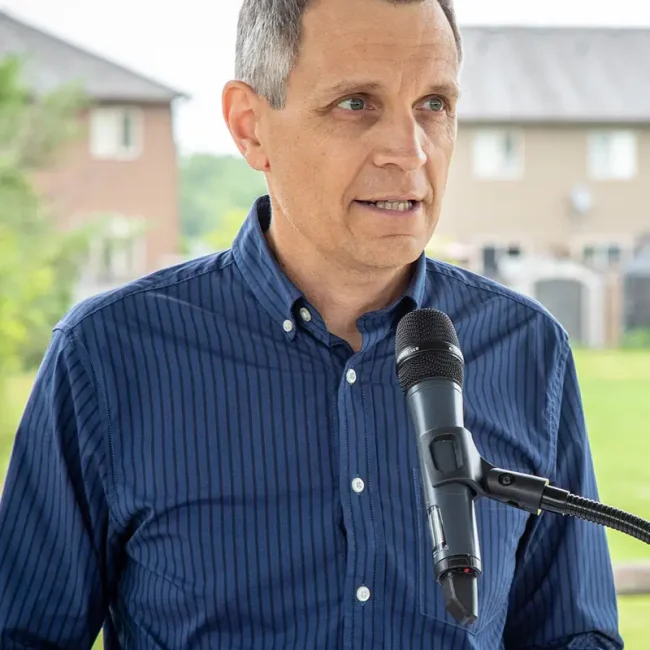
Mark Sutcliffe
Mayor of Ottawa
- Position
- Support
- Coverage
- Extensive public information
- Evidence
- Inferred from public record
- Reviewed
- Sep 8, 2026
Supports the approved Downtown Revitalization Framework and a detailed ByWard Market transformation combining public-space redevelopment, economic activity, tourism, housing, safety, cleaning and coordinated social supports.
Key commitments
- Implement the City’s Downtown Revitalization Framework and develop measurable long-term actions.
- Redevelop key ByWard Market public assets and create new pedestrian-oriented public spaces.
- Restore the historic market building and examine mixed-use redevelopment of 70 Clarence Street.
- Improve downtown gateways, lighting, streetscapes, cleanliness and public art.
- Support tourism, events, nightlife, restaurants and local businesses.
- Increase police and security visibility while expanding paramedic and homelessness outreach.
- Add housing and diversify downtown employment beyond the federal government.
- Use federal office activity as a near-term benefit without making it the sole recovery strategy.
Read the full position
Mark Sutcliffe has made downtown and ByWard Market revitalization a major part of his current record. He supported the City’s 2026 Downtown Revitalization Framework, which seeks to rebalance land uses, diversify the economy, improve safety and transform public spaces. His public messaging describes downtown recovery as requiring new investment, local-business support, improved safety and more attractive destinations.
His ByWard Market Action Plan is more specific. It proposes restoring the historic market building at 55 ByWard Market Square as a food hall, redeveloping the 70 Clarence Street parking garage as a mixed-use destination, redesigning William Street and Market Square, creating York Street Plaza, pursuing national historic-site recognition and establishing an arts corridor between the Ottawa Art Gallery and the National Gallery.
The plan also includes stronger gateways at Rideau-Sussex and Rideau Station, lighting and art, proactive cleaning, increased police presence, the Neighbourhood Operations Centre, dedicated community officers, additional security, downtown paramedics, redesigned homelessness outreach and partnerships related to substance-use supports.
Sutcliffe also welcomes the additional downtown activity generated by federal return-to-office requirements, but the City’s framework acknowledges that Ottawa must reduce its dependence on the federal office market. His broader strategy includes more housing, tourism, events, nightlife, cultural activity and private-sector economic development.
The principal evaluation questions are whether major ByWard projects receive funding and proceed on schedule, whether safety investments improve both actual and perceived safety, whether vulnerable residents are connected to housing and care rather than simply displaced, and whether the downtown attracts permanent residents and private employment beyond the federal government.
Supporting sources (5)
- ByWard Market Action Plan Office of Mayor Mark Sutcliffe · Feb 17, 2026 Open source ↗
- Big progress on transit, roads, and housing Office of Mayor Mark Sutcliffe · Apr 25, 2026 Open source ↗
- Council approves federal partnership for 3,000 new homes City of Ottawa · Apr 22, 2026 Open source ↗
- Council approves projects to enhance the downtown and ByWard Market experience City of Ottawa · May 27, 2026 Open source ↗
- Streets Seats will expand in 2026 Office of Mayor Mark Sutcliffe · Oct 9, 2025 Open source ↗
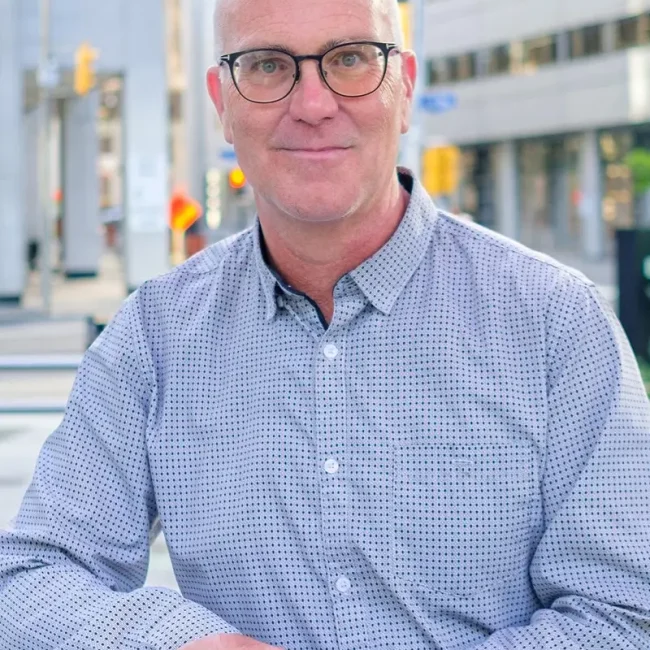
Jeff Leiper
Mayoral Candidate
- Position
- Support
- Coverage
- Moderate public information
- Evidence
- Direct campaign platform
- Reviewed
- Sep 8, 2026
Would emphasize downtown housing, reliable transit, maintained public spaces, alternative crisis response and a more resident-focused economy, but has not yet released a dedicated downtown revitalization platform.
Key commitments
- Add non-profit and permanently affordable housing using City land and long-term leases.
- Protect existing affordable rentals through a City acquisition fund.
- Restore transit service and establish measurable reliability standards.
- Expand dedicated bus lanes serving the downtown.
- Address public-space and City-asset maintenance backlogs.
- Create neighbourhood funding for lighting, parks and small public-space improvements.
- Expand civilian crisis response and focus police on core community-safety duties.
- Publish a dedicated plan for office conversion, downtown businesses, tourism, nightlife and major public-realm projects.
Read the full position
Jeff Leiper’s campaign has not published a standalone downtown revitalization plan. His likely approach can nevertheless be evaluated through his official commitments on housing, transit, public spaces and community safety.
His housing platform proposes 1,500 new non-profit homes per year, use of City-owned land through long-term leases, faster non-profit approvals and an acquisition fund to preserve affordable rentals. Applied downtown, these tools could add permanent residents and protect lower-cost housing, helping shift the core from an office district toward a complete mixed-use community.
Leiper also proposes restoring transit service, creating a Transit Service Guarantee and expanding dedicated bus lanes. Reliable transit is central to downtown revitalization because the core cannot accommodate unlimited growth in car traffic and parking.
His public-space platform calls for addressing maintenance backlogs and creating a Neighbourhood Improvement Fund for parks, lighting and small-scale improvements. His safety platform would make ANCHOR permanent, expand civilian crisis response and focus police on core safety work. Together, these policies suggest a resident- and service-oriented downtown strategy rather than one built mainly around returning office workers.
However, Leiper has not yet identified downtown office-conversion targets, specific ByWard Market projects, business-support programs, nightlife or tourism initiatives, major public-realm capital commitments or a financing plan. His confidence rating is therefore medium rather than high.
Supporting sources (4)
- A City That Works — Housing That Works Jeff Leiper 2026 Campaign Open source ↗
- A City That Works — Transit That Works Jeff Leiper 2026 Campaign Open source ↗
- A City That Works for People Jeff Leiper 2026 Campaign Open source ↗
- Committee approves revitalization framework for downtown Ottawa City of Ottawa · Apr 7, 2026 Open source ↗
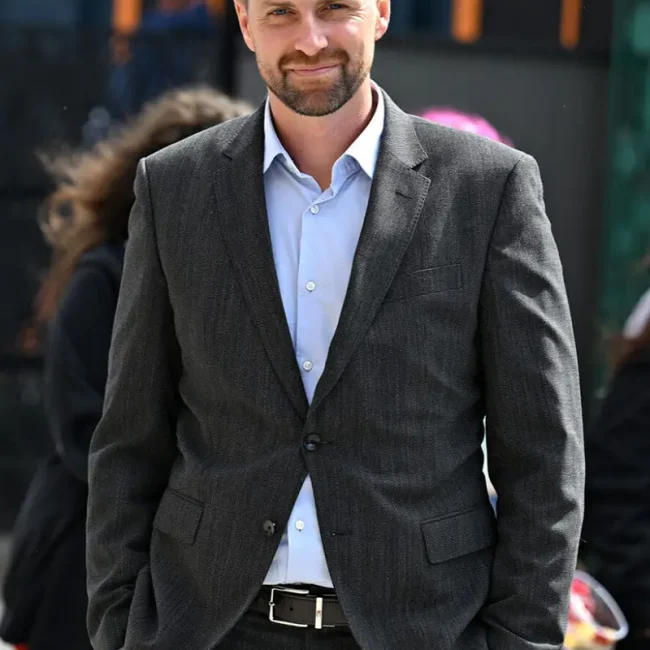
Alex Lawson
Mayoral Candidate
- Position
- Under Review
- Coverage
- Limited public information
- Evidence
- No clear public position found
- Reviewed
- Sep 8, 2026
Has not published a dedicated downtown plan; his existing campaign focuses on reliable basic services, transit operations, faster housing approvals and management accountability.
Key commitments
- No verified standalone downtown revitalization policy was available.
- Improve reliability of transit and other basic City services.
- Accelerate housing approvals and reduce unnecessary process delays.
- Apply management accountability to City programs and capital projects.
- Limit insider lobbying through his proposed governance reforms.
- Publish specific commitments on office conversion, the ByWard Market, public spaces, downtown business and social supports.
Read the full position
Alex Lawson had not released a dedicated downtown revitalization platform as of July 29, 2026. Compare Ottawa therefore cannot verify his position on office conversion, ByWard Market redevelopment, downtown public-realm investment, nightlife, tourism, business incentives or the balance between enforcement and social supports.
His campaign’s published themes are relevant but general. Lawson promises to improve unreliable transit, maintain roads, improve snow removal, accelerate housing approvals and make basic City services more dependable. A downtown recovery strategy built around those principles would likely focus first on operational performance and visible service delivery.
His governance proposals also emphasize accountability and limiting insider influence. These could affect how the City procures and oversees major redevelopment projects, although Lawson has not applied them specifically to downtown assets or public-private partnerships.
The absence of a detailed policy is significant because downtown revitalization requires coordinated land-use, housing, economic development, safety, transportation and social-service decisions. Lawson still needs to identify measurable objectives, priority projects, funding sources and the role he expects the federal government and National Capital Commission to play.
Until those commitments are published, his overall position remains under review.
Supporting sources (3)

Neil Saravanamuttoo
Economist and community advocate
- Position
- Under Review
- Coverage
- Limited public information
- Evidence
- Candidate statement or interview
- Reviewed
- Sep 8, 2026
Saravanamuttoo supports stronger communities, lower everyday costs and more accountable investment, but has not yet released a detailed downtown revitalization strategy.
Key commitments
- Improve affordable transit access.
- Redirect savings toward housing, parks and community services.
- No dedicated downtown revitalization strategy identified as of July 29, 2026.
Read the full position
Saravanamuttoo’s campaign argues that Ottawa should redirect resources away from poorly scrutinized major deals and toward neighbourhoods, housing, transit, parks and community services. His transit and affordability proposals could affect downtown access and activity.
However, no detailed downtown platform was identified covering office conversions, vacant properties, public-realm investment, tourism, nightlife, ByWard Market governance or downtown safety. This position should be treated as incomplete.
Supporting sources (2)
Evidence library
Sources used for this issue
Sources may be cited by more than one candidate position. Duplicate links are shown only once here.
- ByWard Market Action Plan Office of Mayor Mark Sutcliffe · Feb 17, 2026 Open source ↗
- Big progress on transit, roads, and housing Office of Mayor Mark Sutcliffe · Apr 25, 2026 Open source ↗
- Council approves federal partnership for 3,000 new homes City of Ottawa · Apr 22, 2026 Open source ↗
- Council approves projects to enhance the downtown and ByWard Market experience City of Ottawa · May 27, 2026 Open source ↗
- Streets Seats will expand in 2026 Office of Mayor Mark Sutcliffe · Oct 9, 2025 Open source ↗
- A City That Works — Housing That Works Jeff Leiper 2026 Campaign Open source ↗
- Committee approves revitalization framework for downtown Ottawa City of Ottawa · Apr 7, 2026 Open source ↗
- Ottawa Deserves Better Alex Lawson for Mayor Campaign Open source ↗
- The Influence Firewall Alex Lawson for Mayor Campaign · Jun 9, 2026 Open source ↗
- My priorities for Ottawa Neil Saravanamuttoo for Mayor Campaign Open source ↗
- A New Era of Responsible City Spending Neil Saravanamuttoo / the 613 · Jun 3, 2026 Open source ↗
Public transparency
How this page was assembled
This issue page compares each candidate using public campaign material, official records, interviews and credible reporting.
- Positions reviewed
- 4
- Sources cited
- 14
- Directly attributed
- 2
- Last reviewed
- Sep 8, 2026
What these labels mean
Coverage describes how much specific public information supports a summary. It does not rate the candidate or policy.
Evidence basis explains whether a conclusion comes directly from a campaign platform or statement, or is inferred from an official record, municipal policy or reporting.
How updates and corrections work
Research is revised when candidates publish new material, a source changes, or a reader identifies an error. Updates are reflected in the reviewed dates shown throughout the site.
Correction suggestions should include the page, statement and supporting source so the claim can be checked.