
Ottawa election issue
Homelessness & Supportive Housing
Compare how candidates would prevent and reduce homelessness, improve shelters and outreach, expand supportive housing, respond to encampments and connect residents with mental-health, addiction and recovery supports.
Issue overview
Why Homelessness & Supportive Housing matters
Homelessness & Supportive Housing covers people who are unhoused or at immediate risk of losing stable housing: shelters, encampments, Housing First, supportive and transitional housing, prevention and diversion, outreach, youth homelessness and wrap-around mental-health, addiction and recovery supports.
Broader housing supply, zoning, office conversion, infill and urban-sprawl policies belong under Housing & Affordability unless the candidate explicitly connects them to homelessness prevention or supportive housing.
Candidate comparison
Published positions
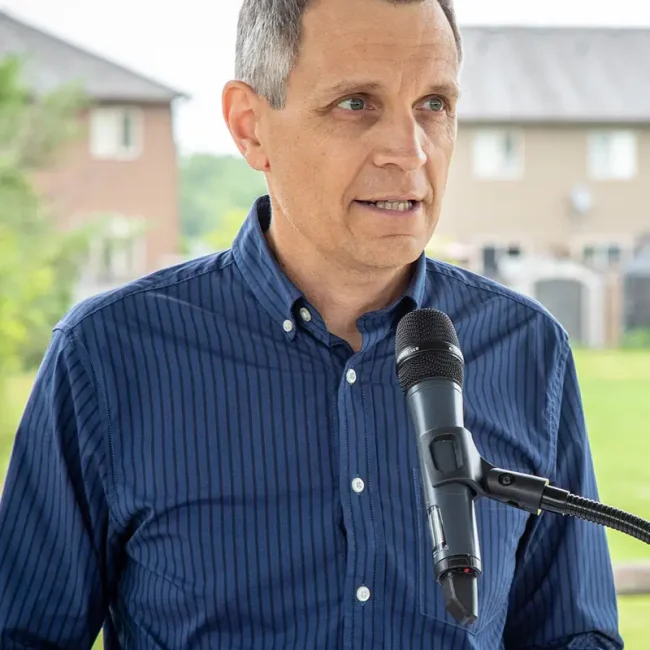
Mark Sutcliffe
Mayor of Ottawa
- Position
- Support
- Coverage
- Extensive public information
- Evidence
- Direct campaign platform
- Reviewed
- Sep 11, 2026
Has released a detailed plan focused on ending youth and chronic homelessness through prevention, Housing First, faster supportive-housing delivery, coordinated outreach and integrated mental-health, addiction and primary-care supports.
Key commitments
- End youth homelessness in Ottawa by 2030.
- Double supportive-housing delivery to about 110 units per year.
- Aim to house the current supportive-housing waitlist within five years.
- Create or capitalize a dedicated supportive-housing fund.
- Expand prevention and shelter-diversion programs.
- Expand coordinated 24/7 outreach for people experiencing unsheltered homelessness.
- Integrate supportive housing with mental-health, addiction, primary-care and peer supports.
- Expand ANCHOR and community-led crisis response.
Read the full position
Sutcliffe has a dedicated Ending Homelessness Action Plan that moves beyond general housing supply. It calls for prevention and diversion, rapid housing pathways and a substantial expansion of supportive housing. He proposes doubling supportive-housing delivery to roughly 110 units per year and housing the approximately 450 people on the supportive-housing waitlist within five years.
His plan also maintains the goal of ending youth homelessness by 2030, expands coordinated 24/7 outreach for unsheltered residents and ties supportive housing to mental-health, addiction, primary-care, peer and life-skills supports. He has also supported expanding ANCHOR and has expressed support for a provincial review of involuntary treatment in limited high-risk cases.
Supporting sources (3)
- Ending Homelessness Action Plan Mark Sutcliffe for Mayor Campaign Open source ↗
- Ending Youth Homelessness in Ottawa by 2030 Fund Ottawa Community Foundation · Apr 1, 2026 Open source ↗
- Over 40 per cent of Ottawa residents open to involuntary addiction treatment: poll iPolitics · Aug 20, 2026 Open source ↗
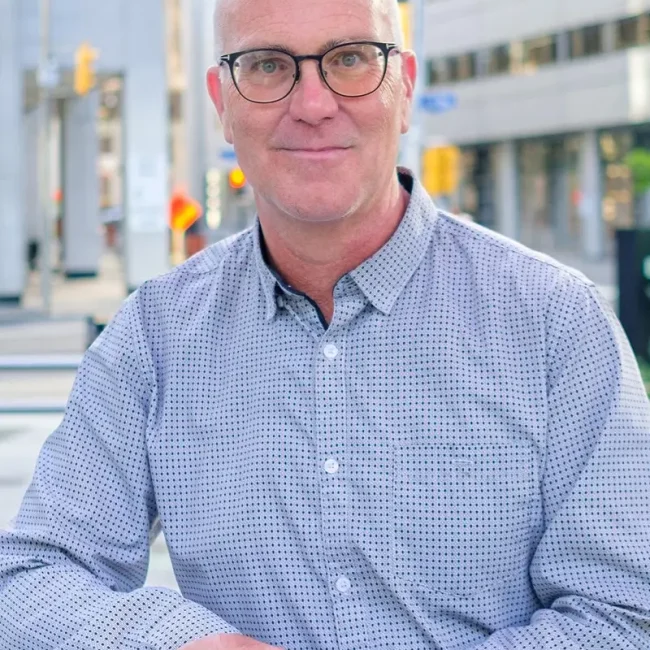
Jeff Leiper
Mayoral Candidate
- Position
- Support
- Coverage
- Moderate public information
- Evidence
- Multiple source types
- Reviewed
- Sep 11, 2026
Emphasizes permanently affordable non-profit housing, a municipal acquisition fund to preserve rentals, tougher proactive enforcement of housing standards, and expanded civilian crisis response, but still lacks a detailed homelessness plan with quantified shelter or supportive-housing targets.
Key commitments
– Prioritize permanently affordable non-profit housing as a core homelessness-prevention tool.
– Create and use a municipal acquisition fund to preserve existing affordable rental housing.
– Implement tougher, proactive enforcement of property and housing-standards bylaws to protect vulnerable tenants.
– Make the ANCHOR civilian crisis-response program permanent and expand it city-wide.
– Shift appropriate non-core police calls, including mental-health crises, to non-police response models.
– Expand access to treatment and support services for people experiencing addiction, mental illness and poverty.
Read the full position
Leiper has not released a standalone homelessness blueprint with quantified supportive-housing, shelter, encampment or outreach targets, but his public statements and platform outline several priorities.
He links homelessness prevention to permanently affordable non-profit housing and a municipal acquisition fund to protect existing rental buildings from speculative loss and renovictions. In the Yahoo homelessness comparison he also stresses tougher, proactive enforcement of property-standards bylaws as a tool to keep vulnerable tenants housed rather than pushed into homelessness.
On street-level response, his broader safety platform supports making the ANCHOR civilian crisis-response program permanent, expanding it city-wide, and shifting appropriate non-core police calls, including mental-health crises, to alternative response models. He also calls for better access to treatment and support services for people experiencing addiction, mental illness and poverty, framed around dignity rather than criminalization.
Overall, his approach focuses more on prevention, tenant protection and non-profit housing than on a quantified, time-bound homelessness-reduction plan.
Supporting sources (2)
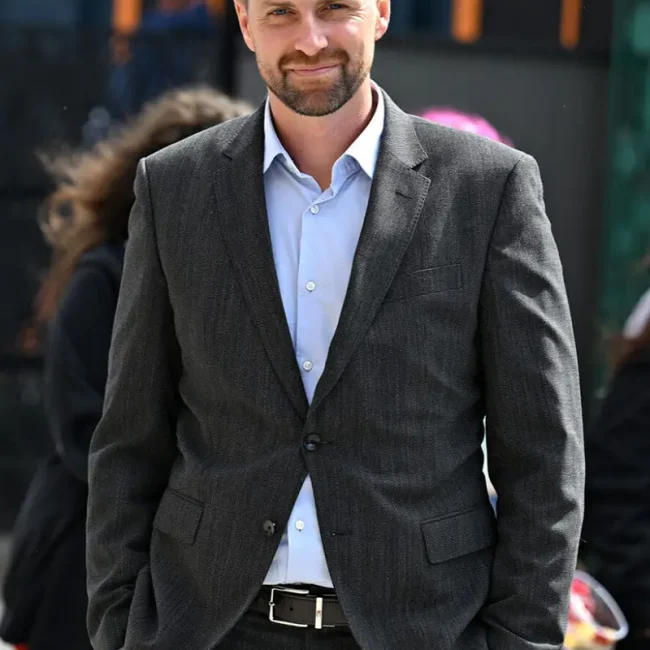
Alex Lawson
Mayoral Candidate
- Position
- Support
- Coverage
- Moderate public information
- Evidence
- Multiple source types
- Reviewed
- Sep 8, 2026
Emphasizes shelter safety, homelessness diversion and a stronger pathway from harm reduction to treatment and recovery, while promising a broader homelessness/addiction policy later in the campaign.
Key commitments
- Conduct a public 90-day review of shelter operations with emergency services and shelter providers.
- Scale homelessness-diversion programs that reduce time in shelters.
- Strengthen frontline partnerships with organizations serving people experiencing homelessness.
- Shift the municipal response toward treatment and recovery pathways rather than harm reduction alone.
- Publish fuller supportive-housing, treatment and implementation targets as the campaign develops.
Read the full position
Lawson’s May housing plan contains distinct homelessness commitments that belong in a separate category: a public 90-day review of shelter operations involving police, paramedics and shelter providers, and expansion of homelessness-diversion programs and frontline partnerships. He argues that unsafe shelter conditions and public disorder require stronger management and accountability.
In August, Lawson told iPolitics that harm reduction should lead toward recovery and said his focus would be on getting people connected to help and off the streets. He said a broader policy would follow. Because detailed supportive-housing, treatment-capacity and encampment targets remain unpublished, this position is substantive but still incomplete.
Supporting sources (2)

Neil Saravanamuttoo
Economist and community advocate
- Position
- Support
- Coverage
- Extensive public information
- Evidence
- Direct campaign platform
- Reviewed
- Sep 11, 2026
Proposes a homelessness strategy combining immediate street-level measures like tiny homes, rapid-access detox and expanded non-police crisis response with increased transitional and long-term social housing, affordable units with wrap-around services, city-wide ANCHOR expansion and openness to reviewing compassionate-care intervention rules.
Key commitments
– Build transitional tiny homes as part of the immediate homelessness response.
– Expand ANCHOR services across Ottawa.
– Increase affordable and social housing with wrap-around services, including transitional and permanent supportive options.
– Expand non-police crisis response for mental health and addiction-related calls.
– Provide rapid-access detox and same-day recovery treatment options.
– Use rapid-response teams to remove needles and other street debris.
– Remain open to reviewing compassionate-care and intervention rules.
Read the full position
Neil Saravanamuttoo presents homelessness as requiring both immediate street-level action and longer-term housing solutions. He supports building transitional tiny homes and other temporary or transitional shelter options, paired with rapid-access detox and recovery services, expanded non-police crisis response, and rapid-response cleanup teams for needles and other debris.
Over the medium and long term, he argues the city must increase affordable and social housing with wrap-around services, including both transitional and permanent supportive options. He backs expanding ANCHOR across Ottawa and emphasizes that non-police crisis response should be scaled up to handle more mental health and addiction-related calls. He has also said the city should remain open to reviewing compassionate-care and intervention rules to better support people with severe addiction or mental illness.
His campaign still has not released detailed supportive-housing production targets or a fully costed homelessness strategy, but the combination of tiny homes, rapid detox access, expanded crisis response and commitments to both transitional and long-term social housing outlines a more integrated approach than previously documented.
Supporting sources (3)
- Over 40 per cent of Ottawa residents open to involuntary addiction treatment: poll iPolitics · Aug 20, 2026 Open source ↗
- Mayoral candidate Neil Saravanamuttoo promises to build transitional tiny homes and ... - CTV News CTV News · Sep 3, 2026 Open source ↗
- Mayoral candidate Neil Saravanamuttoo promises to build transitional tiny homes and ... - CTV News CTV News · Sep 2, 2026 Open source ↗
Evidence library
Sources used for this issue
Sources may be cited by more than one candidate position. Duplicate links are shown only once here.
- Ending Homelessness Action Plan Mark Sutcliffe for Mayor Campaign Open source ↗
- Ending Youth Homelessness in Ottawa by 2030 Fund Ottawa Community Foundation · Apr 1, 2026 Open source ↗
- Over 40 per cent of Ottawa residents open to involuntary addiction treatment: poll iPolitics · Aug 20, 2026 Open source ↗
- A City That Works — Safety That Works Jeff Leiper for Mayor Campaign Open source ↗
- Build the Way Out – Housing in Ottawa Alex Lawson for Mayor Campaign · May 4, 2026 Open source ↗
- Mayoral candidate Neil Saravanamuttoo promises to build transitional tiny homes and ... - CTV News CTV News · Sep 3, 2026 Open source ↗
- Mayoral candidate Neil Saravanamuttoo promises to build transitional tiny homes and ... - CTV News CTV News · Sep 2, 2026 Open source ↗
Public transparency
How this page was assembled
This issue page compares each candidate using public campaign material, official records, interviews and credible reporting.
- Positions reviewed
- 4
- Sources cited
- 10
- Directly attributed
- 2
- Last reviewed
- Sep 11, 2026
What these labels mean
Coverage describes how much specific public information supports a summary. It does not rate the candidate or policy.
Evidence basis explains whether a conclusion comes directly from a campaign platform or statement, or is inferred from an official record, municipal policy or reporting.
How updates and corrections work
Research is revised when candidates publish new material, a source changes, or a reader identifies an error. Updates are reflected in the reviewed dates shown throughout the site.
Correction suggestions should include the page, statement and supporting source so the claim can be checked.