
Ottawa election issue
Property Taxes & City Spending
Compare how Ottawa's mayoral candidates would balance property-tax affordability, service quality, municipal spending, efficiencies and funding from other levels of government.
Issue overview
Why Property Taxes & City Spending matters
Property taxes are Ottawa’s principal locally controlled source of revenue and one of the clearest ways residents experience municipal decisions. The debate is not simply whether taxes should rise or fall. Council must balance household affordability against the cost of transit, policing, roads, snow clearing, libraries, public health, housing, emergency services and the repair of aging infrastructure. Ontario municipalities must adopt balanced operating budgets, so lower tax increases normally require some combination of service reductions, efficiencies, user-fee increases, reserve use, delayed capital work or additional funding from other governments.
Ottawa’s adopted 2026 budget contains a $5.2-billion operating budget, a $1.9-billion capital budget and an overall net property-tax increase of 3.75 percent. The City estimated that this would add approximately $166 to the annual bill of an average urban or suburban homeowner and $93 to the bill of an average rural homeowner. The all-in increase reflects different levy pressures, including substantial increases for transit and police, rather than an identical increase in every municipal service.
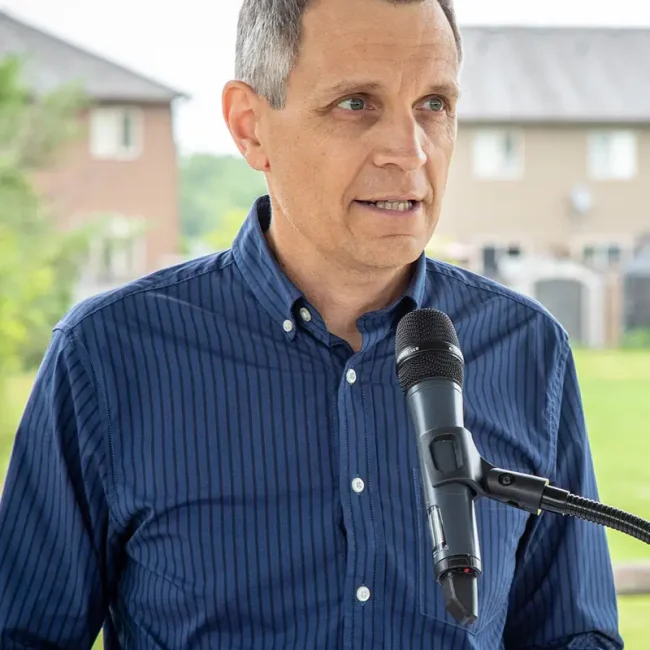
Mark Sutcliffe defends a tax-restraint approach. He argues that Ottawa has kept increases below those of other major Canadian cities while still increasing investment in transit, public safety, roads, housing and other priorities. He points to $253 million in identified savings and efficiencies and more than $1 billion attracted from other levels of government. His position is that affordability requires continued spending discipline, operational efficiencies and outside funding rather than larger local tax increases.
Jeff Leiper has challenged the practice of setting a tax ceiling before determining what services actually need. He voted against the adopted 2026 budget and argued that years of restrained tax increases have left multiple services underfunded. His approach places greater weight on service adequacy and transparent trade-offs. The evidence reviewed shows that he is more open than Sutcliffe to tax increases when required to fund reliable services, but his campaign has not yet published a precise annual tax target or a complete citywide fiscal plan.
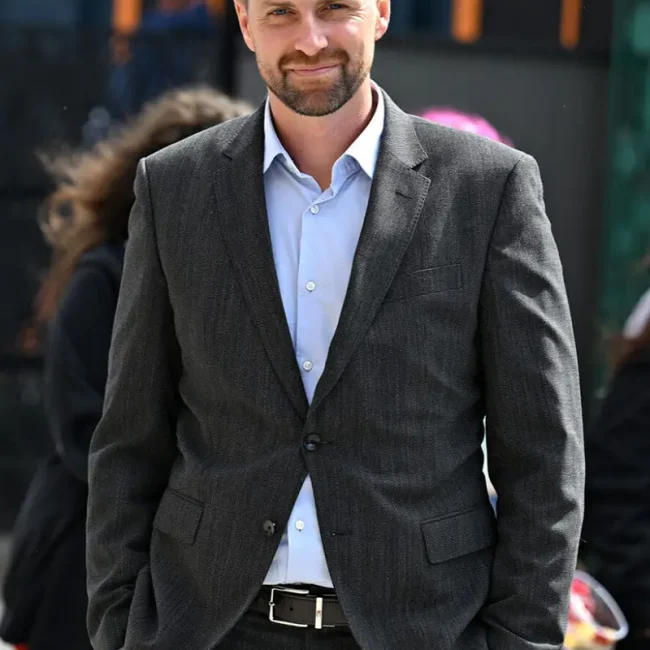
Alex Lawson’s campaign says residents are paying more while basic services perform poorly and repeatedly frames Ottawa’s problems as failures of management, priorities and execution. His published policies call for operational reviews and accountability before major new spending in areas such as transit. As of the verification date, however, his campaign has not published a specific property-tax ceiling, freeze, reduction, or complete municipal budget plan. His entry is therefore intentionally more cautious and carries a lower confidence rating.
The key comparison is between tax restraint, service investment and managerial reform. Voters should look not only at a promised tax percentage, but also at which services would expand or contract, whether savings are recurring, how capital repairs would be funded, what assumptions depend on federal or provincial money, and whether fees or charges would rise outside the headline property-tax number.
Candidate comparison
Published positions
Mark Sutcliffe
Mayor of Ottawa
- Position
- Support
- Coverage
- Extensive public information
- Evidence
- Multiple source types
- Reviewed
- Sep 8, 2026
Prioritizes restrained property-tax increases, recurring savings and efficiencies, and additional federal and provincial funding while maintaining investment in core services.
Key commitments
- Keep property-tax increases as low and predictable as possible during an affordability crisis.
- Continue identifying savings and efficiencies within City operations.
- Seek a larger federal and provincial contribution toward transit, infrastructure and other shared pressures.
- Maintain investment in public safety, transit, roads, housing and core municipal services.
- Avoid larger tax increases advocated by councillors who favour additional spending.
- Present municipal affordability as a combination of restrained taxes, service investment and external funding.
Read the full position
Mark Sutcliffe presents low and predictable property-tax increases as a central part of municipal affordability. He supported the 2026 budget direction capping the overall increase at 3.75 percent and the adopted budget at that level. His communications argue that Ottawa’s increases during his term have remained lower than those in other major Canadian cities, while the City continued to invest in transit, policing, roads, sidewalks, housing and support for vulnerable residents.
Sutcliffe says the City identified $253 million in savings and efficiencies, which he characterizes as avoiding the equivalent of a substantially larger tax increase. His approach combines spending reviews and administrative efficiencies with efforts to obtain additional federal and provincial contributions for services and infrastructure that he argues should not be financed solely by Ottawa property taxpayers.
The 2026 adopted budget nevertheless raised the overall property-tax requirement by 3.75 percent. City figures estimated an additional $166 annually for an average urban or suburban homeowner and $93 for an average rural homeowner. Sutcliffe describes this as a balanced affordability measure rather than a tax freeze, because the City also faced cost inflation and service pressures, especially in transit and public safety.
His campaign material reviewed for this entry does not yet publish a firm tax ceiling for every year of the 2027–2030 term. The clearest evidence is therefore his current record and stated commitment to continue keeping increases low through savings, efficiencies and outside funding. Evaluation should also distinguish recurring operational savings from one-time measures and verify that promised service investments remain fully funded.
Supporting sources (5)
- Building a stronger Ottawa, together — Affordability Mark Sutcliffe 2026 Campaign Open source ↗
- Fighting big tax increases Office of Mayor Mark Sutcliffe · Jul 31, 2026 Open source ↗
- 2026 City Budget Office of Mayor Mark Sutcliffe Open source ↗
- Council approves Ottawa's 2026 Budget City of Ottawa · Dec 10, 2025 Open source ↗
- Council approves 2026 budget directions City of Ottawa · Sep 10, 2025 Open source ↗

Jeff Leiper
Mayoral Candidate
- Position
- Support
- Coverage
- Moderate public information
- Evidence
- Council vote or motion
- Reviewed
- Sep 8, 2026
Rejects setting a tax ceiling before assessing service needs and is more willing to consider additional revenue when required to provide reliable, adequately funded municipal services.
Key commitments
- Assess the resources required to deliver reliable municipal services before fixing the overall tax target.
- Address what he describes as long-term underfunding across multiple City services.
- Make the relationship between tax levels, service standards and budget trade-offs more transparent.
- Prioritize a city whose transit, housing programs and everyday services function reliably.
- Publish a fuller fiscal platform before voters can evaluate his exact tax and spending targets.
Read the full position
Jeff Leiper’s clearest property-tax position comes from his opposition to Ottawa’s adopted 2026 budget. He was one of four councillors who voted against it. In explaining his vote, he argued that Council’s method of first setting a tax target and then forcing every service to compete within that predetermined amount does not properly fund the services residents expect.
Leiper said that multiple municipal services have become underfunded after years of low increases. This places him in a different fiscal position from Sutcliffe: he gives greater priority to determining actual service needs before fixing the tax number and appears more willing to accept a higher increase where the alternative is unreliable or deteriorating service.
This does not establish that Leiper supports unlimited spending or any specific tax increase. His campaign message is built around a ‘city that works,’ with reliable transit, housing action and functioning services. The reviewed campaign pages do not yet contain a complete fiscal framework identifying an annual property-tax target, detailed departmental reductions, new revenue sources or the exact cost of all campaign commitments.
Accordingly, his position is best described as service-needs-first budgeting with transparent trade-offs, rather than a numerical tax promise. The entry should be updated when he releases a formal budget or taxation platform. Until then, claims about the exact increase he would propose would be speculative.
Supporting sources (5)
- Ottawa council passes $5.2-billion 2026 budget including 3.75% property tax hike CBC News / Yahoo News Canada · Dec 10, 2025 Open source ↗
- City council approves the 2026 budget — tax increases and all Ottawa Lookout · Dec 12, 2025 Open source ↗
- Jeff Leiper for Mayor Jeff Leiper 2026 Campaign Open source ↗
- A City That Works Jeff Leiper 2026 Campaign Open source ↗
- Council approves Ottawa's 2026 Budget City of Ottawa · Dec 10, 2025 Open source ↗
Alex Lawson
Mayoral Candidate
- Position
- Support
- Coverage
- Moderate public information
- Evidence
- Multiple source types
- Reviewed
- Sep 8, 2026
Emphasizes fixing management, accountability and basic service delivery before asking residents to pay more, but has not yet published a specific property-tax target or complete fiscal plan.
Key commitments
- Improve management and accountability before relying on major new spending.
- Focus municipal resources on reliable delivery of roads, snow removal, garbage, transit and other basics.
- Use operational reviews and measurable performance standards to identify failures and savings.
- Demonstrate better value for existing taxpayer dollars.
- Publish a specific tax target and costed fiscal plan; neither was available as of the verification date.
Read the full position
Alex Lawson’s campaign repeatedly argues that Ottawa residents face rising costs while receiving unreliable basic services. His central message is that City Hall should improve management, execution and accountability rather than treating additional spending as the first answer. In his transit policy, for example, he calls for operational reform and an independent management review before a major new funding injection.
That philosophy is relevant to property taxes because it suggests a preference for demonstrating value from existing spending, reviewing management and redirecting resources before increasing the burden on residents. His campaign also emphasizes dependable roads, snow removal, garbage collection and other basics rather than adding complex new programs without clear delivery.
However, the reviewed official material does not contain a dedicated property-tax policy. Lawson has not yet committed to a freeze, a reduction, a fixed annual ceiling or a particular all-in increase. Nor has he published a complete municipal budget showing the value of proposed efficiencies, the cost of his commitments, the use of reserves, or how infrastructure and collective-agreement pressures would be funded.
Compare Ottawa therefore characterizes his present position as management-first and value-for-money focused, not as a verified low-tax platform. The confidence rating is medium-low and should be raised only after the campaign publishes numerical tax and spending commitments.
Supporting sources (4)
- Ottawa Deserves Better Alex Lawson for Mayor Campaign Open source ↗
- Fix the basics: The Lawson plan for OC Transpo Alex Lawson for Mayor Campaign · May 13, 2026 Open source ↗
- Mayoral candidate Alex Lawson is ready to deliver results iPolitics · Jun 30, 2026 Open source ↗
- The Influence Firewall Alex Lawson for Mayor Campaign · Jun 9, 2026 Open source ↗

Neil Saravanamuttoo
Economist and community advocate
- Position
- Support
- Coverage
- Extensive public information
- Evidence
- Direct campaign platform
- Reviewed
- Sep 8, 2026
Saravanamuttoo proposes 100 days of open books, spending benchmarks, zero-based budgeting, procurement reform and smarter growth before deciding future property-tax rates.
Key commitments
- Open Books, 100 Days.
- Benchmark Ottawa’s costs against comparable cities.
- Publish contracts, procurement data and change orders.
- Introduce zero-based budgeting.
- Reform spending before setting future property-tax policy.
- Pursue a new fiscal deal for municipalities.
Read the full position
Saravanamuttoo’s fiscal platform argues that Ottawa must first identify waste, compare its costs with other cities and reform budgeting before asking residents to pay more. His Open Books proposal would publish contracts, procurement information, change orders and spending decisions for public scrutiny.
He proposes zero-based budgeting, under which departments would justify spending from scratch rather than automatically carrying prior budgets forward. He also wants to end preferential development deals, reduce the long-term cost of outward expansion and build a national coalition for a new municipal fiscal arrangement.
He explicitly declines to promise a fixed future tax rate before completing this review, saying an inflation cap without structural reform could defer infrastructure costs to future taxpayers.
Supporting sources (3)
Evidence library
Sources used for this issue
Sources may be cited by more than one candidate position. Duplicate links are shown only once here.
- Building a stronger Ottawa, together — Affordability Mark Sutcliffe 2026 Campaign Open source ↗
- Fighting big tax increases Office of Mayor Mark Sutcliffe · Jul 31, 2026 Open source ↗
- 2026 City Budget Office of Mayor Mark Sutcliffe Open source ↗
- Council approves Ottawa's 2026 Budget City of Ottawa · Dec 10, 2025 Open source ↗
- Council approves 2026 budget directions City of Ottawa · Sep 10, 2025 Open source ↗
- Ottawa council passes $5.2-billion 2026 budget including 3.75% property tax hike CBC News / Yahoo News Canada · Dec 10, 2025 Open source ↗
- City council approves the 2026 budget — tax increases and all Ottawa Lookout · Dec 12, 2025 Open source ↗
- Jeff Leiper for Mayor Jeff Leiper 2026 Campaign Open source ↗
- A City That Works Jeff Leiper 2026 Campaign Open source ↗
- Ottawa Deserves Better Alex Lawson for Mayor Campaign Open source ↗
- Fix the basics: The Lawson plan for OC Transpo Alex Lawson for Mayor Campaign · May 13, 2026 Open source ↗
- Mayoral candidate Alex Lawson is ready to deliver results iPolitics · Jun 30, 2026 Open source ↗
- The Influence Firewall Alex Lawson for Mayor Campaign · Jun 9, 2026 Open source ↗
- A New Era of Responsible City Spending Neil Saravanamuttoo / the 613 · Jun 3, 2026 Open source ↗
- My priorities for Ottawa Neil Saravanamuttoo for Mayor Campaign Open source ↗
- Mayoral candidate Neil Saravanamuttoo says smarter spending can fix Ottawa iPolitics · Jun 25, 2026 Open source ↗
Public transparency
How this page was assembled
This issue page compares each candidate using public campaign material, official records, interviews and credible reporting.
- Positions reviewed
- 4
- Sources cited
- 17
- Directly attributed
- 1
- Last reviewed
- Sep 8, 2026
What these labels mean
Coverage describes how much specific public information supports a summary. It does not rate the candidate or policy.
Evidence basis explains whether a conclusion comes directly from a campaign platform or statement, or is inferred from an official record, municipal policy or reporting.
How updates and corrections work
Research is revised when candidates publish new material, a source changes, or a reader identifies an error. Updates are reflected in the reviewed dates shown throughout the site.
Correction suggestions should include the page, statement and supporting source so the claim can be checked.