
Ottawa election issue
Economic Development & Jobs
Compare how Ottawa's mayoral candidates would attract investment, create jobs, support small and rural businesses, revitalize downtown, grow tourism and strengthen key economic sectors.
Issue overview
Why Economic Development & Jobs matters
Economic development is the work of creating the local conditions in which businesses can start, invest, expand and create employment. The City does not control interest rates, federal or provincial income taxes, international trade policy or most labour and immigration rules. It does control or influence zoning, development approvals, infrastructure, municipal taxes and fees, business-support partnerships, tourism promotion, public-realm investment, employment lands, downtown revitalization and the delivery of many services businesses rely on.
Ottawa’s economy is unusually diverse but remains strongly connected to the federal government. The City’s 2026 economic-development update described near-term growth as modest while identifying technology, defence, tourism, construction and manufacturing as important sources of resilience and diversification. Ottawa’s technology sector includes more than 1,800 firms and approximately 94,000 skilled workers, while its defence cluster includes more than 330 firms.
The City’s current Economic Development Strategy is organized around growth, diversification and resilience. Its supporting work includes downtown revitalization, rural economic development, nightlife, tourism, creative industries, small-business support, workforce development and investment attraction. The City also works through partners such as Invest Ottawa, Ottawa Tourism, Business Improvement Areas, colleges, universities and sector organizations.
Downtown recovery is a central economic issue. Ottawa continues to face reduced daytime foot traffic, elevated office vacancy, federal workplace changes, land-use imbalance and public-realm and community-safety concerns. The City’s 2026 Downtown Revitalization Framework focuses on rebalancing residential, commercial, institutional and tourism uses; diversifying the downtown economy; improving community safety and well-being; and transforming public spaces and destinations.
Rural economic development is also significant because most of Ottawa’s land area is rural. In 2026, Council approved a rural economic-development plan that includes a dedicated business liaison, stronger navigation support, promotion of rural tourism, film and events, and work to make rural employment areas and on-farm diversified businesses more viable.
Mark Sutcliffe’s economic approach is the most directly documented through his mayoral record and action plans. It emphasizes downtown and ByWard Market revitalization, infrastructure, housing approvals, tourism and events, rural business support, business tax relief and economic diversification. His ByWard Market plan combines public-realm redevelopment, tourism, business activity, safety and social supports.
Jeff Leiper has not published a standalone economic-development strategy. His campaign argues that reliable transit, affordable and non-profit housing, maintained public facilities, transparent government and effective neighbourhood services are economic foundations because they help residents reach jobs, reduce operating uncertainty and make Ottawa attractive to workers and employers. The direction is clear, but quantified job, investment, tourism, small-business and rural-development targets have not been released.
Alex Lawson has not published a comprehensive economic-development plan. His campaign’s emphasis on faster approvals, reliable transit and services, spending review and accountable management may affect the investment climate, but Compare Ottawa does not infer detailed positions on Invest Ottawa, tourism, downtown office conversion, rural business, sector development or economic incentives where none have been published.
Candidate plans should be compared using measurable results: private investment attracted, employment growth, new and surviving businesses, commercial vacancy, downtown foot traffic, tourism spending, permit and approval timelines, expansion of the commercial and industrial tax base, rural business growth, workforce participation and transparent reporting on the cost and impact of municipal programs.
Candidate comparison
Published positions
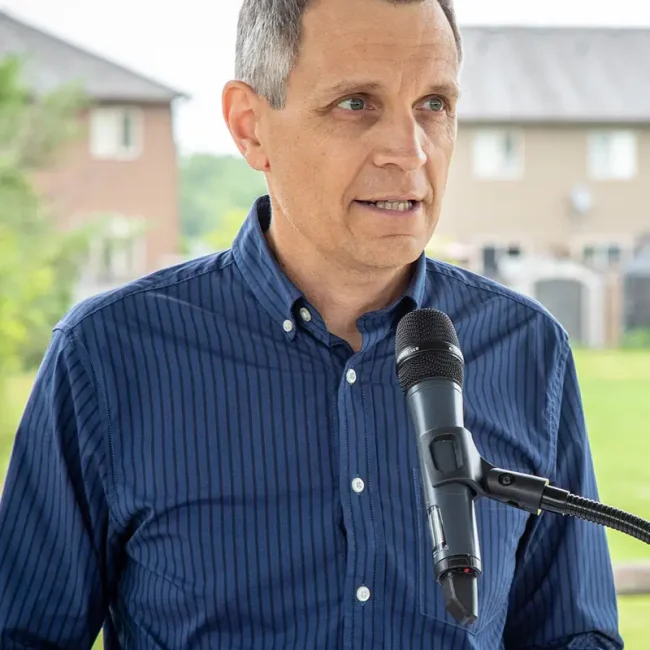
Mark Sutcliffe
Mayor of Ottawa
- Position
- Support
- Coverage
- Extensive public information
- Evidence
- Multiple source types
- Reviewed
- Sep 8, 2026
Supports economic diversification through downtown and ByWard Market renewal, housing and infrastructure investment, tourism and major events, rural business support, streamlined approvals, municipal tax relief and reduced interprovincial trade barriers with Gatineau.
Key commitments
– Implement the Downtown Revitalization Framework and detailed action planning.
– Redevelop and improve public spaces in the ByWard Market.
– Support technology, defence, tourism, construction and manufacturing diversification.
– Use major events, culture and the nighttime economy to attract visitors and spending.
– Streamline housing and development approvals and reduce procedural delays.
– Maintain small-business property-tax relief and BIA support.
– Implement the rural economic-development plan and rural business liaison.
– Invest in transit, roads and other infrastructure that supports employment and investment.
– Work with Gatineau to reduce interprovincial trade barriers that affect local businesses and jobs.
– Publish transparent job, investment, vacancy and program-performance results.
Read the full position
Mark Sutcliffe’s economic-development position is reflected in City strategies and action plans advanced during his term. His approach combines infrastructure and housing growth with downtown revitalization, tourism, small-business measures, rural development, sector diversification and new efforts to reduce interprovincial trade barriers with Gatineau.
The 2026 Downtown Revitalization Framework identifies a stronger downtown economy as essential to investment, talent attraction and entrepreneurship. It proposes rebalancing downtown land uses, diversifying the economy, improving safety and well-being and upgrading public places and destinations. Sutcliffe’s separate ByWard Market Action Plan includes redevelopment of 55 ByWard Market Square, a proposed food hall, redevelopment of 70 Clarence Street, redesign of William Street and Market Square, a York Street event space, improved gateways, cleaning, security and outreach.
The City’s 2026 economic-development update highlights diversification in technology, defence, tourism, construction and manufacturing. It also identifies workforce development, small-business growth, BIA expansion, rural development, culture and the nighttime economy as priorities. In addition, Sutcliffe has signed an agreement with Gatineau’s mayor intended to reduce interprovincial trade barriers between the two cities, positioning closer cross-river economic integration as a tool to support businesses and manage cost pressures in a challenging trade environment.
Council’s 2026 tax policy included a 15 percent reduction for eligible small-business commercial and industrial properties, described by the City as providing $12.6 million in municipal tax savings. Council also approved a rural economic-development plan with a business liaison, tourism promotion and support for employment areas and diversified farm uses.
Sutcliffe’s Housing Action Plan links economic growth to faster approvals, fewer procedural bottlenecks, more flexible fees and charges and transit-oriented development. The key accountability questions are whether these measures, including reduced trade barriers with Gatineau, produce net new jobs and investment, how incentives are evaluated, whether growth reaches rural and lower-income communities and how downtown and intermunicipal outcomes will be independently measured.
Supporting sources (5)
- Committee approves revitalization framework for downtown Ottawa City of Ottawa · Apr 7, 2026 Open source ↗
- ByWard Market Action Plan Office of Mayor Mark Sutcliffe · Jul 31, 2026 Open source ↗
- Housing Action Plan Office of Mayor Mark Sutcliffe · Jul 31, 2026 Open source ↗
- Committee approves plan to help rural businesses grow and succeed City of Ottawa · May 7, 2026 Open source ↗
- Municipalities face 'trying times' as U.S. tariffs drive up costs: FCM president - iPolitics ipolitics.ca · Aug 27, 2026 Open source ↗

Jeff Leiper
Mayoral Candidate
- Position
- Support
- Coverage
- Extensive public information
- Evidence
- Direct campaign platform
- Reviewed
- Sep 8, 2026
Frames reliable transit, affordable housing, effective neighbourhood services and transparent government as the foundations of a productive and attractive local economy, but has not published a dedicated jobs and investment strategy.
Key commitments
- Create a Transit Service Guarantee and publish performance results.
- Improve access to jobs and education through more reliable transit.
- Build 1,500 non-profit homes annually to improve workforce affordability.
- Use City land and faster approvals to support housing delivery.
- Maintain public facilities and improve neighbourhood public spaces.
- Review City fees and charges for fairness and value.
- Increase transparency and public accountability at City Hall.
- Publish specific job, investment, tourism, small-business and rural-development targets.
Read the full position
Jeff Leiper has not published a standalone economic-development and jobs platform. His economic direction must therefore be assessed through the core services and city-building commitments in his ‘A City That Works’ platform.
Leiper argues that dependable transit affects access to employment and education and shapes whether Ottawa functions efficiently. His Transit Service Guarantee, public performance reporting and rider representation are intended to make the transit system more reliable and accountable—conditions that also matter to employers and workers.
His housing platform proposes 1,500 non-profit homes annually, use of City land, faster non-profit approvals and preservation of affordable rental housing. These measures are presented primarily as housing policy but also address workforce affordability and Ottawa’s ability to retain residents and talent.
His people-focused platform emphasizes maintained public facilities, longer access to community spaces, neighbourhood improvements and review of City fees. His open-government commitments may improve predictability and trust in municipal decisions.
However, Leiper has not yet published quantified targets for employment, investment attraction, commercial vacancy, tourism, downtown office conversion, small-business growth, sector development, rural business or municipal economic-development partnerships. His position is therefore supportive with medium confidence rather than a complete economic strategy.
Supporting sources (2)

Alex Lawson
Mayoral Candidate
- Position
- Support
- Coverage
- Extensive public information
- Evidence
- Direct campaign platform
- Reviewed
- Sep 8, 2026
Lawson proposes a city-led jobs and economic diversification strategy focused on helping displaced workers retrain, rebuilding Ottawa’s trades pipeline, improving youth employment pathways, attracting private-sector employers, and publishing clearer labour-market and economic-development performance data.
Key commitments
- Create an Ottawa labour-market team and publish quarterly labour-market reporting, including youth unemployment.
- Create Career Pathways Ottawa to connect displaced workers with employment and retraining opportunities.
- Use City contracting and partnerships to strengthen workforce development, skilled trades and apprenticeship pathways.
- Expand youth employment opportunities and pathways into municipal and private-sector work.
- Target private-sector employer attraction and economic diversification to reduce Ottawa’s dependence on federal employment.
- Maintain a public inventory of serviced employment land and improve reporting on employment and economic-development outcomes.
Read the full position
Lawson’s Jobs and Growth plan argues Ottawa is overly dependent on federal employment and proposes a two-part strategy: help residents get back into work while expanding the city’s private-sector employment base. Measures include an Ottawa labour-market team and quarterly youth unemployment reporting, a Career Pathways Ottawa service connecting displaced workers with jobs and retraining, workforce-development requirements in City contracting, expanded trades and apprenticeship partnerships, youth hiring commitments, targeted employer attraction, a public inventory of serviced employment land, and regular reporting on employment and economic-development outcomes.
Supporting sources (1)

Neil Saravanamuttoo
Economist and community advocate
- Position
- Under Review
- Coverage
- Moderate public information
- Evidence
- Direct campaign platform
- Reviewed
- Sep 8, 2026
Saravanamuttoo emphasizes value for money, lower household costs, stronger infrastructure decisions and a new fiscal deal for cities. A detailed business, investment and jobs strategy has not yet been released.
Key commitments
- Reform procurement and major-project oversight.
- Improve transit reliability and affordability.
- Seek a new fiscal deal for Canadian cities.
- No detailed jobs or business-development platform identified as of July 29, 2026.
Read the full position
Saravanamuttoo brings an economist’s perspective to municipal finances and infrastructure. He argues that better procurement, transparent investment decisions, reliable transit and lower long-term infrastructure costs would strengthen Ottawa’s economic foundations.
He also proposes organizing municipalities to seek a new fiscal arrangement with senior governments. The campaign has not yet published a comprehensive plan addressing small business, downtown employment, technology, tourism, workforce development, permitting or investment attraction.
Supporting sources (2)
Evidence library
Sources used for this issue
Sources may be cited by more than one candidate position. Duplicate links are shown only once here.
- Committee approves revitalization framework for downtown Ottawa City of Ottawa · Apr 7, 2026 Open source ↗
- ByWard Market Action Plan Office of Mayor Mark Sutcliffe · Jul 31, 2026 Open source ↗
- Housing Action Plan Office of Mayor Mark Sutcliffe · Jul 31, 2026 Open source ↗
- Committee approves plan to help rural businesses grow and succeed City of Ottawa · May 7, 2026 Open source ↗
- Municipalities face 'trying times' as U.S. tariffs drive up costs: FCM president - iPolitics ipolitics.ca · Aug 27, 2026 Open source ↗
- A City That Works Jeff Leiper 2026 Campaign Open source ↗
- Economic Development Strategies and Actions City of Ottawa · Jul 31, 2026 Open source ↗
- Jobs and Growth Alex Lawson for Mayor Campaign · Aug 27, 2026 Open source ↗
- A New Era of Responsible City Spending Neil Saravanamuttoo / the 613 · Jun 3, 2026 Open source ↗
- Meet Neil Saravanamuttoo Neil Saravanamuttoo for Mayor Campaign Open source ↗
Public transparency
How this page was assembled
This issue page compares each candidate using public campaign material, official records, interviews and credible reporting.
- Positions reviewed
- 4
- Sources cited
- 10
- Directly attributed
- 3
- Last reviewed
- Sep 8, 2026
What these labels mean
Coverage describes how much specific public information supports a summary. It does not rate the candidate or policy.
Evidence basis explains whether a conclusion comes directly from a campaign platform or statement, or is inferred from an official record, municipal policy or reporting.
How updates and corrections work
Research is revised when candidates publish new material, a source changes, or a reader identifies an error. Updates are reflected in the reviewed dates shown throughout the site.
Correction suggestions should include the page, statement and supporting source so the claim can be checked.