
Ottawa election issue
Federal RTO4 Impact
Compare how Ottawa's mayoral candidates would respond to the federal four-day return-to-office mandate through transit, traffic management, downtown revitalization, economic diversification and advocacy.
Issue overview
Why Federal RTO4 Impact matters
The federal government’s four-day return-to-office requirement took effect for most hybrid-eligible federal public servants on July 6, 2026, while executives had already returned five days per week on May 4. Because Ottawa contains a large concentration of federal workers, offices and commuting trips, the policy has an unusually large local impact.
The mayor and City Council do not control federal workplace policy. Ottawa cannot cancel or enforce the federal directive. The municipal question is how the City should respond to increased traffic, transit demand, parking pressure, childcare and accessibility concerns, downtown business activity, office-space demand, climate impacts and the need to build a downtown economy that does not depend on one employer.
The City prepared a Transportation and Mobility Strategy for increased travel. OC Transpo restored double-car Line 1 weekday service and identified bus routes that could require additional capacity. These actions recognize that RTO4 may strengthen transit ridership and downtown foot traffic while creating congestion and capacity problems if transportation remains unreliable.
Mark Sutcliffe has welcomed clearer and increased federal office presence as helpful to downtown activity, transit and the local economy. His municipal response emphasizes transportation readiness and downtown revitalization.
Jeff Leiper has a documented record supporting flexible work where operationally appropriate. In 2025, he moved a Council motion seeking to reverse the City’s own five-day office standard, arguing that evidence had not been provided that hybrid work reduced productivity or taxpayer value. His campaign’s transit commitments would also affect Ottawa’s response to RTO4.
Alex Lawson has not published a specific position on the federal RTO4 mandate. His transit platform emphasizes operational reliability, route design and measurable service delivery, which are relevant to absorbing additional commuting demand.
The useful comparison is therefore not whether a mayor can reverse federal policy, but how each candidate would manage transit capacity, congestion, parking, downtown revitalization, business support, worker impacts and intergovernmental coordination.
Candidate comparison
Published positions
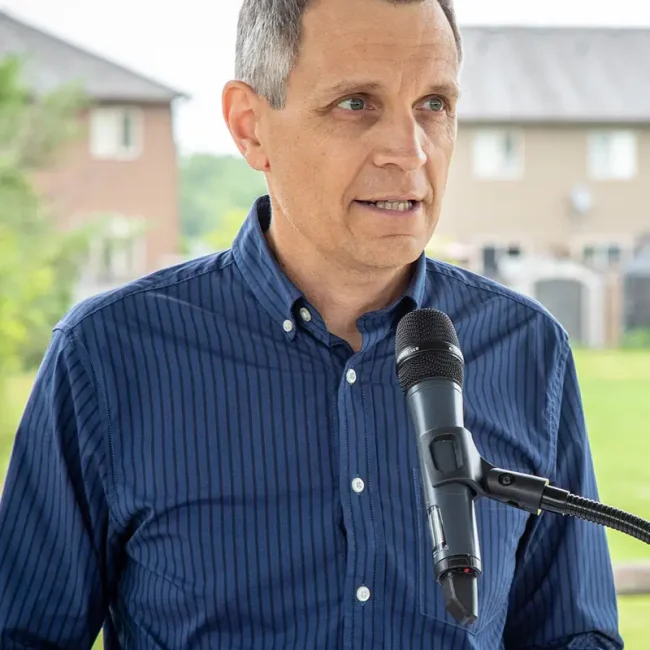
Mark Sutcliffe
Mayor of Ottawa
- Position
- Support
- Coverage
- Extensive public information
- Evidence
- Multiple source types
- Reviewed
- Sep 8, 2026
Welcomes increased and predictable federal office presence as beneficial to downtown activity and transit, while preparing City transportation systems for higher commuting demand.
Key commitments
- Prepare OC Transpo and Line 1 for increased commuting demand.
- Add or adjust bus capacity where ridership data shows pressure.
- Implement traffic, road-network and parking measures for increased weekday travel.
- Use increased office attendance to support downtown businesses and transit ridership.
- Continue downtown diversification through housing, tourism, culture and private-sector growth.
- Coordinate with the federal government on workforce plans, office locations and transportation impacts.
Read the full position
Mark Sutcliffe has consistently treated clarity about federal office attendance as important to Ottawa’s economy. His public comments have emphasized the effects on downtown businesses, commercial activity and transit ridership.
Under RTO4, the City’s practical response has focused on transportation readiness. OC Transpo restored double-car Line 1 weekday service, reviewed bus routes likely to require additional capacity and prepared for increased federal commuting. The City also developed a Transportation and Mobility Strategy covering transit, roads, traffic flow and parking.
Sutcliffe’s downtown approach also supports more housing, private-sector activity, tourism, culture and mixed uses. This matters because increased office attendance may help weekday businesses without solving office vacancy, evening activity or downtown housing challenges.
His position is best characterized as supportive of the local economic opportunity created by RTO4 and focused on implementation rather than opposition to the federal decision.
Supporting sources (3)
- Ottawa mayor, local businesses welcome expected return of federal workers to offices The Canadian Press / CityNews · Dec 16, 2022 Open source ↗
- Transportation and Mobility Strategy and Action Plan City of Ottawa · Jul 9, 2026 Open source ↗
- Transit Committee receives update on plans to address OC Transpo service reliability City of Ottawa · Jun 11, 2026 Open source ↗

Jeff Leiper
Mayoral Candidate
- Position
- Opposes
- Coverage
- Extensive public information
- Evidence
- Candidate statement or interview
- Reviewed
- Sep 8, 2026
Opposes blanket return-to-office mandates, would restore flexible work arrangements for City employees where operationally appropriate, and would press the federal government to reconsider its in-office requirements.
Key commitments
- Oppose blanket return-to-office mandates.
- Restore flexible work arrangements for City employees where operationally appropriate.
- Encourage the federal government to reconsider and reverse its return-to-office requirements.
- Advocate for additional shared federal workspaces outside downtown Ottawa to shorten commutes.
- Assess transportation, financial and environmental impacts before major City workplace-policy changes.
- Support a more residential and diversified downtown economy that is less dependent on mandatory office attendance.
Read the full position
Leiper explicitly opposes blanket return-to-office mandates, arguing they increase congestion, put additional pressure on Ottawa’s transit system and increase commuting costs for workers. In August 2026, he pledged to restore flexible work arrangements for City employees where operationally appropriate and said he would encourage the federal government to reverse its return-to-office mandates.
Leiper also proposes advocating for additional shared federal workspaces in communities including Orléans, Barrhaven and Ottawa’s south end to reduce commuting distances and pressure on the transportation network. He argues that downtown Ottawa’s economic future should rely increasingly on people living downtown rather than mandatory office attendance.
Supporting sources (2)

Alex Lawson
Mayoral Candidate
- Position
- Opposes
- Coverage
- Extensive public information
- Evidence
- Direct campaign platform
- Reviewed
- Sep 8, 2026
Opposes the federal four-day return-to-office mandate and proposes formal City opposition, more federal worksites outside the Greenbelt and restored rush-hour express buses.
Key commitments
- Formally ask the federal government to reverse the four-day return-to-office mandate.
- Use municipal land, zoning and permitting tools to facilitate federal workplaces outside the Greenbelt.
- Target areas including Kanata, Orléans, Barrhaven and the south end for additional federal workplace capacity.
- Restore station-to-station rush-hour express bus service during morning and afternoon peaks.
Read the full position
Alex Lawson published a dedicated return-to-office policy on August 5, 2026 and explicitly states that he does not support the federal four-day return-to-office mandate.
Lawson acknowledges that an Ottawa mayor cannot repeal a federal staffing policy. He proposes instead to put the City formally on record asking the federal government to reverse the four-day mandate.
He also proposes using municipal land-use, zoning and permitting powers to facilitate more federal workplaces outside the Greenbelt in areas such as Kanata, Orléans, Barrhaven and the south end. To address additional commuting demand, he would restore rush-hour station-to-station express bus service using buses Ottawa already owns or has on order, consistent with his broader transit plan.
Supporting sources (2)

Neil Saravanamuttoo
Economist and community advocate
- Position
- Opposes
- Coverage
- Extensive public information
- Evidence
- Candidate statement or interview
- Reviewed
- Sep 9, 2026
Opposes the federal four-day return-to-office mandate, supports hybrid work for remote-capable jobs, and argues workers should be evaluated on results rather than where they work.
Key commitments
- Oppose the federal four-day return-to-office mandate.
- Advocate for hybrid work for remote-capable jobs where operational requirements allow it.
- Support evaluating workers based on performance and results rather than work location.
- Push the federal government to reconsider workplace mandates when they create significant transportation and infrastructure impacts for Ottawa.
Read the full position
Saravanamuttoo explicitly opposes the federal return-to-office mandate and argues Ottawa was not prepared for the additional commuting pressure it creates. He has said he would have pushed the federal government to reconsider the mandate and criticized the current mayor for not doing so.
His position on workplace flexibility is more specifically defined by his response to the independent Ottawa Telework & Future of Work Candidate Survey 2026. For jobs that can be effectively performed remotely while maintaining service and operational requirements, Saravanamuttoo selected hybrid work as the preferred default. He also strongly agreed that workers should generally be evaluated based on their performance and results rather than where they perform their work, and said he would publicly advocate for evidence-based workplace flexibility.
His position therefore combines opposition to a blanket federal RTO4 requirement with support for hybrid workplace arrangements where operationally appropriate, while emphasizing the transportation and infrastructure consequences federal workplace decisions have for Ottawa.
Supporting sources (3)
- A New Era of Responsible City Spending Neil Saravanamuttoo / the 613 · Jun 3, 2026 Open source ↗
- Mayoral candidate Neil Saravanamuttoo says smarter spending can fix Ottawa iPolitics · Jun 25, 2026 Open source ↗
- Ottawa Telework & Future of Work Candidate Survey 2026, Findings Report Jacob Beaulieu · Sep 5, 2026 Open source ↗
Evidence library
Sources used for this issue
Sources may be cited by more than one candidate position. Duplicate links are shown only once here.
- Ottawa mayor, local businesses welcome expected return of federal workers to offices The Canadian Press / CityNews · Dec 16, 2022 Open source ↗
- Transportation and Mobility Strategy and Action Plan City of Ottawa · Jul 9, 2026 Open source ↗
- Transit Committee receives update on plans to address OC Transpo service reliability City of Ottawa · Jun 11, 2026 Open source ↗
- Five-Day-a-Week Office Standard and Working from Home iPolitics · Aug 24, 2025 Open source ↗
- A City That Works — Transit That Works Jeff Leiper 2026 Campaign Open source ↗
- Return to Office Alex Lawson for Mayor Campaign · Aug 5, 2026 Open source ↗
- Fix the basics: The Lawson plan for OC Transpo Alex Lawson for Mayor Campaign · May 1, 2026 Open source ↗
- A New Era of Responsible City Spending Neil Saravanamuttoo / the 613 · Jun 3, 2026 Open source ↗
- Mayoral candidate Neil Saravanamuttoo says smarter spending can fix Ottawa iPolitics · Jun 25, 2026 Open source ↗
- Ottawa Telework & Future of Work Candidate Survey 2026, Findings Report Jacob Beaulieu · Sep 5, 2026 Open source ↗
Public transparency
How this page was assembled
This issue page compares each candidate using public campaign material, official records, interviews and credible reporting.
- Positions reviewed
- 4
- Sources cited
- 10
- Directly attributed
- 3
- Last reviewed
- Sep 9, 2026
What these labels mean
Coverage describes how much specific public information supports a summary. It does not rate the candidate or policy.
Evidence basis explains whether a conclusion comes directly from a campaign platform or statement, or is inferred from an official record, municipal policy or reporting.
How updates and corrections work
Research is revised when candidates publish new material, a source changes, or a reader identifies an error. Updates are reflected in the reviewed dates shown throughout the site.
Correction suggestions should include the page, statement and supporting source so the claim can be checked.