
Ottawa election issue
Lansdowne 2.0
Compare the candidates' positions on the approved Lansdowne 2.0 redevelopment, including cost, risk, oversight, public space, transportation, housing, sports facilities and the City-OSEG partnership.
Issue overview
Why Lansdowne 2.0 matters
Lansdowne 2.0 is one of Ottawa’s most divisive municipal projects because it combines public infrastructure, professional sports, private development, public land, long-term partnership agreements and substantial financial risk. City Council approved the redevelopment and related partnership changes on November 7, 2025 by a vote of 15 to 10. Construction is now underway, so the 2026 mayoral debate is no longer simply whether the original plan should proceed. It is also about oversight, cost control, transparency, transportation, public-space quality and what a future mayor would do if the project encounters financial or construction problems.
The approved plan includes a new municipally owned Event Centre, new north-side stadium stands, replacement retail, public-realm improvements and two privately developed residential towers. The City described the project as delivering a publicly owned asset valued at approximately $418.8 million, with an estimated net municipal investment of $130.7 million. The Event Centre is planned for 6,600 spectators for hockey and more than 7,000 for concerts. The new north-side stands are planned for 12,400 seats, bringing total stadium capacity above 23,000.
Supporters argue that the aging arena and north stands must be replaced, that Lansdowne is an important civic and economic asset, and that the partnership structure allows Ottawa to obtain new public facilities without paying the full construction and operating costs normally associated with municipal recreation and event infrastructure. They also cite new housing, additional public space, tourism, jobs, affordable-housing proceeds from air-rights sales and guarantees intended to keep the REDBLACKS and Ottawa 67’s at Lansdowne through at least 2042.
Opponents argue that the financial projections place too much risk on taxpayers, rely on uncertain future revenues, and commit public resources that could be used for transit, housing or other priorities. They have also raised concerns about the size and location of the Event Centre, impacts on the Great Lawn and festivals, transportation and congestion, consultation with the Ottawa Charge, partnership governance and whether Council received sufficiently independent analysis before approving the deal.
Mark Sutcliffe strongly supported Lansdowne 2.0 and voted for the final plan. He describes it as a responsible investment in a City-owned asset, argues that taxpayers fund only a minority of the project cost, and says the value returned to the City exceeds its net investment. His position now centres on successful construction, risk management, economic activity and delivery of the promised public benefits.
Jeff Leiper voted against the final plan and has criticized both the substance of the deal and the process used to advance it. His concerns include financial exposure, weak transparency, the treatment of alternative analysis and the practice of publicly promoting staff recommendations before councillors and residents had access to the documents. Because construction has begun, his future position must also address which aspects can realistically be changed without creating additional legal or financial costs.
Alex Lawson was not a member of Council when the project was approved. As of the verification date, his campaign had not published a dedicated Lansdowne 2.0 policy. His broader emphasis on management, accountability and limiting insider influence may be relevant to project oversight, but Compare Ottawa does not treat those themes as a verified promise to support, cancel or renegotiate Lansdowne 2.0.
The most useful 2026 comparison is therefore not a retrospective yes-or-no question alone. Candidates should explain how they would monitor costs and schedule, enforce the partnership agreements, protect public space and festivals, improve transit access, report financial performance, respond to overruns and preserve Ottawa’s options if expected revenues or private development do not materialize.
Candidate comparison
Published positions
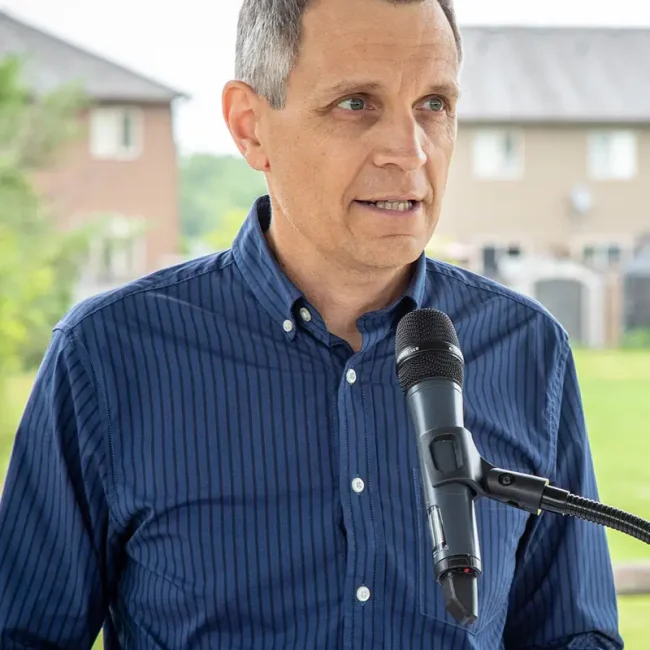
Mark Sutcliffe
Mayor of Ottawa
- Position
- Support
- Coverage
- Extensive public information
- Evidence
- Candidate statement or interview
- Reviewed
- Sep 8, 2026
Strongly supports Lansdowne 2.0 as a long-term investment in City-owned sports and event infrastructure and would focus on completing the approved project and delivering its promised public and economic benefits.
Key commitments
- Complete the approved new Event Centre, north-side stands, retail, public realm and associated redevelopment.
- Treat Lansdowne as a long-term City-owned civic, sports, entertainment and tourism asset.
- Maintain the revised partnership and guarantees intended to keep the REDBLACKS and Ottawa 67’s at Lansdowne through at least 2042.
- Deliver the projected housing, public-space, affordable-housing and economic benefits.
- Keep Lansdowne active and operating through phased construction.
- Manage the project within the approved net-investment and risk framework.
- Improve event transportation through transit and shuttle measures considered by Council.
Read the full position
Mark Sutcliffe was the most prominent political advocate for Lansdowne 2.0 and voted for the final redevelopment and partnership amendments in November 2025. He argues that the existing arena and north-side stands require replacement and that proceeding with the approved redevelopment is financially preferable to maintaining aging facilities without the new private development and partnership revenues.
His public case describes the plan as ‘more for less.’ Sutcliffe says lower construction estimates and higher air-rights revenue improved the final proposal, increased the amount associated with affordable housing and reduced the City’s net burden. He argues that taxpayers are responsible for approximately 31 percent of construction costs and none of the operating costs, and that the City receives roughly three dollars in asset value for each dollar of net municipal investment.
He also emphasizes broader benefits: modern facilities for sports and concerts, continued homes for the REDBLACKS and Ottawa 67’s, housing on the site, tourism, jobs, economic activity and renewed public spaces. Council’s approval included a requirement that the revised partnership guarantee the REDBLACKS and Ottawa 67’s remain in Ottawa and play at Lansdowne until at least 2042.
With construction underway, Sutcliffe’s position is effectively to deliver the project rather than reopen the approval decision. The main accountability questions are whether the City remains within the approved financial framework, whether projected private and partnership revenues arrive, whether public-space and transportation commitments are fulfilled, and how his administration would respond to overruns or delays.
Supporting sources (4)
- Lansdowne 2.0: More for less Office of Mayor Mark Sutcliffe · Oct 20, 2025 Open source ↗
- City Council minutes — November 7, 2025 City of Ottawa · Nov 7, 2025 Open source ↗
- Council approves Lansdowne 2.0 redevelopment plan City of Ottawa · Nov 7, 2025 Open source ↗
- Lansdowne 2.0 project updates City of Ottawa · Jul 3, 2026 Open source ↗

Jeff Leiper
Mayoral Candidate
- Position
- Oppose
- Coverage
- Extensive public information
- Evidence
- Council vote or motion
- Reviewed
- Sep 8, 2026
Opposed the approved Lansdowne 2.0 plan, citing financial risk, weak transparency and process concerns, and would be expected to emphasize stronger oversight and taxpayer protection during construction.
Key commitments
- Maintain his opposition to the financial and governance model Council approved in 2025.
- Demand greater transparency and earlier access to major project documents.
- Give independent and community analysis a meaningful role in evaluating public-private projects.
- Protect taxpayers against overruns, weak revenue performance and partnership risk.
- Clarify what contractual or governance changes remain feasible now that construction is underway.
- Publish a detailed post-approval Lansdowne plan addressing audits, reporting, transportation and public-space protections.
Read the full position
Jeff Leiper voted against the final Lansdowne 2.0 redevelopment and partnership amendments. His opposition was not limited to the need for new facilities; it focused on whether the approved financial and governance model was the right way to deliver them.
Leiper publicly criticized the process in October 2025 after Mayor Sutcliffe promoted major elements of the staff recommendations before councillors and the public had received the underlying documents. He described that approach as disrespectful to Council and objected to the characterization of community critics’ financial analysis as false information. This reflects a broader concern about transparency, independent scrutiny and the treatment of dissenting evidence.
His recorded vote places him clearly against the plan that Council ultimately approved. The opposing case at Council raised risks related to cost overruns, revenue assumptions, opportunity cost, the size and location of the Event Centre, festivals and the Great Lawn, consultation with sports tenants, and the adequacy of independent cost-benefit analysis.
Because contracts have since been approved and construction is underway, a future Leiper administration could not necessarily reverse the project without legal, contractual and financial consequences. His campaign had not yet published a detailed post-approval Lansdowne plan explaining whether he would seek renegotiation, independent audits, design changes, stronger governance or simply tighter implementation oversight. His entry therefore distinguishes his clear opposition to approval from the still-developing question of what he would now do as mayor.
Supporting sources (3)
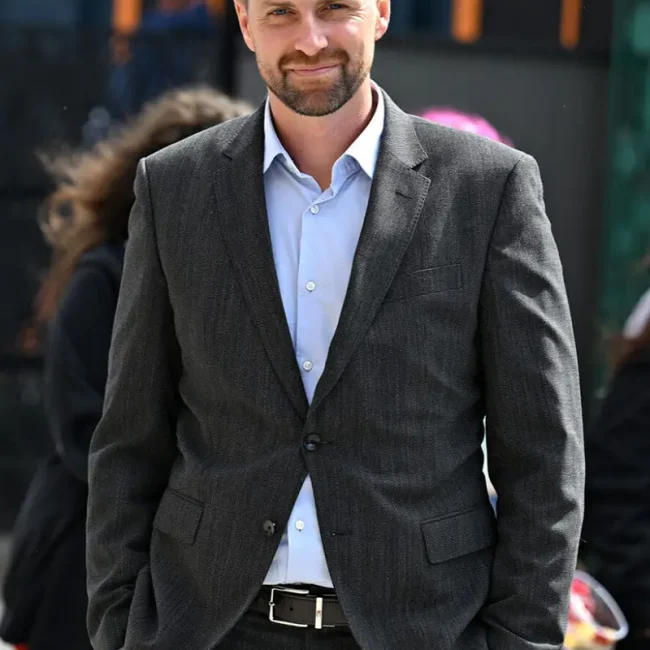
Alex Lawson
Mayoral Candidate
- Position
- Under Review
- Coverage
- Limited public information
- Evidence
- No clear public position found
- Reviewed
- Sep 8, 2026
Has not yet published a dedicated Lansdowne 2.0 position; his accountability and anti-insider themes may inform oversight, but they do not establish whether he supports, opposes or would renegotiate the project.
Key commitments
- No verified commitment to support, cancel or renegotiate Lansdowne 2.0 was available.
- Apply a general management and accountability focus to major City projects.
- Limit lobbying access by campaign donors, paid workers and organized campaign volunteers through his proposed Influence Firewall.
- Publish a project-specific position on contracts, cost control, governance, transit and future phases.
Read the full position
Alex Lawson was not a member of Ottawa City Council when Lansdowne 2.0 was approved and therefore has no recorded vote on the project. As of July 29, 2026, Compare Ottawa did not locate an official campaign policy stating whether he supports the approved redevelopment, would seek to renegotiate it, would attempt to cancel future phases or would continue it under stronger oversight.
Lawson’s broader campaign emphasizes management reform, measurable delivery and reducing the influence of political insiders. His Influence Firewall proposal would bar people who financially or organizationally supported an elected official’s campaign from lobbying that official for four years. Those principles could be relevant to future City-OSEG governance and procurement decisions, but applying them to Lansdowne without an explicit statement from Lawson would be inference rather than a verified position.
The project is already under construction, making the absence of a detailed position significant. A mayoral candidate should explain how he would handle the approved contracts, monitor cost and schedule, protect taxpayers, address transportation and public-space concerns, and respond if projected private development or partnership revenues underperform.
Until Lawson publishes those commitments, his overall position remains under review.
Supporting sources (2)

Neil Saravanamuttoo
Economist and community advocate
- Position
- Oppose
- Coverage
- Extensive public information
- Evidence
- Direct campaign platform
- Reviewed
- Sep 8, 2026
Saravanamuttoo strongly opposes the current Lansdowne 2.0 arrangement, describing it as an inadequately scrutinized subsidy to a politically connected private partner and calling for full accountability.
Key commitments
- Oppose the current Lansdowne 2.0 deal.
- Open the financial assumptions and spending decisions to public scrutiny.
- End what he describes as preferential deals for politically connected developers.
- Redirect municipal resources toward community infrastructure and services.
Read the full position
Opposition to Lansdowne 2.0 is one of Saravanamuttoo’s defining civic positions. He argues that the City committed roughly half a billion dollars to a private-partner redevelopment while lacking sufficient resources for local arenas and other community infrastructure.
His broader spending plan identifies Lansdowne as a “sweetheart deal” that should not be repeated. He calls for open books, stronger project accountability and a reorientation of municipal spending toward community priorities.
Supporting sources (3)
Evidence library
Sources used for this issue
Sources may be cited by more than one candidate position. Duplicate links are shown only once here.
- Lansdowne 2.0: More for less Office of Mayor Mark Sutcliffe · Oct 20, 2025 Open source ↗
- City Council minutes — November 7, 2025 City of Ottawa · Nov 7, 2025 Open source ↗
- Council approves Lansdowne 2.0 redevelopment plan City of Ottawa · Nov 7, 2025 Open source ↗
- Lansdowne 2.0 project updates City of Ottawa · Jul 3, 2026 Open source ↗
- Lansdowne discussion off to a bad start Office of Councillor Jeff Leiper · Oct 20, 2025 Open source ↗
- Council passes Lansdowne 2.0 after close 15-10 vote Ottawa Citizen / Yahoo News Canada · Nov 7, 2025 Open source ↗
- The Influence Firewall Alex Lawson for Mayor Campaign · Jun 9, 2026 Open source ↗
- Ottawa Deserves Better Alex Lawson for Mayor Campaign Open source ↗
- Time for Lansdowne Accountability Neil Saravanamuttoo / the 613 · May 14, 2026 Open source ↗
- A New Era of Responsible City Spending Neil Saravanamuttoo / the 613 · Jun 3, 2026 Open source ↗
- Meet Neil Saravanamuttoo Neil Saravanamuttoo for Mayor Campaign Open source ↗
Public transparency
How this page was assembled
This issue page compares each candidate using public campaign material, official records, interviews and credible reporting.
- Positions reviewed
- 4
- Sources cited
- 12
- Directly attributed
- 2
- Last reviewed
- Sep 8, 2026
What these labels mean
Coverage describes how much specific public information supports a summary. It does not rate the candidate or policy.
Evidence basis explains whether a conclusion comes directly from a campaign platform or statement, or is inferred from an official record, municipal policy or reporting.
How updates and corrections work
Research is revised when candidates publish new material, a source changes, or a reader identifies an error. Updates are reflected in the reviewed dates shown throughout the site.
Correction suggestions should include the page, statement and supporting source so the claim can be checked.