
Ottawa election issue
Roads & Traffic
Compare how Ottawa's mayoral candidates would address road maintenance, congestion, construction coordination, traffic signals, rural roads, winter operations, road safety and alternatives to driving.
Issue overview
Why Roads & Traffic matters
Roads and traffic affect nearly every Ottawa resident, whether they drive, take transit, cycle, walk, move goods, operate a business or depend on emergency services. The issue includes road condition, congestion, traffic signals, construction coordination, winter maintenance, rural roads, road safety, neighbourhood shortcuts and the design of new communities. It also overlaps with transit because reliable alternatives to driving can reduce pressure on the road network.
Ottawa maintains more than 6,100 kilometres of roads across a geographically large urban, suburban and rural municipality. The City must balance resurfacing and reconstruction with rapid growth, aging infrastructure and major provincial projects such as Highway 417 work. Congestion is often caused by several factors at once, including construction, collisions, poor signal progression, insufficient transit capacity, bottlenecks and development that adds travel demand before supporting infrastructure is complete.
In July 2026, the City introduced a Transportation and Mobility Strategy containing 48 potential measures in preparation for increased fall travel demand. The strategy includes express transit, signal optimization, traffic monitoring, incident response, construction coordination, parking and Park & Ride measures, active transportation and clearer public information. Although prompted partly by increased federal office attendance, the measures are intended to improve mobility for all residents.
Mark Sutcliffe presents a balanced mobility approach that includes roads, sidewalks, public transit and active transportation. His record includes increased road and sidewalk investment, support for major growth-related road projects, greater construction coordination, traffic-signal improvements, traffic calming and provincial discussions concerning Highway 174 and the LRT. His campaign says road and sidewalk investment doubled during the current term.
Jeff Leiper places greater emphasis on reducing congestion by improving transit reliability and allocating road space more efficiently. His campaign proposes a Transit Service Guarantee, restoration of service cuts, citywide dedicated bus lanes and advancement of the Baseline Bus Rapid Transit project. His broader record supports complete-street design, safer neighbourhood streets and transportation choices, although his campaign has not yet released a standalone roads and congestion policy.
Alex Lawson emphasizes road maintenance, snow removal, practical traffic fixes and different standards for rural roads. His rural road-safety proposal argues that low-volume communities should not be denied safety improvements simply because they do not meet urban traffic-count thresholds. He would evaluate speed, sightlines, school routes and local conditions. His broader roads platform remains under development, so several citywide commitments are not yet quantified.
The core election debate is not simply whether Ottawa should build more roads. Candidates must explain how they would maintain existing infrastructure, manage growth, coordinate construction, improve traffic flow, prevent neighbourhood cut-through traffic, serve rural communities, reduce serious collisions and provide realistic alternatives to driving. Compare Ottawa also distinguishes projects controlled by the City from highways and interchanges that require provincial approval and funding.
Candidate comparison
Published positions
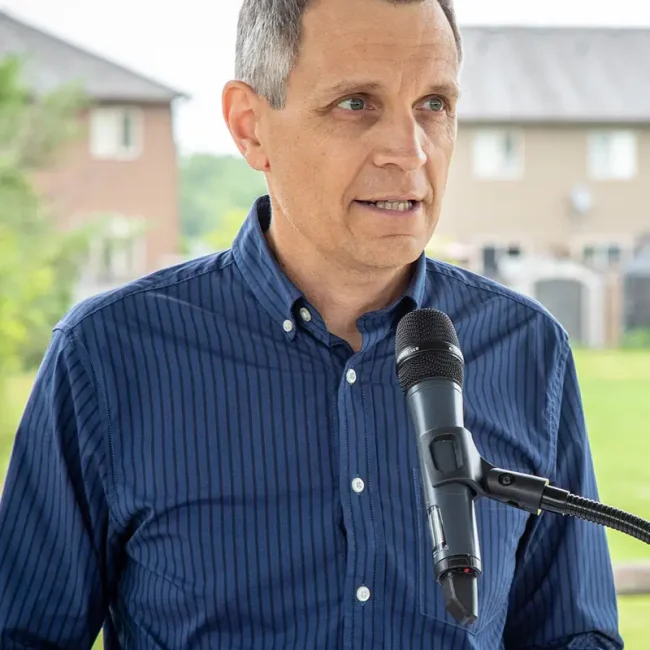
Mark Sutcliffe
Mayor of Ottawa
- Position
- Support
- Coverage
- Extensive public information
- Evidence
- Direct campaign platform
- Reviewed
- Sep 8, 2026
Supports increased road and sidewalk investment, traffic-flow improvements, coordinated construction and a multimodal strategy combining roads, transit, parking, cycling and walking, with added commitments to boost rural road funding and advance work on an Ottawa ring road.
Key commitments
– Continue increased investment in road and sidewalk maintenance.
– Increase funding specifically for rural roads if re-elected.
– Advance work on an Ottawa ring road as part of the broader road network strategy.
– Implement signal-timing, monitoring, incident-response and construction-coordination measures.
– Use express transit, Park & Ride and active transportation to reduce pressure on roads.
– Prioritize transportation infrastructure in rapidly growing neighbourhoods.
– Improve winter road and sidewalk service standards.
– Continue traffic-calming and road-safety investments.
– Advance provincial coordination concerning Highway 417 and Highway 174.
– Provide clearer public information about construction, traffic conditions and travel options.
Read the full position
Mark Sutcliffe’s approach combines maintenance of the existing road network with major transportation projects and alternatives to driving. His campaign states that road and sidewalk investment doubled during the current term and that the City invested more in public transit than during any previous Council term.
His earlier transportation commitments included $100 million over four years for roads and sidewalks, improved winter maintenance, public pothole reporting, clearer road-construction information, growth-related road infrastructure, off-peak construction work, larger ward traffic-calming budgets, expanded red-light-camera use and rural road safety edges. Several of these themes remain visible in his current record and 2026 budget communications.
In the lead-up to the 2026 election, Sutcliffe has also promised that, if re-elected, he will boost funding for rural roads and advance work on an Ottawa ring road. These pledges signal a stronger emphasis on improving rural connectivity and exploring or progressing a bypass route around the urban area as part of his broader road network strategy.
The July 2026 Transportation and Mobility Strategy under his administration identifies 48 potential measures. These include traffic-signal optimization, real-time monitoring, faster incident response, enforcement, construction coordination, express transit routes, Park & Ride expansion, parking adjustments and support for walking and cycling. The City also worked with Ontario to reduce conflicts between Highway 417 construction and heavier fall commuting.
Sutcliffe also supported an agreement to advance a provincial upload of Highway 174 and the LRT. He argues that the arrangement would improve transportation accountability and free municipal funds for more reliable transit. His position is therefore not simply road expansion; it is a network-management strategy that uses maintenance, targeted capacity, transit and intergovernmental funding.
The key questions are whether announced investments reduce the road-maintenance backlog, whether signal and construction measures produce measurable travel-time improvements, whether new suburban development receives roads and transit early enough to avoid creating additional bottlenecks, and how increased rural road funding and any ring-road work affect congestion patterns and long-term land use.
Supporting sources (6)
- Building a stronger Ottawa, together Mark Sutcliffe 2026 Campaign Open source ↗
- Policy: Transportation Mark Sutcliffe · Jul 31, 2026 Open source ↗
- Transportation and Mobility Strategy and Action Plan City of Ottawa · Jul 15, 2026 Open source ↗
- Uploading the LRT and Highway 174 Office of Mayor Mark Sutcliffe · Apr 25, 2026 Open source ↗
- City Budget 2026 Office of Mayor Mark Sutcliffe Open source ↗
- Ottawa mayor promises to boost funding for rural roads, advance ring road if re-elected CTV News · Aug 24, 2026 Open source ↗
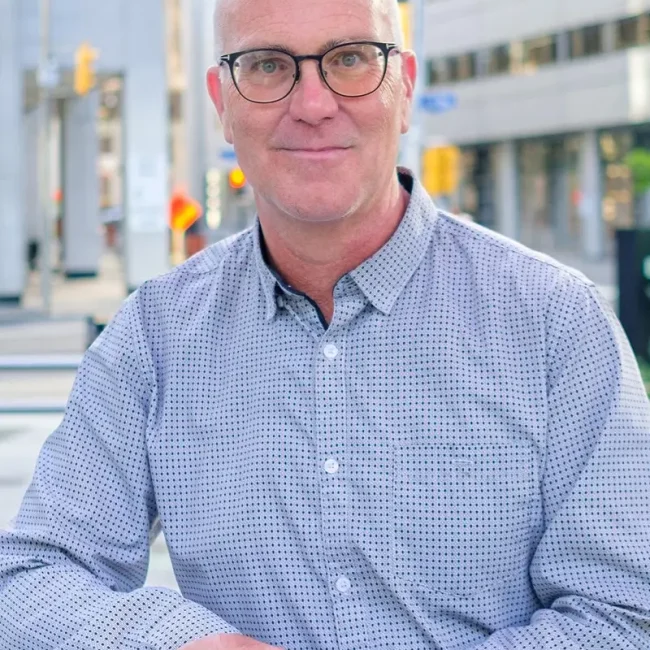
Jeff Leiper
Mayoral Candidate
- Position
- Support
- Coverage
- Moderate public information
- Evidence
- Direct campaign platform
- Reviewed
- Sep 8, 2026
Would reduce congestion primarily through reliable transit, dedicated bus lanes and safer, more efficient street design, while prioritizing maintenance of existing infrastructure.
Key commitments
- Create a Transit Service Guarantee with public reliability standards.
- Restore recent transit service reductions.
- Deliver dedicated bus lanes citywide.
- Advance the Baseline Bus Rapid Transit project.
- Use reliable transit to reduce congestion and dependence on driving.
- Prioritize maintenance of existing public infrastructure.
- Support safer neighbourhood streets and transportation choices.
- Publish a complete roads, winter-maintenance and congestion platform.
Read the full position
Jeff Leiper’s 2026 campaign has not published a standalone roads and traffic platform. His clearest transportation commitments focus on making transit dependable enough to reduce congestion and give residents a practical alternative to driving.
His campaign proposes restoring recent transit service cuts, creating a public Transit Service Guarantee, publishing on-time performance and frequency results, delivering dedicated bus lanes citywide and advancing the Baseline Bus Rapid Transit project. Dedicated lanes are a road-allocation policy as well as a transit policy because they give buses priority over general traffic where congestion otherwise causes delays.
Leiper’s broader public record supports complete-street design, neighbourhood traffic calming and safer conditions for walking and cycling. His campaign also proposes a multi-year plan to address deferred maintenance of City assets, although it does not yet specify a road-resurfacing funding target or a list of major road-capacity projects.
His likely distinction from Sutcliffe is that he gives greater priority to moving more people within the existing right of way rather than treating added general-purpose road capacity as the main response to congestion. Compare Ottawa identifies that as an evidence-based interpretation of his published transit policies, not as a complete roads platform.
A fuller policy would need to address potholes, winter maintenance, construction coordination, rural roads, goods movement, major suburban bottlenecks and the balance between bus lanes, cycling facilities, parking and vehicle capacity.
Supporting sources (3)
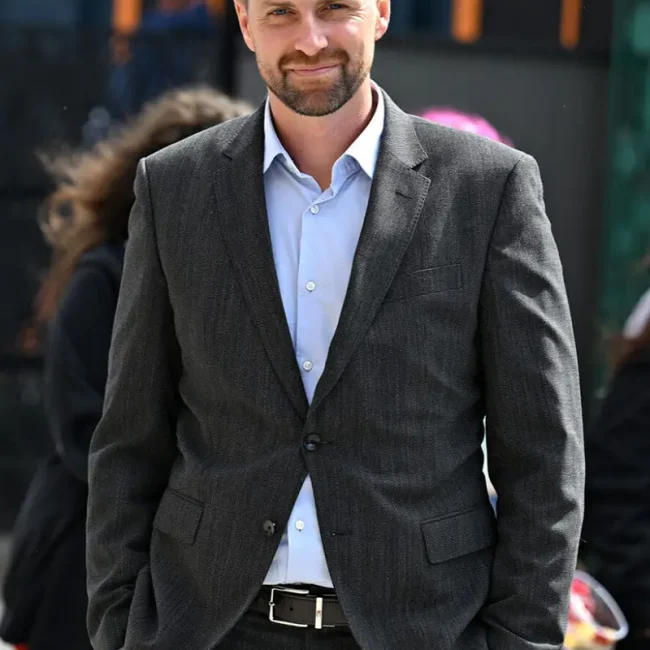
Alex Lawson
Mayoral Candidate
- Position
- Support
- Coverage
- Extensive public information
- Evidence
- Direct campaign platform
- Reviewed
- Sep 8, 2026
Prioritizes road maintenance, dependable snow removal, practical congestion fixes and rural safety standards based on local risk, and now pledges to eliminate paid on-street parking citywide.
Key commitments
Maintain roads more consistently.
Improve snow removal and dependable delivery of basic services.
Create rural road-safety standards that consider speed, sightlines and school routes.
Reduce reliance on one-size-fits-all urban traffic-count warrants.
Act earlier at rural intersections with demonstrated local risk.
Address heavy-truck and road-safety concerns in rural villages.
Eliminate paid on-street parking by turning off parking meters and making on-street parking free citywide.
Publish a complete citywide congestion, construction and road-capital plan.
Read the full position
Alex Lawson’s campaign identifies road maintenance and improved snow removal as basic City services that should operate consistently, with an emphasis on practical delivery rather than complicated new systems.
His most detailed roads proposal concerns rural road safety. Lawson argues that Ottawa’s standard traffic warrants can disadvantage villages and rural communities because they rely heavily on vehicle and pedestrian counts developed for busier urban environments. A dangerous rural intersection may never reach the numerical threshold required for a stop sign or crosswalk, even where speeds, sightlines, school routes or collision history indicate substantial risk. He would establish a rural standard that weighs speed, visibility, school routes and how residents actually use the road. His examples include Dalmeny Road and Nixon Drive, Flewellyn Road and Shea Road, Constance Bay Road and Dunrobin Road, and heavy truck traffic through villages such as Manotick.
In addition, Lawson now pledges that, if elected mayor, he will eliminate paid on-street parking in Ottawa by turning off parking meters and making on-street parking free across the city. This is a new, specific commitment affecting how curbside space is managed and how the City uses parking charges as a tool. It extends his roads and traffic platform beyond rural safety and maintenance into parking policy.
His overall position remains supportive of better roads and traffic management but still developing: he has not yet released a complete citywide plan covering traffic signals, construction coordination, road-resurfacing funding, downtown congestion, suburban bottlenecks, parking-garage policy, freight movement or major capital projects. The confidence level reflects strong evidence for rural road reform, maintenance priorities, and now a clear stance on paid on-street parking, but limited evidence for the rest of Ottawa’s road network.
Supporting sources (3)

Neil Saravanamuttoo
Economist and community advocate
- Position
- Support
- Coverage
- Moderate public information
- Evidence
- Direct campaign platform
- Reviewed
- Sep 12, 2026
Saravanamuttoo links congestion relief to better transit and smarter construction management, proposing a new office to coordinate road work, tougher lane‑closure and overrun rules, and federal park‑and‑shuttle measures alongside redirecting budget savings to road maintenance.
Key commitments
– Reduce congestion by restoring reliable, affordable transit and increasing frequency on priority corridors.
– Create a “People’s Office for Better Construction” to coordinate road and infrastructure projects.
– Tighten lane‑closure rules and introduce stronger penalties for construction delays and overruns that worsen congestion.
– Urge the federal government to relax its return‑to‑office mandate to ease peak‑hour traffic.
– Advocate federal park‑and‑shuttle bus services from underused federal parking lots into central areas.
– Redirect identified budget savings toward road maintenance and other core services.
– Benchmark and reduce excessive road and traffic‑calming procurement costs.
Read the full position
Saravanamuttoo argues that Ottawa’s congestion is driven both by unreliable transit and poorly coordinated construction. He maintains that restoring reliable, affordable transit is central to reducing car dependence, with a focus on lower fares, redesigned routes and higher frequency on key corridors.
His congestion plan adds a governance and construction‑management layer. He proposes creating a “People’s Office for Better Construction” to better coordinate road projects, tighten rules for lane closures, and impose stronger penalties for contractors that cause excessive delays or cost overruns. He presents this as a way to minimize avoidable disruption and keep traffic moving during necessary infrastructure work.
He also calls on the federal government to ease its current return‑to‑office mandate and to operate shuttle buses from underused federal parking lots, aiming to cut peak‑hour traffic into central Ottawa. Consistent with his broader fiscal plan, he says identified operating savings should be redirected toward roads and core municipal services, and he has criticized high procurement costs, using speed‑bump pricing as an example.
Supporting sources (3)
- 4-Point Transit Recovery Plan Neil Saravanamuttoo / the 613 · May 25, 2026 Open source ↗
- A New Era of Responsible City Spending Neil Saravanamuttoo / the 613 · Jun 3, 2026 Open source ↗
- Saravanamuttoo unveils congestion relief plan for Ottawa - CTV Vancouver Island CTV News · Sep 11, 2026 Open source ↗
Evidence library
Sources used for this issue
Sources may be cited by more than one candidate position. Duplicate links are shown only once here.
- Building a stronger Ottawa, together Mark Sutcliffe 2026 Campaign Open source ↗
- Policy: Transportation Mark Sutcliffe · Jul 31, 2026 Open source ↗
- Transportation and Mobility Strategy and Action Plan City of Ottawa · Jul 15, 2026 Open source ↗
- Uploading the LRT and Highway 174 Office of Mayor Mark Sutcliffe · Apr 25, 2026 Open source ↗
- City Budget 2026 Office of Mayor Mark Sutcliffe Open source ↗
- Ottawa mayor promises to boost funding for rural roads, advance ring road if re-elected CTV News · Aug 24, 2026 Open source ↗
- A City That Works — Transit That Works Jeff Leiper 2026 Campaign Open source ↗
- Transportation system management City of Ottawa Open source ↗
- A country road isn't a downtown street Alex Lawson for Mayor Campaign · Jul 20, 2026 Open source ↗
- Ottawa Deserves Better Alex Lawson for Mayor Campaign Open source ↗
- Ottawa Election 2026: Lawson vows to eliminate paid on-street parking - CTV News CTV News · Sep 4, 2026 Open source ↗
- 4-Point Transit Recovery Plan Neil Saravanamuttoo / the 613 · May 25, 2026 Open source ↗
- A New Era of Responsible City Spending Neil Saravanamuttoo / the 613 · Jun 3, 2026 Open source ↗
- Saravanamuttoo unveils congestion relief plan for Ottawa - CTV Vancouver Island CTV News · Sep 11, 2026 Open source ↗
Public transparency
How this page was assembled
This issue page compares each candidate using public campaign material, official records, interviews and credible reporting.
- Positions reviewed
- 4
- Sources cited
- 15
- Directly attributed
- 4
- Last reviewed
- Sep 12, 2026
What these labels mean
Coverage describes how much specific public information supports a summary. It does not rate the candidate or policy.
Evidence basis explains whether a conclusion comes directly from a campaign platform or statement, or is inferred from an official record, municipal policy or reporting.
How updates and corrections work
Research is revised when candidates publish new material, a source changes, or a reader identifies an error. Updates are reflected in the reviewed dates shown throughout the site.
Correction suggestions should include the page, statement and supporting source so the claim can be checked.